

Small Batch Coffee Roasting: Benefits That Matter
Table of Contents
- What Is Small Batch Coffee Roasting?
- Superior Flavor Clarity and Profile Development
- Fresh Roasted Coffee Beans: The Freshness Advantage
- Small Batch vs Commercial Coffee Roasting: Key Differences
- Precision, Quality Control, and Consistency
- How to Store Coffee Beans for Maximum Freshness
- Sustainability and Supply Chain Transparency
- Conclusion
Last Updated: August 24, 2026
What Is Small Batch Coffee Roasting?
Small batch coffee roasting refers to the practice of roasting coffee beans in deliberately limited quantities, typically 5 to 25 pounds per roast, compared to the hundreds or thousands of pounds processed in commercial operations. This approach prioritizes precision over volume, allowing roastmasters to control every variable in the roasting curve with meticulous attention.
The fundamental difference lies in thermal dynamics and batch consistency. When roasting smaller quantities, heat distributes more evenly through the green coffee beans, reducing the risk of uneven development that plagues larger batches.
At Cenia's Coffee, we've built our entire operation around this principle. Every roast is prepared to order, meaning your beans are roasted days before they arrive at your door, not weeks or months prior. This commitment to small batch roasting directly addresses what remote professionals and coffee enthusiasts care about most: freshness and flavor clarity.
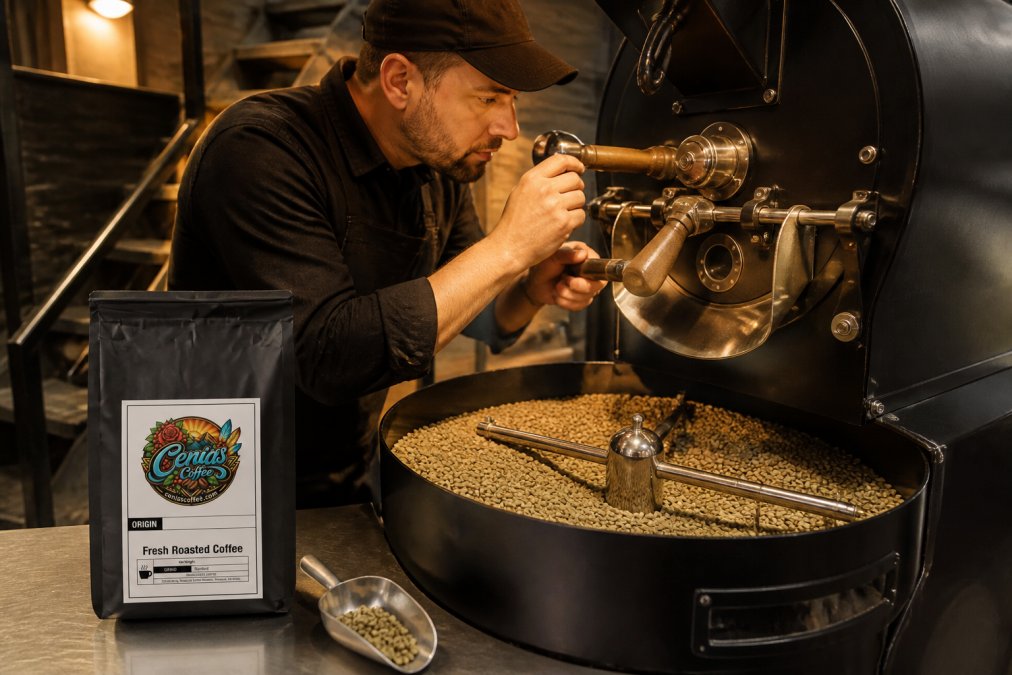
The process requires expertise that develops over years. A roastmaster working with small batches must understand how origin characteristics, altitude, processing method, and bean density affect heat absorption and development speed. This knowledge becomes the foundation for creating roast profiles that reveal rather than mask the inherent qualities of each origin.
Superior Flavor Clarity and Profile Development
When you roast in smaller quantities, the beans develop more uniformly, which means flavor compounds emerge with greater definition and complexity. This is where small batch coffee roasting delivers its most tangible benefit: you taste the actual coffee, not a flattened approximation of it.
In commercial roasting operations, beans at the center of a large drum experience different thermal energy than those at the perimeter. This inconsistency forces roastmasters to aim for a middle ground that satisfies most beans adequately but optimizes none. Small batch roasting eliminates this compromise. Every bean in a 10-pound batch receives nearly identical heat exposure, allowing the maillard reaction and caramelization to proceed at consistent rates across the entire load.
The result is flavor clarity. When you brew a cup from a small batch roast, you notice distinct tasting notes rather than generic "roasted coffee" character. A single-origin bean from a specific region reveals its terroir, the soil composition, altitude, and climate that shaped its development. A carefully crafted blend shows each component's individual characteristics before they integrate into a cohesive whole.
This precision in roast profile development matters especially for specialty coffee enthusiasts who use pour-over methods, French press, or other manual brewing techniques. These methods expose inconsistencies in roast quality immediately. A bean roasted unevenly will produce uneven extraction, leading to sour or bitter notes depending on which particles end up in your cup. Small batch roasting minimizes this risk entirely.
Fresh Roasted Coffee Beans: The Freshness Advantage
Bean freshness deteriorates on a predictable timeline. Immediately after roasting, coffee beans continue degassing, releasing carbon dioxide that accumulated during the roasting process. This degassing period typically spans 24 to 72 hours, during which the beans are not yet optimal for brewing (peer-reviewed research). After that window closes, the beans reach peak freshness, which persists for roughly two weeks before oxidation begins noticeably degrading flavor compounds (peer-reviewed research).
The freshness advantage of small batch coffee roasting is straightforward: roasting to order means your beans are in their peak window when they arrive. Compare this to commercial operations that roast in massive batches, package them, distribute them through wholesale channels, and sit on retailer shelves for weeks. By the time those beans reach a consumer, they've already passed their optimal freshness window.
Cenia's Coffee roasts your order days before shipment, ensuring arrival during the peak freshness period. This timing directly addresses a real objection many remote professionals raise: "I work from home and go through maybe half a bag before it goes stale." With small batch roasting and proper storage, a half-pound of beans maintains excellent quality for three to four weeks, giving you a realistic window to enjoy them without waste (peer-reviewed research).
The practical implication is that you taste coffee as the roastmaster intended. Oxidation gradually flattens aromatic compounds and shifts flavor profiles toward staleness. Fresh roasted beans preserve the sensory experience, the bright acidity, the complex aromatics, the clean finish, that distinguishes specialty coffee from commodity-grade alternatives.
Small Batch vs Commercial Coffee Roasting: Key Differences
| Aspect | Small Batch Roasting | Commercial Roasting |
|---|---|---|
| Batch Size | 5-25 lbs per roast | 300-1000+ lbs per roast |
| Heat Distribution | Uniform across batch | Uneven (center vs. perimeter) |
| Roast Profile Flexibility | Adjustable in real time | Predetermined, rigid |
| Production Efficiency | Lower output per hour | Higher throughput |
| Roast Consistency | High batch-to-batch uniformity | Acceptable but variable |
| Freshness at Delivery | Peak (2-7 days post-roast) | Declining (2-8 weeks post-roast) |
| Cost Per Pound | Higher | Lower |
| Ideal For | Specialty enthusiasts | Bulk, commodity consumption |
The distinction goes beyond scale. Small batch roasting prioritizes quality control and sensory experience. Commercial roasting prioritizes production efficiency and cost reduction. Neither approach is inherently wrong, they serve different markets and priorities.
For consumers who brew manually and notice subtle differences in flavor, small batch roasting delivers measurable value. For consumers who brew in automatic drip machines and prioritize convenience over nuance, the differences matter less. Understanding where you fall on that spectrum determines whether small batch coffee roasting makes sense for your routine.
The supply chain transparency also differs. Small batch roasters typically maintain direct relationships with specific farms, allowing them to source green coffee beans with known characteristics and processing methods. Commercial roasters often source from commodity markets where bean origins and processing details are aggregated and less traceable. If you care about knowing exactly where your coffee comes from, which many specialty enthusiasts do, small batch operations typically provide that clarity.
Precision, Quality Control, and Consistency
Small batch coffee roasting demands rigorous quality control because every roast is visible and accountable. A roastmaster cannot hide inconsistencies in a sea of volume. This accountability drives precision.
The roasting curve, the temperature progression over time, becomes the primary tool for consistency. A roastmaster develops a specific curve for each origin, accounting for its density, moisture content, and desired roast degree. Small batches allow for real-time adjustments: if the first crack (the audible sound indicating the beans have reached a development threshold) arrives earlier than expected, the roastmaster reduces heat or increases airflow immediately. This responsiveness is impossible at commercial scales.
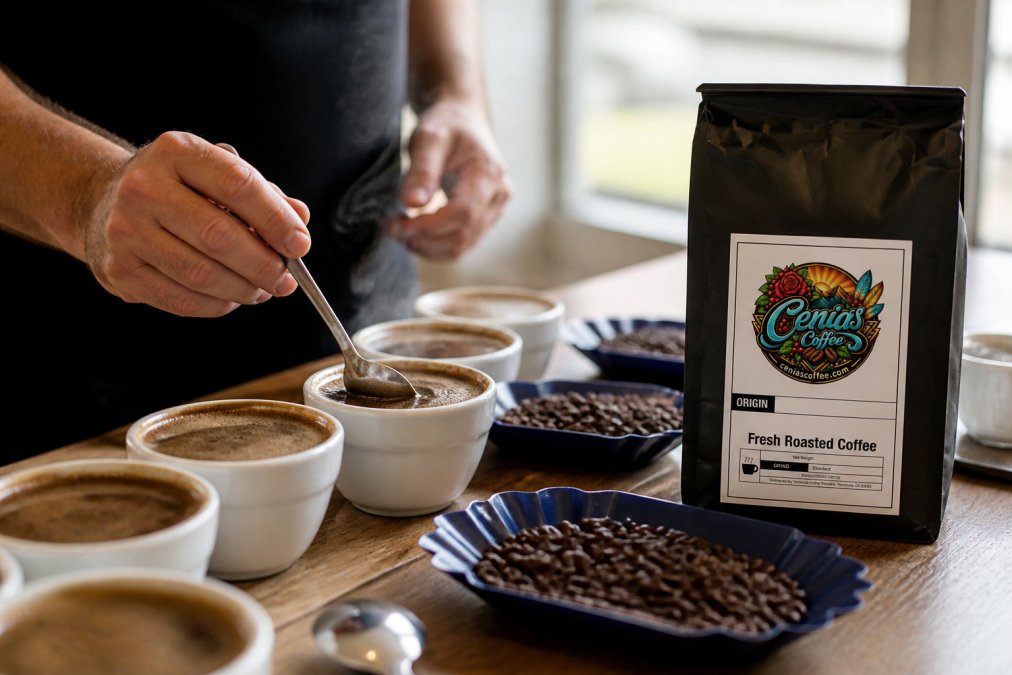
Cupping, the formal sensory evaluation method used by coffee professionals, becomes standard practice in small batch operations. A roastmaster cupping their own roasts compares each batch against previous roasts of the same origin, identifying whether the roast profile achieved the intended flavor outcome. This feedback loop drives continuous improvement and consistency.
The precision extends to origin characteristics. A single-origin bean from a specific farm and harvest responds differently to roasting than the same origin from a different farm or harvest year. Small batch roastmasters adjust their profiles to account for these variations, whereas commercial operations typically apply the same roast to all beans of a given origin regardless of these nuances.
Consistency in roasting also means consistency in your brewing experience. If you're particular about your pour-over technique and grind fresh every morning, you'll notice immediately if your beans roast unevenly. Small batch roasting eliminates that variable, letting you focus on perfecting your brewing method rather than compensating for roasting inconsistencies.
How to Store Coffee Beans for Maximum Freshness
Proper storage extends the freshness window significantly. Coffee beans are hygroscopic, meaning they absorb moisture from their environment. They're also permeable to oxygen, which triggers oxidation. Your storage strategy must address both factors.
The ideal storage container is airtight and opaque. Glass jars with rubber seals work well. Vacuum-sealed bags designed for coffee storage work better. Avoid clear containers that expose beans to light, which accelerates oxidation. Avoid paper bags or containers that allow airflow, these speed deterioration noticeably.
Temperature stability matters more than cold temperature. A cool, dark pantry at 60-70 degrees Fahrenheit is ideal. Avoid the refrigerator unless you're storing beans for longer than three weeks; temperature fluctuations during opening and closing introduce condensation that degrades flavor. The freezer is acceptable for long-term storage (one month or longer), but only if you use an airtight container and allow beans to reach room temperature before opening to prevent moisture condensation.
Grind your beans immediately before brewing. Pre-ground coffee oxidizes rapidly due to increased surface area. If you grind in advance, consume within 30 minutes for optimal flavor. This practice, grinding fresh each morning, is where small batch roasting truly shines. Since your beans are already at peak freshness, grinding fresh maximizes the sensory experience.
Buy in quantities you'll consume within two to three weeks. This timing aligns with the peak freshness window and eliminates waste. Remote professionals working from home often ask whether ordering smaller quantities costs more per pound than buying bulk elsewhere. The answer depends on your priorities. Yes, per-pound pricing typically runs higher. But you're not paying for storage, you're not discarding stale beans, and you're enjoying superior flavor throughout the consumption window. The real cost of bulk buying includes the beans you don't finish before they lose quality.
Sustainability and Supply Chain Transparency
Small batch roasting creates conditions for genuine sustainability practices that large-scale operations struggle to implement. The smaller volume allows roastmasters to maintain direct relationships with specific farms, creating accountability throughout the supply chain.
This transparency matters. You can verify that your coffee comes from farms using sustainable practices, shade-grown cultivation, soil health management, fair labor practices. Commercial roasters sourcing from commodity markets cannot offer this level of traceability. The beans are aggregated, origins mixed, and the path from farm to cup becomes opaque.
Sustainability also encompasses production efficiency and waste reduction. Small batch roasting generates less chaff and produces less waste heat than massive commercial operations. The smaller scale allows for more precise energy management. While large operations achieve efficiency through volume, small batch operations achieve it through precision, using exactly the energy needed rather than excess capacity.
Supply chain transparency extends to certifications. Many small batch roasters work directly with farms pursuing organic certification, shade-grown certification, or fair trade practices. These certifications represent verifiable commitments to environmental and social standards. Cenia's Coffee sources from trusted farms committed to these practices, allowing customers to align their purchases with their values.
The environmental impact of freshness itself deserves mention. When beans arrive at peak freshness and remain fresh longer due to proper storage, less coffee ends up discarded. This reduces waste throughout the consumption cycle. From an environmental perspective, buying small batches frequently beats buying large quantities that partially spoil before consumption.
Conclusion
Small batch coffee roasting delivers measurable advantages in flavor clarity, freshness, consistency, and supply chain transparency. The approach prioritizes sensory experience and quality control over production volume, making it ideal for coffee enthusiasts and remote professionals who brew intentionally and notice the difference quality makes.
If you're ready to experience coffee roasted with precision and freshness as core principles, Cenia's Coffee offers small batch roasts delivered to your door at peak flavor. Our Single Origin Favorites Sample Pack lets you explore multiple origins roasted to their individual profiles, or try our Best Sellers Sample Pack to discover which roast profiles match your brewing method. Every roast is prepared to order and arrives within days, ensuring you experience the full sensory potential that small batch roasting makes possible.


Frequently Asked Questions
Q: Is small batch coffee actually better than mass-produced coffee?
A: Small batch coffee roasting produces superior flavor clarity because roastmasters can adjust heat application and airflow management for each specific batch of green coffee beans. Commercial roasting prioritizes production efficiency over origin characteristics, often resulting in less distinct flavor profiles. The precision roasting approach in small batches allows the roastmaster to develop the full sensory experience of each origin, whereas industrial roasting uses standardized curves that treat all beans similarly.
Q: How long does small batch coffee stay fresh?
A: Peak freshness for small batch roasted coffee typically lasts 2-4 weeks after the roast date, with optimal flavor occurring in the first 2-3 weeks. Degassing continues after roasting, so beans roasted to order reach their best flavor window faster than coffee that has been sitting in inventory. Proper storage in an airtight container away from light and heat extends shelf life, but the advantage of small batch roasting is that you receive beans closer to roast date, maximizing freshness at the time you brew.
Q: Why does batch size affect the flavor profile of coffee?
A: Smaller batch sizes allow the roastmaster to monitor the roasting curve more closely and respond to how individual batches of green coffee beans develop. The maillard reaction and caramelization happen at slightly different rates depending on bean density, moisture content, and altitude. In small batches, the roastmaster can adjust thermal energy application mid-roast to achieve consistent roast degree and highlight origin characteristics. Larger commercial batches use fixed roasting profiles that cannot adapt, resulting in less flavor clarity and more batch inconsistency.
Q: Does roasting coffee in small batches cost more?
A: Small batch roasting typically costs more per pound than bulk commercial coffee because labor and operational costs are spread across fewer beans. However, the value comes from superior freshness, flavor clarity, and the ability to customize roast profiles for specific brewing methods like pour-over. Many coffee enthusiasts find that the enhanced sensory experience and reduced waste (since beans stay fresh longer) justify the higher price point compared to buying bulk coffee that loses quality over time.
This article was written using GrandRanker