

Best Fresh Roasted Coffee for Pour Over: 2026 Guide
Table of Contents
- How to Choose the Best Fresh Roasted Coffee for Pour Over
-
Top Fresh Roasted Coffee Picks for Pour Over Brewing
- 1. Kenya - Bright Citrus and Floral Clarity
- 2. Ethiopia Natural - Fruity, Milk Chocolate Sweetness
- 3. Tanzania - Delicate Pear, Jasmine, and Strawberry
- 4. Colombia - Dried Orange, Berry, and Chocolate Balance
- 5. Guatemala - Dark Chocolate, Bright Fruit, Butterscotch
- 6. Nicaragua - Cocoa, Floral, and Citrus Complexity
- 7. Costa Rica - Sweet Apple, Raisin, and Honey
- Pour Over Coffee Grind Size Guide
- Benefits of Ethically Sourced Coffee for Your Daily Brew
- How to Store Fresh Roasted Coffee to Preserve Flavor
- Quick Comparison: All Single-Origin Picks at a Glance
- Which Fresh Roasted Coffee Should You Order First?
- Conclusion
Last Updated: August 18, 2026
Pour over brewing is unforgiving. It rewards good beans and punishes mediocre ones, there's nowhere to hide behind milk, sugar, or a forgiving espresso machine. That's why choosing the best fresh roasted coffee for pour over matters more than any other brewing variable. At Cenia's Coffee, we've built our lineup around single-origin beans roasted to order, sourced from trusted farms across Africa, Central America, and South America. This guide breaks down which origins shine brightest through a pour over dripper, how to dial in your grind, and why freshness isn't just marketing, it's the difference between a cup that tastes alive and one that tastes flat.
Quick Picks:
- Best for bright, citrus clarity: Kenya, orange, lemon, floral, effervescent
- Best for fruity sweetness: Ethiopia Natural, milk chocolate, berry, caramel
- Best for delicate floral complexity: Tanzania, pear, jasmine, strawberry
- Best for balanced everyday brew: Colombia, dried orange, berry, chocolate
How to Choose the Best Fresh Roasted Coffee for Pour Over
Fresh roasted coffee has been roasted within the past two to four weeks and allowed to degas before brewing. Pour over extracts with exceptional clarity, meaning every quality in the bean, terroir, processing method, roast level, comes through directly in your cup.

Three variables drive the decision: roast profile, processing method, and origin character.
Roast Profile: Light vs. Medium for Pour Over
Light roasts preserve the most origin character. The bean's natural acidity, fruit notes, and floral aromatics remain intact because the roast stops before caramelization fully develops. For pour over, this translates to clarity and brightness, you taste the farm, altitude, and varietal rather than the roast process.
Medium roasts offer more body and sweetness, with chocolate, caramel, and nutty notes while still delivering excellent flavor complexity.
The practical rule: go light to taste where a coffee comes from; go medium for a rounder, more forgiving cup.
Washed vs. Natural Process: What Changes in Your Cup
A washed process coffee has its fruit removed before drying, resulting in a clean, transparent cup where origin character and acidity read clearly. These coffees produce bright citrus, floral, and tea-like notes through a pour over.
A natural process coffee dries with the fruit intact, allowing sugars to ferment into the bean. The result is heavier body, pronounced fruit sweetness, and richer mouthfeel. Neither is objectively better, washed coffees reward precision; natural process coffees reward patience.
Top Fresh Roasted Coffee Picks for Pour Over Brewing
Every coffee listed here ships as a single-origin, roasted-to-order bag at $22.99. Each offers meaningful flavor differences.
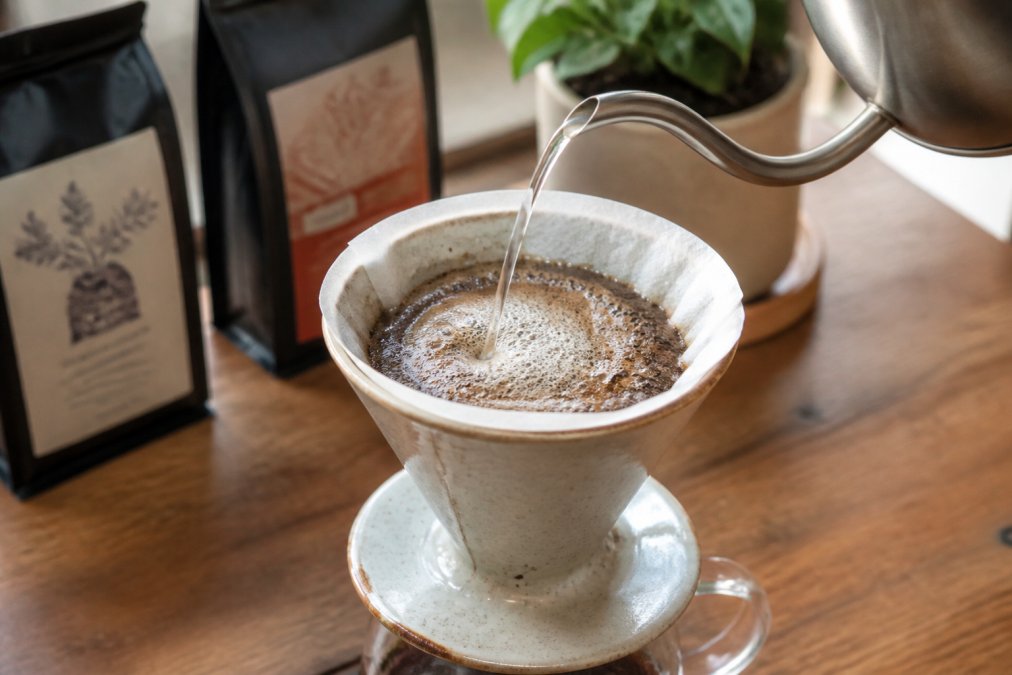
1. Kenya - Bright Citrus and Floral Clarity
The Kenya from Nyeri County, grown at 1,700-1,890 meters and fully washed, delivers bright, effervescent clarity. Tasting notes: orange, lemon, floral.

Best for: Anyone who wants to understand what high-altitude African coffee can taste like at its peak. This profile is polarizing, drinkers accustomed to dark roasts may find it sharp. Start with a slightly coarser grind to soften the acidity if needed.
2. Ethiopia Natural - Fruity, Milk Chocolate Sweetness
The Ethiopia Natural from Sidama showcases what natural process coffee can do. Tasting notes: milk chocolate, fruity, caramel.
Best for: Pour over drinkers who want fruit-forward sweetness with real body.
3. Tanzania - Delicate Pear, Jasmine, and Strawberry
The Tanzania from the Mbeya region features Bourbon and Kent varietals grown at 1,200-1,900 meters, fully washed and dried on raised beds. The profile reads almost like white tea through a pour over: pear, floral, jasmine, strawberry.

Best for: Drinkers who prefer subtle, aromatic complexity over citrus-forward profiles.
4. Colombia - Dried Orange, Berry, and Chocolate Balance
The Colombia from smallholder farmers, grown at 1,300-1,500 meters and dried in solar dryers, is the most approachable coffee in the lineup. Tasting notes: dried orange, berry, chocolate.
Best for: Daily drinkers who want a reliable, complex medium roast.
5. Guatemala - Dark Chocolate, Bright Fruit, Butterscotch
The Guatemala from Antigua, grown at 1,200-1,616 meters on volcanic loam soils, delivers dark chocolate and butterscotch alongside bright fruit. Tasting notes: Dark chocolate, bright fruit, butterscotch.
Best for: Drinkers who want richness without muting fruit notes.
6. Nicaragua - Cocoa, Floral, and Citrus Complexity
The Nicaragua from Molino Norte is fully washed and fermented for 12-14 hours, then dried on both patios and raised beds. Tasting notes: cocoa, floral, citrus.
Best for: Coffee drinkers who want a medium roast with layered complexity.
7. Costa Rica - Sweet Apple, Raisin, and Honey
The Costa Rica from Alajuela uses the eco-pulped method, a hybrid approach that removes the outer skin but leaves some honey-like mucilage intact. Grown at 1,300-1,445 meters on volcanic loam soils. Tasting notes: sweet apple, raisin, honey.
Best for: Drinkers who want clarity with more sweetness and body than standard washed process.
Pour Over Coffee Grind Size Guide
Grind size is the most actionable variable in pour over brewing. Get it wrong and even the best fresh roasted coffee tastes bitter or weak, regardless of bean quality.
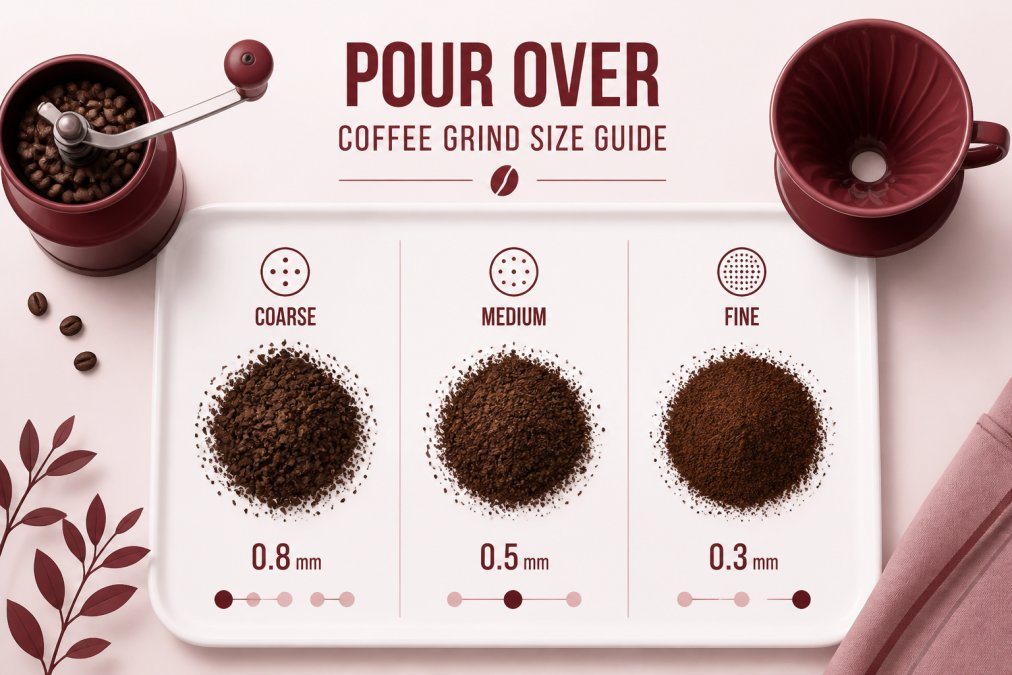
The target for pour over is medium-fine to medium, finer than drip but coarser than espresso, resembling coarse sea salt.
Calibrating Grind Size by Bean Density and Roast Level
Bean density and roast level both affect extraction. Denser beans (typically high-altitude origins like Kenya or Ethiopia Natural) require a slightly finer grind. Lower-altitude beans (like Nicaragua at 900-1,590 meters) are less dense and extract more readily, requiring a slightly coarser grind to prevent over-extraction and bitterness.
Light roasts are denser than medium roasts because less cellular structure has broken down during roasting. This means:
- Light roast, high altitude (Kenya, Ethiopia) → medium-fine grind
- Medium roast, high altitude (Colombia, Guatemala) → medium grind
- Medium roast, lower altitude (Nicaragua, Costa Rica) → medium to medium-coarse grind
| Coffee | Altitude | Roast | Suggested Grind |
|---|---|---|---|
| Kenya | 1,700-1,890 m | Light | Medium-fine |
| Ethiopia Natural | 1,700-1,900 m | Med-light | Medium-fine |
| Tanzania | 1,200-1,900 m | Med-light | Medium-fine |
| Colombia | 1,300-1,500 m | Medium | Medium |
| Guatemala | 1,200-1,616 m | Medium | Medium |
| Costa Rica | 1,300-1,445 m | Medium | Medium |
| Nicaragua | 900-1,590 m | Medium | Medium-coarse |
Troubleshooting Extraction Issues by Adjusting Grind
Sour, thin, or weak cup: Under-extraction. Go finer by one or two clicks on your grinder and ensure your bloom (the initial 30-45 second pre-infusion) is adequate.
Bitter, harsh, or astringent cup: Over-extraction. Go coarser and check that your water temperature is below 205°F.
Uneven extraction: Usually a distribution issue. Ensure grounds are level before pouring and use a slow, controlled circular pour.
Benefits of Ethically Sourced Coffee for Your Daily Brew
Ethically sourced coffee changes what ends up in your cup. Farms that pay fair prices have the financial stability to invest in selective harvesting, better processing infrastructure, and soil management. These practices directly produce higher-quality beans with more complex flavor profiles.
Every origin in the Cenia's Coffee lineup comes from smallholder farmers or small cooperatives: Kenya from Othaya, Nyeri County; Tanzania from the Mbeya region; Ethiopia Natural from Sidama. As documented in USDA's Agricultural Marketing Service guidance on fair trade and specialty coffee, transparency in supply chains correlates with better post-harvest processing standards, which directly affects cup quality. When growers receive premium prices, they have economic incentive to sort, process, and dry coffee more carefully.
How to Store Fresh Roasted Coffee to Preserve Flavor
Fresh roasted coffee begins degassing carbon dioxide immediately after roasting. Wait 3-5 days after the roast date before opening a new bag. After that, oxidation becomes the enemy.
Storage rules:
- Store in an airtight container away from direct light and heat
- Keep at room temperature; refrigeration introduces moisture through condensation
- Do not freeze unless buying in bulk (more than a 3-week supply)
- Buy quantities you'll use within 3-4 weeks of the roast date
- Grind immediately before brewing; pre-ground coffee goes stale within hours
Transfer coffee to a dedicated airtight canister after opening. Most bags include a one-way valve that works only when properly sealed; repeated opening degrades the seal.
Water Chemistry: The Hidden Variable in Pour Over Quality
Water chemistry separates a good pour over from an exceptional one. Pour over extracts through water, so mineral content directly affects how flavor compounds dissolve.
The two key variables are total dissolved solids (TDS) and the balance between magnesium and calcium. Magnesium enhances extraction of fruity and floral compounds. Calcium increases water hardness and can mute delicate flavors. The Specialty Coffee Association's water quality standards recommend a target TDS of 150 ppm with a pH between 6.5 and 7.5. If your tap water is very hard, filter it through a simple activated carbon pitcher filter to improve the clarity of light roast coffees noticeably.
Quick Comparison: All Single-Origin Picks at a Glance
| Coffee | Roast | Process | Tasting Notes | Best For | | --- | --- | --- | --- | | Kenya | Light | Washed | Orange, lemon, floral | Citrus brightness lovers | | Ethiopia Natural | Med-light | Natural | Milk chocolate, fruity, caramel | Fruit-forward sweetness | | Tanzania | Med-light | Washed | Pear, jasmine, strawberry | Delicate floral complexity | | Colombia | Medium | Washed | Dried orange, berry, chocolate | Reliable daily drinker | | Guatemala | Medium | Washed | Dark chocolate, bright fruit, butterscotch | Rich sweetness with fruit | | Nicaragua | Medium | Washed | Cocoa, floral, citrus | Layered medium roast | | Costa Rica | Medium | Eco-pulped | Sweet apple, raisin, honey | Honey sweetness, clean finish |
All seven are priced at $22.99 per bag and roasted to order.
Which Fresh Roasted Coffee Should You Order First?
Start with the Kenya if you've never tasted a high-quality washed African coffee through a pour over. The citrus clarity is a genuine revelation and the best demonstration of what specialty coffee can taste like when everything is done right.
Start with the Ethiopia Natural if you prefer fruit-forward sweetness over acidity. The natural process adds body and complexity that makes it more accessible to drinkers transitioning from medium-dark roasts.
Start with the Colombia if you want something that works well every morning without demanding precise technique. It's the most forgiving profile in the lineup.
Ordering a single bag and brewing it within three to four weeks is genuinely better value than buying in bulk and letting beans go stale. Fresh roasted coffee brewed at peak freshness outperforms a larger quantity of stale coffee at any price point.
Choosing the right single-origin coffee for pour over comes down to three things: freshness, processing method, and roast level matched to your palate. Cenia's Coffee roasts every bag to order, sources directly from smallholder farmers and cooperatives with traceable growing regions, and ships quickly so the coffee arrives at peak freshness. Whether you start with the bright citrus of the Kenya, the fruity sweetness of the Ethiopia Natural, or the balanced everyday reliability of the Colombia, you're getting beans that were grown carefully and roasted specifically for your order. Order your first bag from Cenia's Coffee and taste the difference that roasted-to-order freshness makes.
Frequently Asked Questions
Which coffee roast is best for pour over?
Light to medium-light roasts are the best match for pour over brewing. These roast levels preserve the bean's natural acidity, floral notes, and complex flavor profile, all of which shine through the clean extraction a pour over delivers. Darker roasts can work but tend to produce heavier body and less clarity in the cup. Single-origin light roasts from Ethiopia, Kenya, or Tanzania are especially well-suited to this brew method.
How does roast date affect pour over flavor?
Roast date matters more for pour over than almost any other brew method. Freshly roasted beans release CO2, which creates the bloom stage when hot water first hits the grounds. This off-gassing also means the coffee is actively developing flavor in the days after roasting. Beans roasted within the past two to four weeks will produce the most vibrant aroma, sweetness, and complexity. Coffee roasted to order, like the single-origin offerings from Cenia's Coffee, ensures you receive beans at peak freshness.
Should I buy whole bean or pre-ground for pour over?
Whole bean is the better choice for pour over. Grinding just before brewing preserves volatile aromatic compounds that disappear quickly once the bean is ground. Pre-ground coffee, even stored carefully, loses noticeable flavor within a few days. For pour over specifically, grind size consistency matters a great deal for even extraction, and a burr grinder lets you dial in a medium-fine grind that pre-ground bags cannot guarantee.
What are the benefits of ethically sourced coffee beyond taste?
Ethically sourced coffee supports fair compensation for smallholder farmers, encourages sustainable farming practices, and often results in better bean quality because growers have the resources to invest in careful processing. Transparent sourcing also lets you trace flavor back to a specific region, altitude, and process, which is exactly what single-origin specialty coffee is built on. When farms are treated as partners rather than commodity suppliers, the quality difference shows up directly in your cup.
What grind size should I use for pour over coffee?
A medium-fine to medium grind is the standard starting point for pour over, roughly the texture of coarse sand. Light roasts and denser high-altitude beans often need a slightly finer grind to reach full extraction, while medium roasts can pull well at a standard medium setting. If your brew tastes sour or finishes too quickly, grind finer. If it tastes bitter or takes too long to drain, go coarser. Adjust in small increments and taste between changes.
This article was written using GrandRanker