

Best Coffee Beans for Home Brewing: 2026 Guide
Table of Contents
- How We Evaluated the Best Coffee Beans for Home Brewing
- Quick Comparison: Roast Level, Origin, and Brew Method
- Single Origin vs Blend Coffee: Which Should You Buy?
- Best Coffee Beans by Roast Profile and Brewing Method
- Troubleshooting Bitter or Sour Brews at Home
- How to Grind Coffee Beans at Home for Any Brewer
- How to Store Coffee Beans for Freshness Between Deliveries
- Subscription, Grocery Store, or Local Roaster: What Makes Sense
Last Updated: August 16, 2026
Finding the best coffee beans for home brewing comes down to a few decisions most guides skip entirely. The "best" bean is always relative to how you brew, a bean that tastes extraordinary through a pour over can taste flat through a drip machine with the wrong grind.
Below, we'll cover roast profiles, brewing methods, grind size, storage, and sourcing questions worth asking. We'll also give you a troubleshooting framework for bitter or sour brews, and a straight answer on whether a subscription, grocery store, or local roaster makes the most sense for your setup.
How We Evaluated the Best Coffee Beans for Home Brewing
Good evaluation criteria matter more than brand reputation. The best coffee beans for home brewing were assessed across four practical dimensions: roast consistency, origin transparency, freshness at delivery, and versatility across common home brewing methods.
Freshness is the factor most buyers underestimate. Coffee beans begin oxidizing immediately after roasting. Many grocery store bags were roasted weeks or months before they reach the shelf, meaning the complex flavor notes on the label have already faded. Specialty roasters who roast to order deliver beans at peak flavor, typically within days of roasting. According to the Specialty Coffee Association's freshness guidelines, whole bean coffee is best consumed within two to four weeks of the roast date for optimal flavor.
Roast consistency matters because uneven roasting produces inconsistent extraction. Origin transparency is worth prioritizing because it tells you something real about flavor, a natural process Ethiopian bean and a washed Colombian bean are not interchangeable.
Quick Comparison: Roast Level, Origin, and Brew Method
| Roast Level | Typical Flavor Notes | Best Brew Method | Origin Examples |
|---|---|---|---|
| Light | Floral, fruity, high acidity | Pour over, AeroPress | Ethiopia, Kenya |
| Medium | Balanced, nutty, chocolate | Drip, French press | Colombia, Guatemala |
| Dark | Bold, smoky, low acidity | Espresso, cold brew | Brazil, Sumatra |
| Medium-Dark | Caramel, toasted, full body | Drip, espresso | Brazil, Honduras |
This reflects common pairings, not hard limits. Many home brewers use medium roast beans in an espresso machine with excellent results.
Single Origin vs Blend Coffee: Which Should You Buy?
Single-origin coffee is sourced from one farm, cooperative, or region. Blend coffee combines beans from multiple origins to hit a consistent flavor target.
Single-origin beans are the better choice when you want to taste what coffee actually is. A high-altitude Ethiopian natural process bean carries genuine tasting notes, blueberry, jasmine, bright acidity, that come directly from terroir and processing method. These beans reward careful manual brewing methods like pour over or AeroPress.
Blends are engineered for consistency and balance. A good espresso blend is designed to produce stable crema, predictable body, and a flavor profile that holds up across slight variations in grind size and brew ratio.
The practical answer: buy single-origin for your manual brewing ritual, and consider a blend if espresso is your primary method.
Best Coffee Beans by Roast Profile and Brewing Method
Roast profile is the single biggest variable in how your coffee tastes. The roasting process transforms green beans through caramelization and the Maillard reaction, determining acidity, body, mouthfeel, and flavor development.
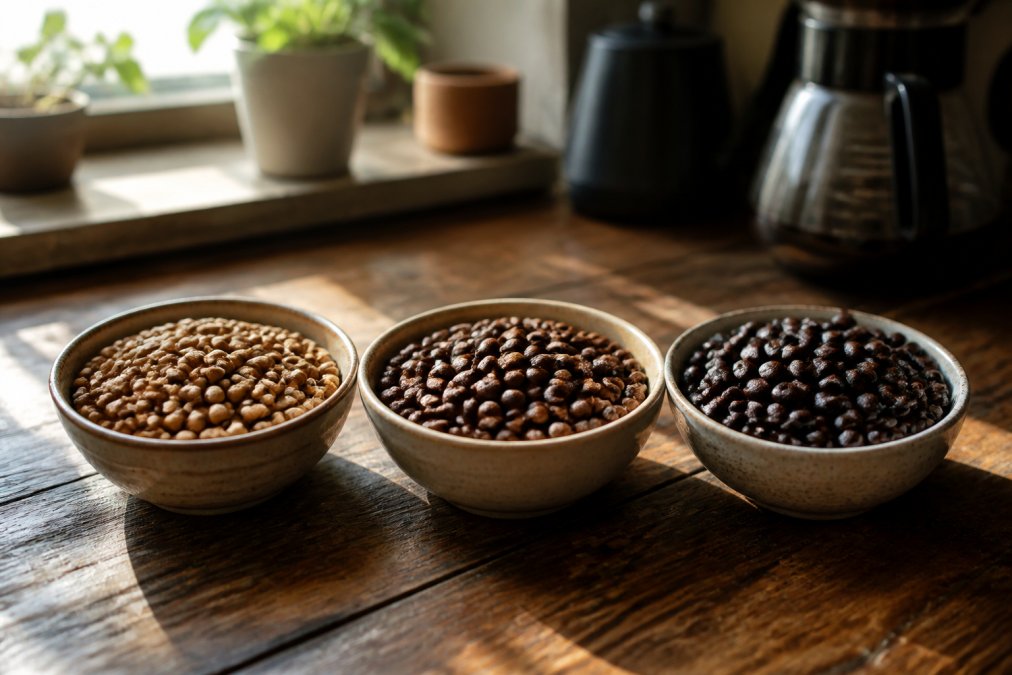
Light Roast: Best for Pour Over and Manual Brewing
Light roast beans are stopped early in the roasting process, before second crack. The result is a bean that retains more of its original origin character, high acidity, floral aromatics, and complex fruit-forward tasting notes.
These beans perform best through pour over, AeroPress, or other manual brewing methods where you control water temperature and flow rate precisely. The ideal water temperature for light roast extraction runs around 200-205°F, because the denser bean structure requires more thermal energy to extract properly.
Light roast beans are less forgiving of a coarse grind. If your extraction tastes thin and sour, grind finer before adjusting anything else.
Best origins for light roast: Ethiopia, Kenya, Rwanda, Yemen.
Medium Roast: The Everyday Crowd-Pleaser
Medium roast is the most versatile roast level for home brewing. The beans reach a balanced point where origin character and roast development both contribute to the cup. You get nutty, chocolate, and caramel notes from roasting without losing all the acidity and brightness from the origin.
Medium roast works reliably through drip coffee makers, French press, and pour over. It's the safest starting point if you're dialing in a new grinder or brewing method.
Colombian beans are the archetype here. The country's high-altitude farms and washed processing method produce a clean, balanced cup with mild acidity and consistent body. Brazilian naturals at medium roast develop a nutty, chocolatey profile with low acidity.
Dark Roast: Bold Flavor for Espresso and Cold Brew
Dark roast beans are taken past second crack, which burns off most of the origin's natural acidity and replaces it with bold, smoky, bittersweet flavors. Body is heavy, mouthfeel is thick, and crema production in espresso is typically more pronounced.
Espresso machines and cold brew immersion are where dark roast performs best. The low acidity and heavy body hold up well when diluted with milk or ice.
A common mistake: grinding dark roast beans too fine for espresso. The oils and brittle structure extract faster than lighter roasts. Start slightly coarser than you think you need and adjust from there.
Best origins for dark roast: Brazil, Sumatra, Guatemala, Honduras.
Troubleshooting Bitter or Sour Brews at Home
Bitter and sour brews have opposite causes. Getting the diagnosis right saves you from chasing the wrong fix.
Sour coffee means under-extraction. The water pulled acids and sugars from the grounds but didn't reach the heavier, sweeter compounds that balance them. Causes include: grind too coarse, water temperature too low, brew time too short, or too little coffee relative to water.
Bitter coffee means over-extraction. The water pulled everything worth tasting and kept going, pulling harsh, astringent compounds. Causes include: grind too fine, water temperature too high, brew time too long, or using dark roast beans with a method that over-extracts them.
| Problem | Taste | Most Likely Cause | Fix |
|---|---|---|---|
| Under-extraction | Sour, thin, sharp | Grind too coarse or brew too short | Grind finer, extend brew time |
| Over-extraction | Bitter, harsh, dry | Grind too fine or water too hot | Grind coarser, lower temperature |
| Flat, no flavor | Dull, papery | Stale beans or wrong brew ratio | Check roast date, adjust ratio |
The brew ratio is the fix most home brewers ignore. A standard starting point is 1:15 to 1:17 (coffee to water by weight) for most filter methods. Espresso runs much tighter, around 1:2 to 1:2.5. If your coffee tastes weak and sour, try 1:14 before touching the grind.
How to Grind Coffee Beans at Home for Any Brewer
Grind size controls extraction rate more directly than almost any other variable. The finer the grind, the more surface area exposed to water, and the faster compounds extract. Match grind size to your brewing method, or you'll fight your equipment instead of working with it.
According to the National Coffee Association's brewing guide, grind consistency is one of the most important factors in producing a balanced cup at home. A burr grinder produces a far more consistent particle size than a blade grinder, which chops beans unevenly.
Grind size reference by brewing method:
- Extra fine, Turkish coffee
- Fine, Espresso machine
- Medium-fine, AeroPress, Moka pot
- Medium, Pour over (V60, Chemex), drip coffee maker
- Medium-coarse, French press
- Coarse, Cold brew immersion
The bloom step matters for pour over and filter brewing. Pour a small amount of hot water (about twice the weight of your grounds) over the grounds and wait 30-45 seconds before continuing. This releases CO2 trapped in fresh beans, which would otherwise create uneven extraction.
How to Store Coffee Beans for Freshness Between Deliveries
Knowing how to store coffee beans for freshness is as important as choosing the right beans. Oxidation, moisture, heat, and light are the four enemies of fresh coffee.
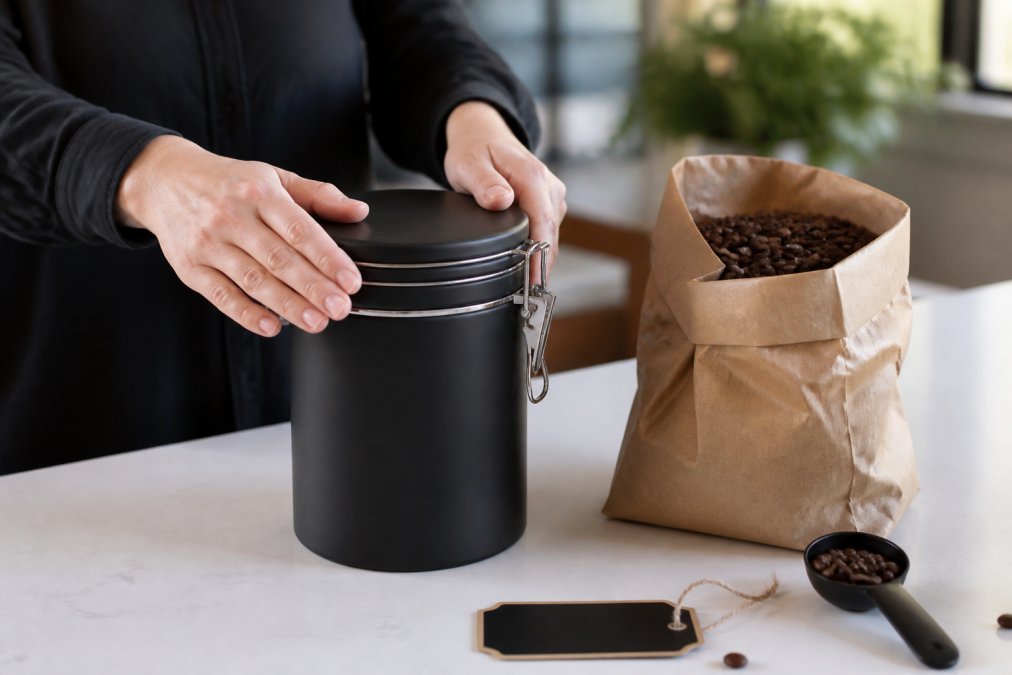
The best storage method for whole bean coffee is an airtight container kept at room temperature, away from direct sunlight and heat sources. A dedicated coffee canister with a one-way valve is ideal, it lets CO2 escape from freshly roasted beans without letting oxygen in.
The refrigerator introduces moisture and absorbs food odors, both of which degrade flavor. Freezing is a legitimate option for long-term storage of unopened bags, but only works well if you freeze in single-use portions and never refreeze.
Practical storage checklist:
- Transfer beans to an airtight container immediately after opening
- Store away from the stove, oven, or any heat source
- Keep out of direct sunlight, a cabinet or pantry works well
- Buy in quantities you'll finish within two to three weeks of the roast date
- Check the roast date, not the "best by" date, when buying
Whole bean coffee stored properly retains good flavor for three to four weeks after roasting. Pre-ground coffee stales much faster, often within a week of opening, because grinding dramatically increases surface area exposed to oxygen.
Subscription, Grocery Store, or Local Roaster: What Makes Sense?
The sourcing question matters more than most buyers realize. Where you buy your beans determines freshness, variety, and how much control you have over what arrives at your door.
Grocery store beans are convenient and predictably available, but freshness is the real tradeoff. Most grocery store coffee was roasted weeks before it hits the shelf. For everyday brewing where freshness isn't the priority, grocery store coffee is fine. For anyone who has invested in a good grinder or brews with a pour over, the quality ceiling is noticeably lower.
Local roasters offer the best freshness and the most direct sourcing transparency. You can ask when the beans were roasted, where they came from, and how they were processed. The tradeoff is consistency, small roasters rotate their offerings, and your favorite single-origin may be seasonal or sell out.
Subscription roasters and direct-to-door services solve the freshness problem for home brewers who don't live near a quality local roaster. Roasted-to-order services ship beans within days of roasting, which means you're getting peak-freshness coffee without the trip.
Cenia's Coffee offers roasted-to-order beans sourced from trusted farms, with a straightforward ordering process designed to get fresh coffee to your door without the complexity of managing a traditional subscription.
Bulk buying only saves money if you actually use the coffee before it goes stale. Buying what you'll use in two to three weeks, delivered fresh, is almost always the better value in practice.
Quick sourcing comparison:
| Source | Freshness | Variety | Transparency | Convenience |
|---|---|---|---|---|
| Grocery store | Low | Limited | Minimal | High |
| Local roaster | High | Seasonal | High | Moderate |
| Subscription/direct | High | Wide | Varies by roaster | High |
Most home brewers already have the equipment to make a genuinely great cup. The gap between a mediocre brew and an excellent one usually comes down to bean freshness, roast-to-method matching, and consistent grind size. Cenia's Coffee offers roasted-to-order beans sourced from trusted farms, with a straightforward ordering process designed to get fresh coffee to your door without the complexity of managing a traditional subscription. If you're ready to stop settling for stale grocery store coffee, get started with Cenia's Coffee and taste the difference that roast-date freshness actually makes.
Frequently Asked Questions
What type of coffee beans are best for making cold brew at home?
Dark roast whole beans work best for cold brew. The extended immersion process, typically 12 to 24 hours, pulls out deep chocolate and caramel flavor notes without the bitterness that hot extraction can introduce. A coarse grind size prevents over-extraction during the long steep. Single-origin beans from Brazil or Colombia, known for their nutty body and low acidity, are especially well suited. Grind just before brewing for the best flavor and aroma.
How do I choose the right roast for my brewing method?
Match roast level to how your brewer extracts flavor. Light roasts suit pour over and manual brewing, the slower, controlled extraction highlights floral and fruity flavor notes. Medium roasts perform well in drip coffee makers, balancing acidity and body. Dark roasts hold up under the pressure of an espresso machine, producing a rich crema. If you use multiple brewers, a medium roast is the most flexible starting point for home brewing.
Does the freshness of coffee beans really matter for home brewing?
Freshness has a direct impact on flavor. Roasted coffee beans begin releasing CO2 immediately after roasting, a process called off-gassing, and oxidation starts degrading flavor compounds within days of opening the bag. Beans roasted to order and used within two to four weeks of the roast date produce noticeably brighter, more complex cups. Stale beans taste flat regardless of roast quality. Buying smaller quantities more often beats buying bulk if freshness matters to you.
What are the differences between single-origin and blended coffee beans?
Single-origin beans come from one farm, region, or country, making tasting notes like altitude, processing method, and soil character easy to identify. Ethiopian single-origin coffees often show floral and fruity notes; Colombian beans tend toward balanced acidity and caramel sweetness. Blends combine beans from multiple origins to create a consistent, repeatable flavor profile across roast batches. Blends are often designed for espresso, while single-origin beans reward slower manual brewing methods like pour over.
How should I store coffee beans at home to keep them fresh?
Store whole beans in an airtight container away from light, heat, and moisture. A ceramic or opaque airtight canister kept in a pantry or cabinet, not on the counter near the stove, extends shelf life noticeably. Avoid the refrigerator: temperature swings cause condensation that accelerates oxidation. The freezer works only for sealed, unopened bags you won't touch for several weeks. Once opened, plan to use beans within two to three weeks for the best flavor.
This article was written using GrandRanker