

How to Verify Coffee Farm Transparency
Table of Contents
- Why Coffee Farm Transparency Matters
- Understanding Coffee Transparency Report Examples
- The Farm-to-Cup Supply Chain and Traceability
- Coffee Certification Standards Explained
- What Is Direct Trade Coffee and How It Differs
- Step-by-Step Verification Process for Consumers
- Red Flags in Transparency Claims
- Conclusion
Last Updated: August 26, 2026
Why Coffee Farm Transparency Matters
Most coffee drinkers never think about where their beans come from. They buy a bag, brew it, and move on. But if you're reading this, you probably care about more than just taste. You want to know whether your coffee supports farmers fairly, protects the environment, and comes from a source you can actually verify.
That's where coffee farm transparency becomes essential. It's the difference between a vague promise of "ethical sourcing" and a documented trail showing exactly which farm grew your beans, how much the farmer was paid, and what conditions they worked under. Without it, you're trusting marketing copy instead of facts.
At Cenia's Coffee, we work with carefully sourced beans from trusted farms. But we also understand that not every roaster operates the same way, and you shouldn't have to take anyone's word for it. This guide walks you through how to verify coffee farm transparency yourself, so you can make informed choices about where your coffee actually comes from.
Understanding Coffee Transparency Report Examples
A transparency report is a document that breaks down the supply chain of a coffee batch. It shows the farm, the cooperative or middleman involved, pricing at each stage, and certifications. Think of it as a paper trail for your coffee.
What does a real transparency report look like? It typically includes:
- Farm name and location (specific region, altitude, sometimes GPS coordinates)
- Farmer or cooperative contact information (sometimes anonymized for privacy)
- Green coffee price paid at origin (what the farm received per pound)
- Processing method (washed, natural, honey-processed)
- Harvest date and lot number (so you can trace a specific batch)
- Third-party certifications (Fair Trade, Rainforest Alliance, organic, etc.)
- Environmental practices (water usage, shade-grown details, chemical inputs)
The quality of these reports varies dramatically. Some roasters provide a single paragraph. Others publish a full document with photos of the farm, farmer names, and detailed pricing breakdowns. A comprehensive report should answer the question: "If I wanted to contact this farm directly, could I?"
Many roasters claim transparency but only share vague regional information. "Ethiopian coffee from the Yirgacheffe region" tells you almost nothing, that region has thousands of farms. Real transparency identifies the specific farm, cooperative, or washing station.
The Farm-to-Cup Supply Chain and Traceability
Coffee doesn't go straight from farm to your cup. It passes through multiple hands, each adding cost and complexity. Understanding this chain is how you spot where transparency breaks down.
Here's the typical journey:
Farmer → Cooperative/Middleman → Exporter → Importer → Roaster → You
Each step introduces an opportunity for information to get lost. A farmer might sell to a cooperative, which pools beans from dozens of farms. That cooperative sells to an exporter, who mixes lots from multiple coops. By the time the roaster buys green coffee, the original farm identity might be buried in paperwork or lost entirely.
Real traceability means the roaster can trace the beans backward to a specific farm, cooperative, or washing station. This is called chain of custody documentation, proof that the coffee moved from one verified party to the next. Without it, you can't verify anything.
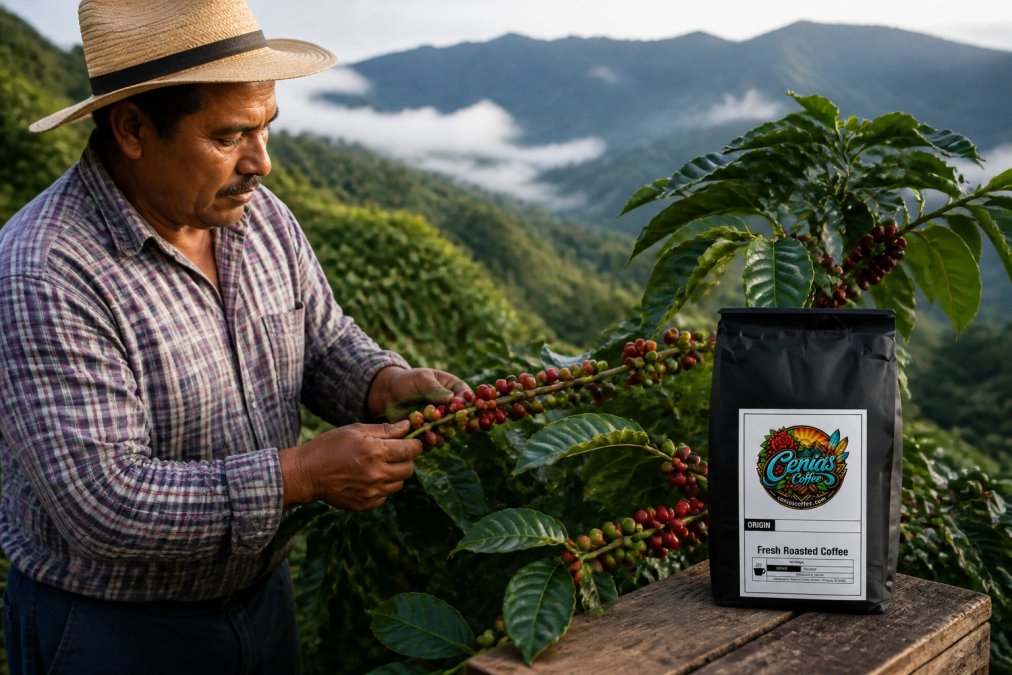
Direct trade relationships strengthen traceability because fewer intermediaries are involved. When a roaster buys directly from a farmer or cooperative, they can visit the farm, meet the people, and document the process themselves. This doesn't automatically mean the coffee is better or more ethical, but it does mean the information trail is shorter and easier to verify.
Cooperatives can also provide strong traceability if they maintain detailed records. A well-organized cooperative tracks which member farms contributed to each lot, what they were paid, and what certifications apply. Some cooperatives are transparent about this; others treat it as proprietary information.
The key question: Can the roaster tell you which farm or cooperative provided the beans? If the answer is "it's a blend from multiple farms" or "we can't disclose that," then real traceability doesn't exist.
Coffee Certification Standards Explained
Certifications are third-party verification that a farm meets certain standards. They're not perfect, but they add a layer of accountability that self-reporting doesn't provide.
The major certifications you'll encounter:
Fair Trade, Ensures farmers receive a minimum price and work in safe conditions. Fair Trade also requires democratic governance of cooperatives and reinvestment of premiums into community projects (fairtrade.net). The certification is audited annually.
Organic, Certifies that the farm doesn't use synthetic pesticides or fertilizers. Organic certification requires soil testing and documentation of inputs (usda.gov). Renewal happens annually.
Rainforest Alliance, Focuses on environmental sustainability, worker rights, and farm profitability. Covers broader criteria than Fair Trade or organic alone. Audits are conducted every three years.
Bird Friendly, The strictest environmental standard. Requires shade-grown coffee in native forest habitat with minimal chemical use. Aims to preserve migratory bird populations. Audits happen annually.
Direct Trade, Not a formal certification, but a marketing term meaning the roaster buys directly from farms or cooperatives without middlemen. Some direct trade organizations have standards and audits; others don't. Always ask what "direct trade" means to a specific roaster.
Single-Origin, Means the coffee comes from one country, region, or sometimes one farm. This isn't a guarantee of ethics or quality, just traceability. Single-origin coffee is easier to trace than blends.
Here's what matters: A certification doesn't tell you everything. Fair Trade doesn't guarantee excellent environmental practices. Organic doesn't guarantee fair wages. A farm might be certified but still have poor labor conditions in areas the audit doesn't check.
Multiple certifications are stronger than one. A farm with Fair Trade, organic, and Bird Friendly certification has passed three independent audits. That's harder to fake than a single label.
What Is Direct Trade Coffee and How It Differs
Direct trade coffee means the roaster buys directly from farmers or farmer cooperatives, cutting out export companies and import companies in between. The roaster pays the farmer directly, and the farmer receives a higher percentage of the final retail price.
How is this different from Fair Trade or other certifications?
Fair Trade sets a minimum price but allows multiple middlemen. A Fair Trade farmer might still sell through a cooperative, then an exporter, then an importer, before reaching the roaster. Each middleman takes a cut.
Direct trade eliminates those middlemen. If a roaster buys directly from a cooperative, the cooperative keeps more money and can pay farmers more. If the roaster visits the farm annually, they can see conditions firsthand and build a relationship.
The catch: Direct trade isn't formally regulated. There's no independent auditor checking whether the roaster actually paid fairly or visited the farm. A roaster can claim "direct trade" without any third-party verification.
Real direct trade relationships typically include:
- Annual or semi-annual farm visits by the roaster
- Long-term contracts (multi-year agreements so farmers can plan ahead)
- Pricing transparency (the roaster can tell you exactly what they paid per pound)
- Relationship continuity (the same person from the roaster works with the same farm over time)
Some direct trade coffees are excellent. Others are mediocre but marketed as premium because of the "direct" label. The direct trade model doesn't guarantee quality or ethics, it just means fewer middlemen and a shorter supply chain.
Cenia's Coffee sources carefully from trusted farms around the world. We can provide information about the farm and origin for our single-origin coffees. The key is being honest about our sourcing model for each coffee.

Step-by-Step Verification Process for Consumers
Here's how to actually verify coffee farm transparency yourself. This isn't complicated, but it requires asking the right questions and reading carefully.
Step 1: Request Origin Information
Contact the roaster and ask: "Where does this coffee come from?"
A good answer includes:
- Country and region (e.g., "Ethiopia, Yirgacheffe region")
- Specific farm, cooperative, or washing station name
- Altitude and processing method
- Harvest date or lot number
A weak answer sounds like: "It's from a sustainable farm in Central America" or "We source from ethical partners." That tells you nothing.
If the roaster won't give you specifics, ask why. Sometimes they'll say the farm requests anonymity for privacy or security reasons. That's valid in some regions where farmers face political risk. But most farms are fine with being named, they're proud of their work.
Step 2: Check Third-Party Certifications
Look for certification logos on the bag or website. Common ones are Fair Trade, organic, Rainforest Alliance, and Bird Friendly.
Check the certification database to verify it's legitimate. Most major certifications maintain searchable registries where you can enter the farm or company name and confirm the certification is current.
If the roaster claims a certification but you can't find it in the official database, it's probably not real.
Step 3: Review Pricing Transparency
Ask the roaster: "What did you pay for this coffee per pound, and what did the farmer receive?"
A transparent roaster will tell you. They might say: "We paid $2.80 per pound for green coffee. The farmer received $2.40 per pound after cooperative fees and export costs."
If they won't share this, it doesn't mean they're being unethical, they might consider it proprietary information. But it does mean you can't verify their claims about fair pricing.
For context: A farmer in many origins receives between $1.00 and $2.50 per pound of green coffee, depending on quality and market conditions (ico.org). Specialty coffee roasters typically pay more. If a roaster claims to pay fairly but won't disclose the price, that's worth questioning.
Step 4: Verify Chain of Custody Documentation
Ask: "Can you share the chain of custody for this lot?"
This document shows the coffee moving from farm to cooperative to exporter to importer to roaster. Each step should list the party involved, the date, the quantity, and any certifications that applied.
A complete chain of custody proves the coffee you're buying is actually the coffee from the farm the roaster told you about. Without it, you're trusting that the roaster didn't accidentally mix lots or buy from a different source.
Not all roasters maintain detailed chain of custody records. Small roasters might only have a purchase invoice from their importer. That's less strong than a full documented chain, but it's still better than nothing.
Red Flags in Transparency Claims
Some roasters use transparency language without actually providing transparency. Here's what to watch for:
Vague sourcing language, "Ethically sourced," "sustainable," "direct trade," or "farmer-friendly" without specifics. These words mean nothing without documentation.
No farm names, If the roaster won't name the farm, cooperative, or even the specific region, they're hiding something. Privacy concerns are valid in some cases, but most farms don't need anonymity.
Changing stories, If you ask the same roaster twice and get different answers about where the coffee comes from, that's a problem.
Prices that seem too cheap, If a specialty single-origin coffee costs less than $10 per pound retail, the farmer probably didn't receive a fair price. Specialty coffee with real transparency typically costs more because the supply chain is shorter and the farmer is paid more.
No certifications and no explanation, Uncertified coffee isn't automatically bad. But if a roaster claims ethical sourcing and has no certifications and no direct trade relationship, ask why. What's their verification method?
Transparency reports that are vague, A report that says "sourced from a cooperative in Guatemala" is barely better than no report. Real reports name the specific cooperative, the farmers involved, and the prices paid.
Resistance to questions, If you ask for transparency details and the roaster gets defensive or evasive, that's a red flag. Transparent roasters welcome questions because they have nothing to hide.
Conclusion
Verifying coffee farm transparency takes effort, but it's the only way to know whether your coffee actually comes from where the roaster claims. The process is straightforward: ask for specifics, check certifications, review pricing, and request documentation. If a roaster won't provide these details, move on.
Cenia's Coffee sources from farms we know and can verify. Each of our single-origin coffees comes with information about the farm and origin. Our Single Origin Favorites Sample Pack lets you try multiple origins and see how we document each one. Start with verification, and you'll taste the difference that real transparency makes.

Frequently Asked Questions
What information should be included in a coffee transparency report?
A credible transparency report should include the farm's name and location, grower names, altitude, processing method, and varietals used. It should also show pricing breakdown (farm gate price, cooperative fees, export costs), third-party verification details, and environmental or social impact metrics. The best reports include batch tracking numbers that link specific bags to specific farms, allowing you to trace your coffee from origin to roasting.
What is the difference between direct trade and fair trade coffee?
Fair trade coffee is certified by third-party organizations and guarantees minimum prices and labor standards. Direct trade coffee involves roasters buying directly from farmers, often at higher prices, with direct relationships and transparency. Direct trade typically offers more traceability and higher premiums to producers, but lacks standardized certification. Fair trade provides consistent standards across suppliers. Both prioritize ethical sourcing, but direct trade emphasizes personal roaster-producer partnerships while fair trade relies on auditing and certification differentials.
How can I verify that a coffee roaster's transparency claims are actually true?
Request documentation from the roaster directly: ask for the farm name, region, and cooperative details. Check if they hold third-party certifications like Fair Trade USA, Rainforest Alliance, or Specialty Coffee Association credentials. Verify chain of custody paperwork showing the coffee's journey from farm through export and import. Cross-reference the farm's details on certification databases. Ask the roaster about their relationship with the producer, how long they've worked together and whether they visit the farm. Red flags include vague sourcing language, no specific farm names, or inability to provide documentation.
What does farm-gate pricing mean and why does it matter for transparency?
Farm-gate price is what the farmer receives directly for their green coffee beans, the price at the farm before export costs, middlemen fees, and shipping. Transparent roasters share this number because it shows how much value actually reaches the producer. If a roaster shows the farm-gate price alongside their retail price, you can see the full markup and understand the supply chain cost structure. This transparency reveals whether producers are earning fair compensation for their work and inputs, which is central to ethical sourcing.
This article was written using GrandRanker