

Best Small Batch Coffee Roasters 2026
Table of Contents
- Quick Comparison: Top Small Batch Coffee Roasters
- How We Selected the Best Small Batch Coffee Roasters
- Best Fresh Roasted Coffee for Pour Over
- How to Identify Ethical Coffee Sourcing
- Benefits of Roasted to Order Coffee
- Single-Origin vs. Blended Roasts: What Works Best
- Understanding Coffee Subscription Models
- Conclusion: Choosing Your Small Batch Roaster
Last Updated: August 29, 2026
Quick Comparison: Top Small Batch Coffee Roasters
Fresh roasted coffee from small batch roasters delivers noticeably sharper aroma, more complex flavor, and a more intentional experience than mass-produced beans. The best small batch roasters share three traits: they obsess over bean quality from origin, roast in small batches to control variables, and ship fast enough that freshness matters.
| Roaster Focus | Starting Price | Key Strength | Best For |
|---|---|---|---|
| Cenia's Coffee | $22.99 | Roasted to order, transparent sourcing | Home brewers who prioritize freshness |
| Single-origin specialists | $20-28 | Cupping notes and processing transparency | Coffee enthusiasts exploring flavor profiles |
| Subscription-focused | $15-25/month | Variety and convenience | Regular drinkers wanting discovery |
| Ethical-first roasters | $24-32 | Fair trade and direct trade certifications | Buyers prioritizing farmer impact |
How We Selected the Best Small Batch Coffee Roasters
We evaluated roasters across four criteria: sourcing transparency, roast date accuracy, roasting profile consistency, and brewing method alignment.
Sourcing transparency ranked first. We prioritized roasters that name their farms, list altitude and processing methods, and explain how these details affect flavor. A roaster that specifies soil type and varietal demonstrates knowledge that translates to better roasting decisions.
Roast date matters critically. Coffee peaks in flavor 5-14 days after roasting (peer-reviewed research). We prioritized roasters who ship within 48 hours of roasting and clearly label roast dates on every bag. This single detail separates fresh coffee from beans sitting in warehouses for weeks.
Roasting profile consistency was our third filter. We evaluated whether roasters offer light, medium, and dark options, and whether their tasting notes aligned with actual flavor. Specific notes like "milk chocolate, fruity, caramel" tell you what to expect and whether it suits your brewing method.
Brewing method compatibility shaped our final selections. Pour-over, espresso, French press, and cold brew each demand different grind sizes and extraction characteristics. The best roasters explain which profiles work for which methods.
Best Fresh Roasted Coffee for Pour Over
Pour-over brewing rewards precision in water temperature, grind size, and brew time. The foundation is the coffee itself, you want beans with clarity, bright acidity, and defined flavor notes that shine through without over-extraction.
Cenia's Coffee excels here because our roasted-to-order approach means your beans arrive at peak freshness. For pour-over, we recommend medium roasts, which preserve complexity while avoiding the bitterness that darker roasts can develop in pour-over's longer contact time.
Our Kenya single-origin ($22.99) is built for pour-over. Bright acidity, orange, lemon, and floral notes define what pour-over does best. The fully washed and raised-bed drying process emphasizes clarity. When you pour hot water through these beans, you taste the origin.
The Ethiopia Natural ($22.99) works equally well, offering a different approach. Natural processing creates a syrupy body with milk chocolate, fruity, and caramel notes. The medium-light roast preserves fruit character without over-extraction.
If you're new to pour-over, the Single Origin Favorites Sample Pack ($24.99) includes six 2-ounce pours of our most popular origins: Brazil Santos, Colombia, Costa Rica, Ethiopia, Honduras, and Tanzania. This lets you identify which origins suit your palate before buying larger quantities.

How to Identify Ethical Coffee Sourcing
Ethical sourcing starts with transparency. If a roaster won't tell you where beans come from, how much farmers earned, or what processing method was used, that's a red flag.
Look for roasters who name their farms or cooperatives. Cenia's Coffee sources from specific locations, listing region, altitude, soil type, and farmer details for every origin. Specificity like "Smallholder farmers from Sidama Zone, Ethiopia" or "Koperasi Baitul Qiradh Baburrayyan (KBQB) in Sumatra" signals real relationships, not generic sourcing.
Processing method transparency matters because it affects both flavor and farmer economics. Washed coffees require more infrastructure. Natural-processed coffees are labor-intensive but often pay better. Wet-hulled coffees use specific Indonesian techniques that create distinctive flavor while supporting regional farming practices. When a roaster explains these choices, they demonstrate supply chain knowledge.
Certifications provide a baseline but aren't the full story. Fair trade ensures minimum prices and labor standards. Direct trade typically means roasters work directly with farms, eliminating middlemen. Organic certification verifies farming practices. The best roasters combine certification with direct relationships and can explain why they chose specific certifications and how it affects sourcing decisions.
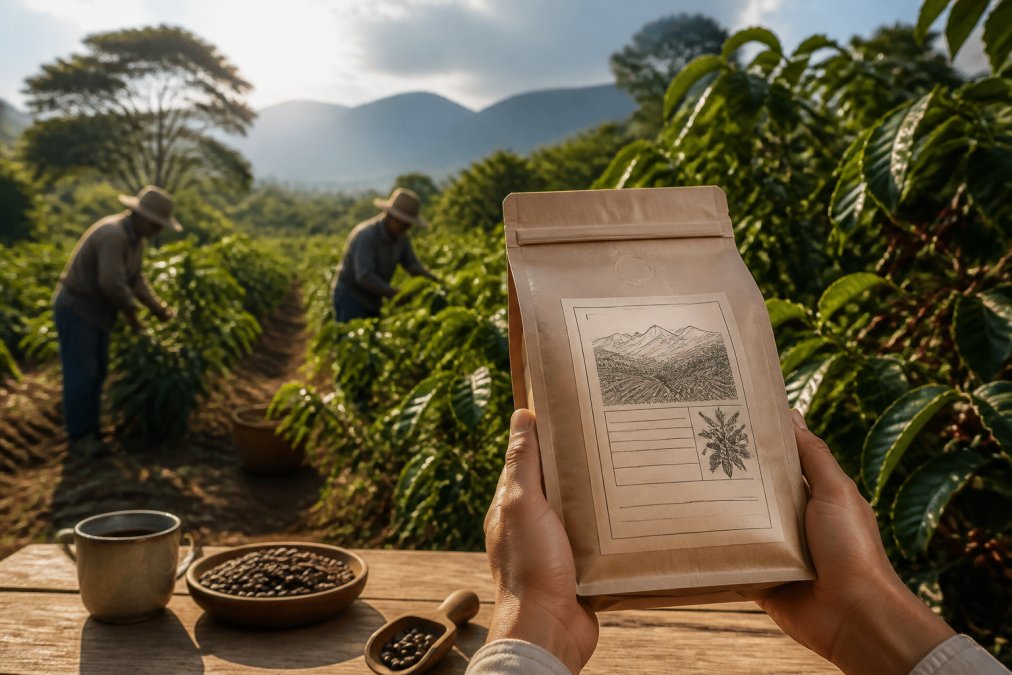
Ask roasters about farmer relationships. How long have they worked with specific farms? Do they visit? What prices do they pay? Roasters who answer with specifics practice ethical sourcing. Those who deflect probably aren't prioritizing farmer welfare.
Benefits of Roasted to Order Coffee
Roasted to order guarantees freshness. When your coffee is roasted after you order it, there's no warehouse sitting or guessing about roast date.
The flavor difference is dramatic. Coffee begins oxidizing immediately after roasting. Within 2-3 weeks, bright notes fade (peer-reviewed research). By week 4, most complexity is gone (peer-reviewed research). Roasted to order coffee arrives at its peak, typically 5-10 days post-roast, the sweet spot for most brewing methods.
Cenia's Coffee roasts to order because we believe maximum flavor and freshness define the experience. When you order, we roast your beans and ship within 48 hours, ensuring your coffee arrives fresher than anything on grocery shelves or from most mail-order services.
Roasted to order also enables customization. Want a lighter roast to highlight origin characteristics? You can get it. Need a darker roast for espresso? We roast accordingly. Bulk roasters can't offer this flexibility because they're locked into production schedules.
There's also a practical advantage for home storage. Roasted to order means you receive smaller quantities more frequently, which suits home brewers better than buying in bulk. A half-pound of fresh coffee lasts longer in your cabinet than a five-pound bag that goes stale before you finish it.
Single-Origin vs. Blended Roasts: What Works Best
Single-origin coffee comes from one farm, region, or country and showcases unique characteristics shaped by soil, altitude, processing method, and varietal. Cenia's Coffee offers single-origins like Kenya (bright acidity, orange, lemon, floral) and Guatemala (dark chocolate, bright fruit, butterscotch). When you brew single-origin, you taste the terroir.
Blended coffees combine beans from multiple origins to create a specific flavor target. Our 6Bean Blend, for example, is a dark roast house blend designed for consistency and balance rather than showcasing a single origin's unique character.
For pour-over and filter methods, single-origins typically shine because the brewing method emphasizes clarity and complexity. For espresso, blends often work better because espresso's high pressure and quick extraction can amplify certain characteristics. A well-designed blend balances acidity and body to produce a smooth, complex shot.
For cold brew and French press, both work well. Cold brew's long steeping time extracts smoothly from either profile. French press's immersion method handles both without favoring one.
Single-origins let you explore and discover your preferences. Blends offer consistency and approachability. Many enthusiasts start with blends, then move into single-origins as their palate develops.
Understanding Coffee Subscription Models
Coffee subscriptions come in three main structures.
Recurring delivery subscriptions ship a set quantity on a schedule you choose, typically every two weeks or monthly. You specify your roast preference and the roaster sends the same profile each time. The advantage is convenience and cost savings, many roasters offer 10-15% discounts. The disadvantage is lock-in if the coffee doesn't suit you or your preferences change.
Discovery subscriptions send rotating origins or roast profiles each month. You get variety without choosing. The trade-off is unpredictability.
Flexible subscriptions let you pause, skip, or modify your order before each shipment. They offer the best of both worlds, discount and convenience with flexibility to adjust.
When evaluating subscriptions, check pause and cancellation policies, pricing per unit compared to one-time purchases, and whether you can customize roast profiles or origins. Some roasters make pausing difficult or charge cancellation fees. Others allow easy adjustments.
Cenia's Coffee structures around flexibility because we understand that consumption and preferences vary. A subscription should adapt to your life, not lock you into a fixed commitment.
Conclusion: Choosing Your Small Batch Roaster
The best small batch coffee roasters share a commitment to freshness, transparency, and quality that mass producers can't match. When you choose a roaster, you're choosing a sourcing philosophy and roasting approach.
Cenia's Coffee delivers on all fronts. Our beans are roasted to order for maximum flavor and aroma, sourced from trusted farms where we name the growers and explain processing methods, and shipped fast enough that freshness is guaranteed. Whether you're exploring single-origins through our Single Origin Favorites Sample Pack or committing to regular delivery of your favorite profile, you're getting coffee that tastes like the care we put into sourcing and roasting it.
Start with a sample pack if you're new to specialty coffee. Explore different origins and roast profiles. Identify what your palate actually prefers. Then commit to a roaster whose values align with yours. The difference between good coffee and exceptional coffee lives in those details: roast date, sourcing transparency, and the roaster's willingness to prioritize your experience over production efficiency.
Frequently Asked Questions
What defines a small batch coffee roaster?
A small batch coffee roaster focuses on roasting coffee in smaller quantities, typically 5-50 pounds per batch, rather than massive industrial volumes. This approach allows roasters to control variables like temperature, airflow, and roasting time more precisely. Small batch roasting emphasizes quality over quantity, enabling roasters to highlight the unique characteristics of each bean's origin, processing method, and roast profile. The result is greater flavor complexity and consistency compared to mass-produced coffee.
Why is small batch coffee considered higher quality?
Small batch roasters can monitor each roast individually, adjusting for variables that affect flavor development. They typically source specialty-grade beans from direct trade or fair trade relationships with specific farms, ensuring traceability and quality control. The smaller volume also means faster turnover, so beans reach you fresher. Roasting to order, a common practice among small batch roasters, preserves the peak flavor window. These practices result in more complex tasting notes, better acidity balance, and more pronounced origin characteristics than commodity coffee.
How long does small batch roasted coffee stay fresh?
Peak freshness for small batch roasted coffee typically lasts 2-4 weeks from the roast date, depending on storage conditions and roast profile. Light roasts often maintain optimal flavor for 2-3 weeks, while dark roasts can stay fresh slightly longer due to their lower acidity. After 4 weeks, the beans begin losing aromatic compounds and flavor complexity. Proper storage in an airtight container away from heat and light extends freshness. Many small batch roasters print the roast date on the bag so you can track freshness and order accordingly.
Are small batch coffee subscriptions worth the cost?
Small batch subscriptions cost more per pound than bulk commodity coffee, but the value depends on your priorities. If you work from home and value fresh, flavorful coffee with transparent sourcing, the premium is justified. You avoid waste by receiving smaller quantities before beans lose peak flavor, and you discover new roast profiles and origins regularly. Many roasters offer flexible subscriptions you can pause or cancel anytime, addressing concerns about unwanted charges. For quality-focused coffee drinkers, the cost reflects superior bean quality, artisan roasting, and direct trade relationships that support farmers.
How can you tell if coffee was roasted in small batches?
Look for these indicators: a roast date clearly printed on the bag (small batch roasters prioritize freshness), detailed sourcing information including farm name and region, specific tasting notes and processing method listed, and batch size or lot number information. Small batch roasters typically describe their roasting technique and bean variety. Check their website for transparency about their roasting process and sourcing practices. Companies offering sample packs or subscription flexibility often indicate small batch operations, as mass producers typically sell in larger quantities only.
This article was written using GrandRanker