

Why Store-Bought Coffee Tastes Bitter: A Brewing Guide
Table of Contents
- Why Store-Bought Coffee Tastes Bitter
- Over-Extraction: The Primary Culprit
- Coffee Grind Size and Extraction Explained
- Water Temperature and Contact Time
- Bean Freshness and Oxidation
- How to Store Coffee Beans for Freshness
- How to Brew Pour Over Coffee Correctly
- Sour vs. Bitter: Understanding the Difference
Last Updated: August 21, 2026
Why Store-Bought Coffee Tastes Bitter
Your store-bought coffee tastes bitter, and you're not alone. The culprit rarely comes down to the beans themselves. Instead, bitterness stems from how coffee is brewed, stored, and handled after purchase.
Bitterness in coffee isn't always a flaw, some bold roasts are intentionally bitter. But when you're tasting an unpleasant, astringent harshness that masks the actual flavor of the beans, something in your brewing process has gone wrong. The good news: fixing it requires understanding just a few key variables.
This guide walks you through the science behind bitter coffee and gives you practical fixes you can implement today. By the end, you'll know exactly why your store-bought coffee tastes the way it does and how to brew something genuinely delicious instead.
Over-Extraction: The Primary Culprit
Over-extraction is the single biggest reason store-bought coffee tastes bitter. When water stays in contact with coffee grounds too long, it pulls out compounds that create harsh, astringent flavors. The ideal extraction window is narrow: roughly 25-30 seconds for espresso, 4-6 minutes for French press, and 2-4 minutes for pour-over, depending on your grind size (peer-reviewed research).
When you brew store-bought coffee, several factors can push you past this window. Automatic drip machines often keep water in contact with grounds far longer than necessary. Pre-ground coffee from a bag brews faster than whole beans because the increased surface area accelerates extraction. If you're not paying attention to brewing time, over-extraction happens almost automatically.
The compounds that create bitter flavors, particularly chlorogenic acid lactones, intensify with prolonged water contact. Lighter roasts contain more chlorogenic acid, making them more prone to harsh bitterness if over-extracted. Darker roasts like French Roast have already broken down some of these compounds during roasting, which is why they often taste smoother even when slightly over-extracted.

How Grind Size and Extraction Work Together
Grind size controls how fast water moves through coffee grounds. A finer grind creates more surface area and speeds up extraction. A coarser grind slows extraction by forcing water to take longer paths through the bed of grounds.
Pre-ground coffee from a bag tastes bitter more often than freshly ground whole beans because commercial grinding creates a mix of particle sizes optimized for average conditions, not your specific setup. When you grind beans fresh, you control the consistency, ensuring all particles extract at roughly the same rate and produce a balanced cup. If your store-bought coffee tastes bitter, grinding coarser is often the first adjustment to try.
Coffee Grind Size and Extraction Explained
Coffee grind size determines how quickly water extracts flavor compounds from the grounds. Finer grounds extract faster, coarser grounds extract slower. Extraction happens in stages: initially, water dissolves sugars, acids, and aromatic oils that create pleasant flavors. As contact time increases, water begins dissolving less desirable compounds like tannins and over-oxidized chlorogenic acids, which create harsh bitterness.
The ideal extraction targets roughly 18-22 percent of the bean's soluble solids (peer-reviewed research). Below that range, the coffee tastes sour and thin. Above that range, it tastes bitter and harsh. Your grind size is the primary lever for hitting this target.
For automatic drip machines, use a medium grind. For French press, use a coarse grind because immersion brewing requires longer contact time. For pour-over, use a medium-fine grind. If you're buying pre-ground coffee, you're stuck with the manufacturer's choice. Switching to whole beans and grinding fresh gives you control.
Water Temperature and Contact Time
Water temperature affects extraction speed dramatically. Hotter water extracts faster than cooler water. Most automatic drip machines brew at around 200°F, which is ideal. But many home brewers use water that's either too hot or too cool.
The optimal brewing temperature for most methods is 195-205°F (peer-reviewed research). If you're using a kettle, let boiling water cool for about 30 seconds before pouring. This small adjustment prevents the harshness that comes from water that's slightly too hot.
Contact time must match your grind size and brewing method. A finer grind requires less contact time. A coarser grind requires more. If you're using pre-ground coffee, contact time becomes your primary control lever. Shorten contact time if your coffee tastes bitter.
Bean Freshness and Oxidation
Store-bought coffee beans begin deteriorating the moment they're roasted. Oxidation slowly degrades the aromatic compounds that make coffee taste good. Beans roasted more than two weeks ago taste noticeably different from beans roasted within the past week. The difference becomes dramatic after four weeks.
Pre-ground coffee oxidizes much faster than whole beans because grinding increases surface area. A bag of pre-ground coffee begins going stale within days of opening. Whole beans stay fresh for 2-3 weeks after roasting if stored properly.
Buying fresh-roasted whole beans from a specialty roaster like Cenia's Coffee makes a dramatic difference. Beans roasted to order arrive at your door at peak freshness. You grind them just before brewing, capturing all the aromatic compounds before oxidation can degrade them.
How to Store Coffee Beans for Freshness
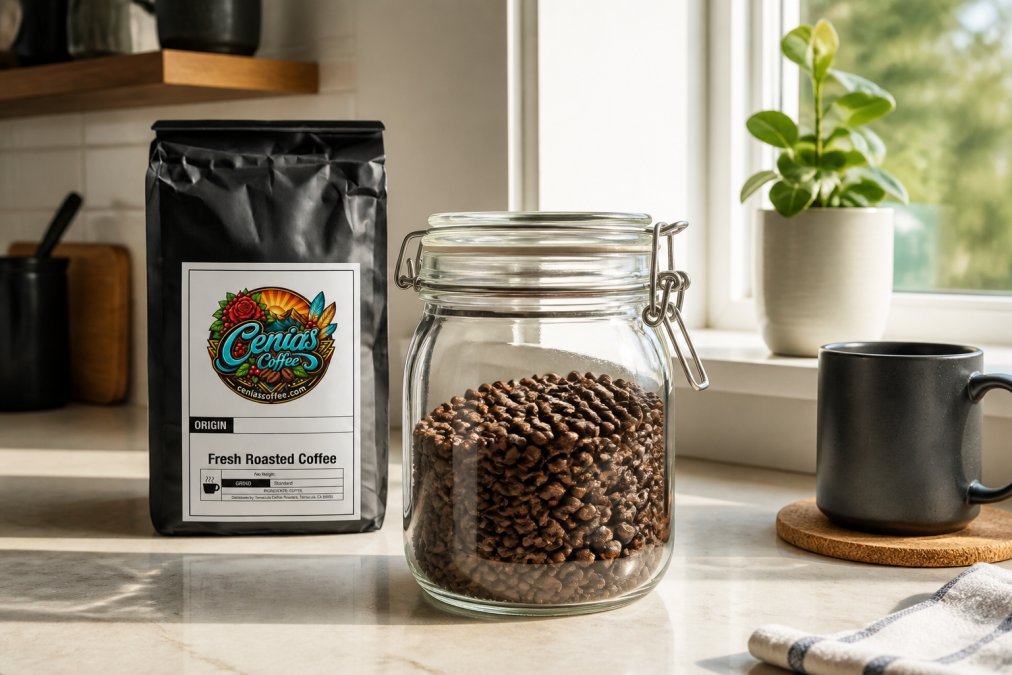
Proper storage slows oxidation and keeps your beans tasting good for weeks. Store beans in an airtight container in a cool, dark place, ideally your pantry or a kitchen cabinet away from direct sunlight. Never store coffee in the refrigerator or freezer, as temperature fluctuations cause condensation that degrades the beans.
Buy whole beans and grind fresh each morning. This single change eliminates most of the staleness problem. If you buy pre-ground coffee, use it within a week of opening. Within 15 minutes of grinding, you've already lost significant flavor complexity.
For remote professionals who work from home, buying smaller quantities more frequently makes sense. Cenia's Coffee offers convenient delivery every two weeks or monthly, so you always have fresh-roasted beans without needing to buy in bulk.
How to Brew Pour Over Coffee Correctly
Pour-over brewing gives you complete control over extraction. You control water temperature, contact time, and how water moves through the grounds. This control makes pour-over ideal for dialing in the exact flavor you want.
The basic setup requires a pour-over cone or dripper, paper or metal filters, and a gooseneck kettle for precise water control. The technique matters more than the equipment.
Step-by-Step Pour Over Brewing
Step 1: Prepare your setup. Place a filter in your dripper and rinse it with hot water. This removes paper dust and preheats the equipment. Grind your beans to a medium-fine consistency, slightly finer than sand. Use about 1 gram of coffee per 16-18 milliliters of water.
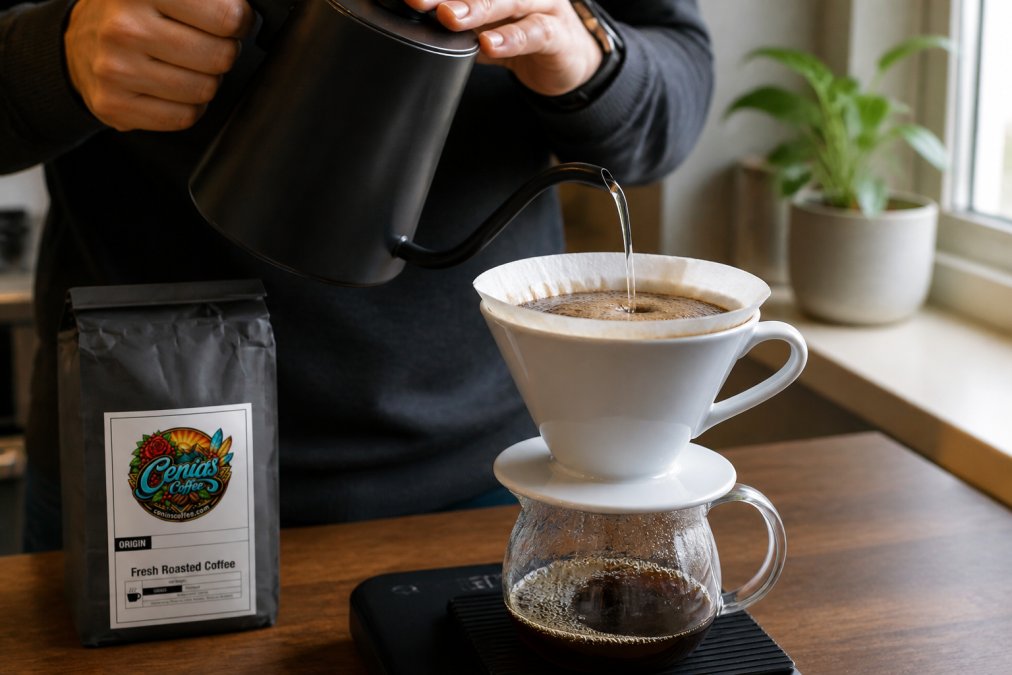
Step 2: Bloom the grounds. Pour just enough hot water to saturate the grounds, roughly twice the weight of the coffee. Let this sit for 30-45 seconds. This releases gases trapped in the beans and ensures even extraction.
Step 3: Pour slowly and steadily. Pour water in a circular motion, keeping the water level consistent. Pour slowly enough that the entire brew takes 3-4 minutes. Fast pouring creates uneven extraction.
Step 4: Stop when the water drains. Your total brew time from the start of the bloom should be 3:30-4:00 minutes. If it's faster, your grind is too coarse. If it's slower, your grind is too fine.
Common Mistakes That Cause Bitterness
The most common pour-over mistake is pouring too quickly. Rushing the water through the grounds creates channeling, where water finds the path of least resistance and flows through certain areas while bypassing others. The areas water passes through over-extract, creating harsh bitterness.
Another mistake is using water that's too hot. Water above 210°F accelerates extraction too much, even with correct timing. Using pre-ground coffee is a third major mistake, as it's typically ground for average conditions, not your specific setup. Finally, many people skip the bloom step, which means gases remain trapped in the beans, creating uneven extraction.
Sour vs. Bitter: Understanding the Difference
Coffee drinkers often confuse sour coffee with bitter coffee, but they're caused by opposite problems. Sour coffee tastes acidic and sharp, like underripe fruit. It's caused by under-extraction, when water didn't stay in contact with the grounds long enough. Sour coffee indicates your grind is too coarse, your water is too cool, or your contact time is too short.
Bitter coffee tastes harsh and astringent, like burnt toast or strong tea left steeping too long. It's caused by over-extraction, when water stayed in contact too long and pulled out harsh compounds. Bitter coffee indicates your grind is too fine, your water is too hot, or your contact time is too long.
The fix for sour coffee is the opposite of the fix for bitter coffee. If your coffee tastes sour, grind finer, use hotter water, or brew longer. If it tastes bitter, grind coarser, use slightly cooler water, or brew shorter.
The reason your store-bought coffee tastes bitter usually has nothing to do with the beans themselves. It comes down to extraction, how long water stays in contact with the grounds and how that interacts with your grind size, water temperature, and brewing equipment. Fresh-roasted whole beans from Cenia's Coffee, ground fresh each morning and brewed with attention to contact time, eliminate most bitterness problems immediately. Start with a medium grind, brew for 3-4 minutes with water around 200°F, and taste the difference that proper technique makes.
Frequently Asked Questions
Q: How can I fix coffee that tastes bitter?
A: Bitter taste usually comes from over-extraction. Try using a coarser grind size, lowering your water temperature to 195-205°F, or reducing brew time. If your beans are stale, they'll taste bitter no matter what, switch to freshly roasted coffee. Check that your equipment is clean; residue buildup adds harsh flavors. Fresh, quality beans roasted to order (like those from Cenia's Coffee) make a noticeable difference.
Q: Does roast level affect how bitter coffee tastes?
A: Yes, significantly. Darker roasts like French Roast and Italian Roast naturally have more bitter compounds because the roasting process breaks down chlorogenic acid into bitter lactones. However, a well-brewed light roast can taste bitter if over-extracted, while a dark roast brewed correctly tastes bold but balanced. The roast profile matters, but your brewing technique matters more.
Q: Why does store-bought coffee taste more bitter than coffee from a café?
A: Store-bought beans lose freshness over time through oxidation, which increases harsh, bitter flavors. Cafés often use beans roasted within days or weeks. Additionally, many store-bought beans sit in bags for months before reaching your home. Switching to freshly roasted beans delivered to your door eliminates this problem. Cenia's Coffee roasts to order, ensuring maximum freshness and flavor.
Q: How does water quality impact bitterness in coffee?
A: Water with high mineral content (total dissolved solids) extracts more compounds from grounds, increasing bitterness. Soft water can under-extract, causing sourness instead. Filtered water or water with moderate mineral content (150-200 ppm) brews the most balanced cup. If your tap water is very hard or very soft, consider using filtered water to improve flavor consistency.
This article was written using GrandRanker