

Is a French Press Worth It for Daily Use?
Table of Contents
- The Case for a French Press: Why Daily Users Love It
- The Real Downsides of Daily French Press Use
- French Press vs Drip Coffee Taste: Which Wins?
- Best Grind Size for French Press (and Why It Matters)
- How to Clean a French Press Quickly (Daily Routine)
- Time, Cost, and Longevity: The Daily Reality
- Verdict: Is a French Press Worth It for Your Daily Routine?
- Frequently Asked Questions
Last Updated: September 14, 2026
The Case for a French Press: Why Daily Users Love It
A French press is an immersion brewing device that steeps coarse ground coffee in hot water before a metal plunger separates the grounds from the liquid. For daily users, that simple mechanism delivers a fuller body and richer mouthfeel than most automatic drip machines, because the oils and micro-fines stay in the cup instead of getting trapped by a paper filter. This guide from Cenia's Coffee breaks down the real trade-offs so you can decide whether the ritual fits your morning.
The short answer on whether a french press is worth it for daily use: yes, for most people who value flavor control and don't mind a four-minute steep and a two-minute rinse. The catch is maintenance and grind discipline, which we'll cover honestly below.
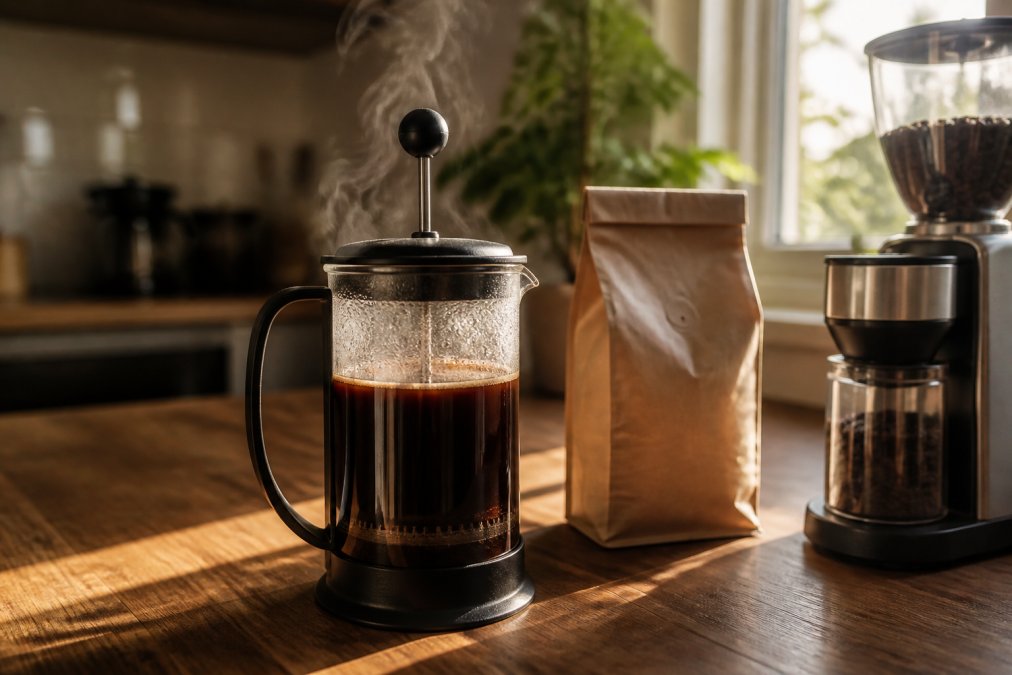
What most guides miss is that the French press rewards consistency more than any other manual brew method. Change your grind by a few clicks and the cup changes noticeably. That sensitivity is a feature, not a bug, once you learn to control it.
The Real Downsides of Daily French Press Use
The biggest complaint among daily French press users is sediment. Metal mesh filters let micro-fines through, so the last sip often carries a bit of sludge. A common mistake is grinding too fine to chase a stronger cup, which clogs the mesh and makes the sediment worse.
Cleanup is the second friction point. You cannot leave wet grounds sitting in the carafe all day without risking a stale smell and staining, especially on stainless models. Many people find the rinse-and-dump routine adds a couple of minutes to their morning compared to tossing a paper filter.
There's also the cholesterol question. Coffee contains diterpenes, natural oils that some research links to raised LDL cholesterol when consumed unfiltered (Coffee • The Nutrition Source). Paper filters catch most of these compounds; metal mesh does not. If you drink several cups daily and monitor your cholesterol, this is worth discussing with your doctor. The Harvard T.H. Chan School of Public Health guidance on coffee and health covers the diterpene research in plain terms.
French Press vs Drip Coffee Taste: Which Wins?
French press coffee tastes heavier and more textured than drip, while drip tastes cleaner and brighter. The difference comes down to filtration: paper traps oils and micro-fines, metal mesh lets them through.
If you love rich flavor, chocolate and cocoa notes, and a syrupy body, the French press wins outright. A medium roast like Brazil Santos at $22.99, with its elegant cocoa profile, shows exactly why. If you prefer flavor clarity and lighter acidity, drip usually reads better because the paper filter strips the muddiness.

| Factor | French Press | Drip Machine |
|---|---|---|
| Body | Full-bodied, oily | Lighter, cleaner |
| Flavor clarity | Lower | Higher |
| Sediment | Some | None |
| Hands-on time | 4-5 minutes | Under 1 minute |
| Cleanup | Rinse carafe, dump grounds | Toss filter, wipe basket |
Neither is objectively better. The question is whether you want texture or clarity in your daily cup.
Best Grind Size for French Press (and Why It Matters)
The best grind size for French press is coarse, roughly the texture of sea salt or coarse cornmeal. Coarse particles let the mesh filter catch them while still extracting evenly during the four-minute steep.
Too fine and you get sludge plus a bitter, over-extracted cup. Too coarse and the water passes through without pulling enough flavor, leaving a weak, sour result. A burr grinder gives you the consistency a blade grinder cannot, and consistency is what separates a good daily cup from a frustrating one.
Use a coffee-to-water ratio of about 1:15 by weight (Influence of Various Factors on Caffeine Content in Coffee Brews). For a standard 34-ounce press, that's roughly 60 grams of coffee to 900 grams of water. Add a 30-second bloom, then steep four minutes before plunging slowly.
How to Clean a French Press Quickly (Daily Routine)
Cleaning a French press quickly takes about 90 seconds if you do it immediately after brewing. The routine below keeps the carafe, mesh, and plunger free of oil buildup that turns rancid over time.
- Dump grounds into the trash or compost, not the sink, to avoid clogs
- Rinse the carafe with hot water and a drop of mild dish soap
- Disassemble the plunger and rinse each mesh layer separately
- Wipe the mesh with a soft brush to clear trapped micro-fines
- Air-dry all parts upside down so water doesn't sit in the seal
Most guides stop there. But the real question for daily use isn't whether you can clean a French press once, it's whether the routine holds up over months of back-to-back brews. That's where the maintenance details matter.
The mesh filter is the wear part. A standard plunger stacks several stainless steel mesh screens between a top plate and a bottom plate. Every plunge flexes those layers slightly, and daily brewing slowly compresses them. The practical symptom is gradual: sediment in the cup creeps up, and the plunge feels looser. Most daily brewers replace the mesh assembly every 12 to 24 months, or sooner if the layers visibly bow. Replacement screens and full plunger assemblies are widely available and inexpensive, so this is a wear item, not a reason to replace the whole press.
The rubber seal is the second wear part. The gasket that presses against the carafe wall hardens with heat cycling and picks up coffee oils. A stiff seal lets grounds slip past the edge and makes the plunge jerky. Rinse it, don't scrub it with abrasives, and replace it when it stops sealing snugly, typically around the same interval as the mesh.
Descaling matters if your water is hard. Mineral scale builds on the carafe glass and inside the mesh layers, and it holds onto stale coffee oils. A monthly soak in a 1:1 white vinegar and water solution, followed by a thorough hot-water rinse, lifts scale without scratching glass or stainless. If your tap water leaves spots on a drinking glass, assume your press needs this monthly rather than quarterly.
Stain prevention is a habit, not a product. Coffee oils bond to glass and to brushed stainless if they sit. The single most effective rule is to rinse within an hour of brewing, before the oils polymerize. For stainless models, avoid abrasive pads, which dull the finish and create micro-grooves that trap residue.
Weekly deep clean. Once a week, run a deeper clean with hot water and baking soda to lift coffee oils from the mesh and the carafe walls. Skip this and you'll notice a stale, papery taste creeping into your morning cup. For a stronger reset, a dedicated coffee-equipment cleaner (the same powdered type used for drip machines and espresso gear) dissolves oils the baking soda leaves behind.
Odor is a diagnostic, not a nuisance. If the carafe smells sour even after washing, oils have soaked into the seal and mesh layers. Disassemble fully, soak the metal parts in hot water with a cleaner, and replace the seal if the smell persists. A press that smells clean before you brew will taste clean after.
Time, Cost, and Longevity: The Daily Reality
A French press costs less than most drip machines and lasts for years if you handle the glass or stainless carafe carefully. The real daily cost is your coffee, not the equipment. But 'worth it for daily use' hinges on three numbers most guides never break down: how much of your morning it actually eats, what it costs per cup, and how long the hardware survives daily brewing.
Time-to-cup, split into active and passive. The five-minute figure is real, but it's mostly waiting, not working. A realistic breakdown for a 34-ounce press:
| Stage | Active time | Passive time |
|---|---|---|
| Boil water (electric kettle) | ~30 sec to fill and switch on | 3-4 min |
| Weigh and grind beans | 30-45 sec | , |
| Add water, bloom | 20 sec | 30 sec |
| Steep | , | 4 min |
| Plunge and pour | 30-45 sec | , |
| Rinse and dump | 60-90 sec | , |
Total hands-on time lands around 3 to 4 minutes; total elapsed time is closer to 8 to 10 minutes if you're starting from cold water. The key insight for busy mornings: the 4-minute steep is dead time you can spend getting dressed or packing a bag. A drip machine you set the night before wins on zero-effort mornings, but a French press wins on mornings when you're already moving around the kitchen, you're not standing over it.
Cost per cup. The equipment is a one-time cost. The recurring cost is beans and, for drip, filters. Running the math on a 34-ounce press at a 1:15 ratio: roughly 60 grams of coffee per brew, or about 2.1 ounces. At a typical specialty whole-bean price of $16 to $22 per 12-ounce bag, that's roughly $2.80 to $3.85 per 34-ounce brew, or about $0.70 to $0.95 per 12-ounce mug. A drip machine using the same beans costs the same per cup plus paper filters, which commonly run a few cents each. So the French press saves you the filter cost and the machine cost, but not the coffee cost. If you're comparing against pods, the gap is far larger in the French press's favor.
Equipment longevity: glass vs. stainless. This is the durability question daily users actually face.
- Glass carafes are the classic choice. They're cheap to replace, don't retain flavors, and let you watch the brew. The failure mode is thermal shock and impact, pouring near-boiling water into a cold carafe, or knocking it against the sink. With careful handling, a glass carafe can last years; with careless handling, it can crack in weeks. Replacement carafes are inexpensive, so the risk is manageable.
- Stainless steel carafes survive drops and thermal swings that would shatter glass, and they hold heat longer, which matters if you sip over 20 minutes. The trade-offs: you can't see the brew, they're heavier, and brushed interiors can hold onto oils if you skip the daily rinse. Double-wall stainless models stay hot longest but are the heaviest to handle and pour.
For a household that brews daily and wants the lowest chance of a broken carafe, stainless is the safer bet. For someone who wants the classic ritual and doesn't mind replacing a carafe occasionally, glass is fine.
Waste management. There's no paper filter to buy or throw away, and spent grounds go straight into compost or the trash. For anyone tracking kitchen waste, that's a small but real win, and it's a recurring one, since you're avoiding a filter every single day rather than once.
The honest longevity rule. Two habits determine whether a French press survives daily use: never plunge with force, and never let grounds dry inside the mesh. Do both, and the carafe and frame last for years while the mesh and seal become the only parts you replace.
Verdict: Is a French Press Worth It for Your Daily Routine?
Is a french press worth it for daily use? For most coffee drinkers who want full-bodied flavor and don't mind a five-minute brew and a 90-second clean, yes. It's the cheapest path to oil-rich, café-style coffee at home, and it rewards a little practice with a noticeably better cup.
Skip it if you want zero cleanup, prefer clean and bright flavor clarity, or drink coffee in a rush every single morning. A drip machine handles those needs better.
For the beans that make a French press shine, Cenia's Coffee roasts to order and ships fresh. The French Roast at $22.99 delivers the bold, bittersweet depth that immersion brewing handles best, while the Colombia brings dried orange and berry notes for a brighter daily cup. Both arrive roasted to order, so the flavor and aroma peak when they reach your door.


Frequently Asked Questions
What are the downsides of using a French press daily?
Daily French press use means more cleanup than a drip machine, and the metal mesh filter leaves sediment in your cup. You also need a coarse grind and consistent steeping time to avoid bitterness. Because there is no paper filter, oils and diterpenes remain in the coffee, which can raise LDL cholesterol for some people. It takes about 4-5 minutes of hands-on time per brew, so it is not as hands-off as an automatic brewer.
Which is healthier, French press or drip coffee?
Drip coffee with a paper filter traps most diterpenes, compounds linked to higher LDL cholesterol. French press coffee retains those oils, so if you drink 3-4 cups daily and have high cholesterol, drip may be the better choice. However, French press preserves more of the coffee's natural oils and antioxidants. If you love the French press flavor, using it once a day is a reasonable balance for most healthy adults.
Does a French press require a specific grind size?
Yes. The best grind size for French press is coarse, similar to sea salt. A coarse grind prevents micro-fines from clogging the metal mesh and keeps sediment out of your cup. If you grind too fine, you will get a muddy texture and over-extracted, bitter coffee. If you grind too coarse, the result is weak and sour. A burr grinder gives you the most consistent coarse grind for daily brewing.
How much time does a French press take compared to an automatic brewer?
From start to finish, a French press takes about 6-8 minutes: 30 seconds to grind and add coffee, 4 minutes to steep, 30 seconds to plunge, and 1-2 minutes to clean. An automatic drip brewer takes 8-12 minutes but requires almost no attention. If you value hands-on control over convenience, the French press time investment is minimal. If you need to multitask while brewing, drip wins.
Is the cleanup process for a French press difficult for daily use?
Cleanup is the most common daily friction point. To clean a French press quickly, plunge the grounds, dump them into the trash (not the sink, to avoid clogs), rinse the carafe and plunger with hot water, and air dry. This takes about 60-90 seconds. A deeper clean with disassembly and soap is needed weekly to prevent oil buildup. It is more work than tossing a paper filter, but manageable once it becomes a routine.
Deciding whether a french press fits your daily routine comes down to how much you value flavor control versus convenience. If you want a richer, oil-forward cup without spending on equipment, Cenia's Coffee makes the beans worth brewing, with carefully sourced single-origin and blend options roasted to order and delivered fresh. Browse the full lineup and get started with Cenia's Coffee for a smoother, richer daily cup.