

Best Coffee for Automatic Drip Makers: 2026 Guide
Table of Contents
- What Makes Coffee Work in an Automatic Drip Maker
- The Ideal Grind Size for Drip Coffee Makers
- Roast Level and Extraction in a Drip Basket
- Why Freshness Beats Origin for Drip Brewing
- Fresh Roasted Coffee Benefits for Drip Brewing
- How to Store Coffee Beans for Maximum Freshness
- Roast Profiles and Blends That Suit Drip Machines
- Matching the Best Coffee for Automatic Drip to Your Routine
- Frequently Asked Questions
Last Updated: September 11, 2026
What Makes Coffee Work in an Automatic Drip Maker
Finding the best coffee for automatic drip coffee makers comes down to four variables: roast level, grind consistency, freshness, and water. A drip machine rewards beans roasted for balance and ground for even saturation, and punishes everything else.
Automatic drip brewing is a gravity-fed extraction method: hot water is dispersed over a bed of ground coffee, dissolving soluble compounds as it passes through the filter. Because the machine controls temperature and flow rate, the coffee itself is the only variable you can change.
The Specialty Coffee Association's Golden Cup Standard for brewed coffee sets the benchmark most drip machines are designed to hit: water between 195 and 205 degrees Fahrenheit, a coffee-to-water ratio near 1:16, and total brew time between four and eight minutes.
Why Brew Temperature Is the Hidden Variable
Most residential drip machines are engineered to land in the 195-205°F window, but the temperature at the spray head is not the temperature in the coffee bed. Water cools as it travels through the basket, so a machine that starts at 200°F may finish closer to 185°F, which is why the same beans taste sweet on one machine and flat on another.
A few practical signals:
- If your machine has a pre-infusion or "bloom" phase, use it. It wets the grounds evenly before the main pour and stabilizes bed temperature.
- If your machine has a thermal carafe, preheat it with hot tap water before brewing. A cold carafe pulls heat out of the finished coffee within minutes.
- If your machine has a warming plate, don't leave coffee on it longer than 20 minutes. Sustained heat above 180°F accelerates oxidation and turns a good cup bitter (peer-reviewed research).
The Water-to-Coffee Ratio, in Real Numbers
The 1:16 ratio is a starting point, not a rule:
- 1:15 (about 1 gram of coffee per 15 milliliters of water) produces a fuller, heavier cup, good for medium-dark roasts.
- 1:16 is the balanced default for medium roasts.
- 1:17 produces a lighter, tea-like cup, useful for light roasts that would otherwise taste thin.
For a standard 12-cup drip machine, that means roughly 60 to 70 grams of ground coffee for 60 fluid ounces of water. Most scoop-based instructions undershoot this, which is why so many home brews taste weak.
Water Quality: The Variable Nobody Tests
Coffee is roughly 98 percent water by volume, and the minerals in that water determine how well flavor compounds dissolve, two identical bags brewed with different water can taste like two different coffees.
What matters:
- Total dissolved solids (TDS): The Specialty Coffee Association's water standard recommends brewing water with TDS between 75 and 125 parts per million. Tap water above 150 ppm tends to mute sweetness and amplify bitterness; water below 50 ppm (common with reverse-osmosis systems) produces a flat, hollow cup because there aren't enough minerals to carry flavor.
- Hardness: Calcium and magnesium are the minerals that extract coffee solubles. Some hardness is good; too much leaves scale in your machine and chalky notes in the cup.
- Chlorine and chloramine: Municipal water treatment leaves residual disinfectants that react with coffee aromatics. A simple carbon filter, pitcher or inline, removes most of it.
A practical test: brew the same coffee with tap water and with a filtered option. If the filtered cup tastes sweeter and more defined, your water is the limiting factor, not your beans.
The best coffee for automatic drip is a medium or medium-dark roast, ground medium-coarse, used within two to three weeks of its roast date, and brewed with water in the 75-125 ppm TDS range. Roast level, freshness, and water quality matter more than origin.

The Ideal Grind Size for Drip Coffee Makers
The ideal grind size for drip coffee makers is medium-coarse, roughly the texture of coarse sand or table salt. This range lets water pass through the bed at a steady rate while exposing enough surface area for full extraction.
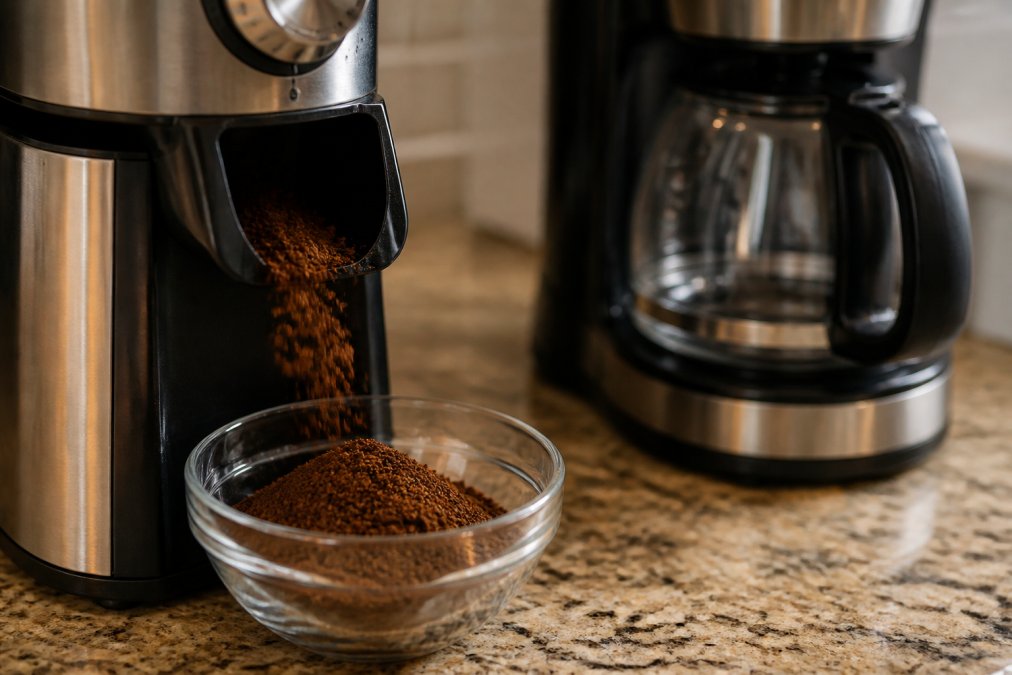
Grind consistency matters more than the exact setting. A burr grinder produces uniform particles; a blade grinder produces dust and boulders, causing simultaneous under- and over-extraction, which is why blade-ground drip coffee often tastes sour and bitter at once.
A common mistake is grinding too fine because it "looks stronger." Fine grounds slow the flow rate and push extraction into bitterness and dryness. If your brew takes longer than eight minutes, your grind is too fine.
Here's a practical starting point:
- Flat-bottom basket: medium-coarse, slightly coarser than table salt
- Cone basket: medium, a touch finer to compensate for the deeper bed
- Single-cup pod machines: match the manufacturer's grind spec; you cannot adjust it
Adjust one notch at a time. Small changes in particle size produce large changes in flavor.
Roast Level and Extraction in a Drip Basket
Medium and medium-dark roasts extract most predictably in a drip basket. Dark roasts are more soluble and turn bitter quickly; light roasts are denser and often taste thin or sour when a drip machine can't reach the right temperature.
The roast level determines how much of the bean is soluble: longer roasting breaks down cell structure and caramelizes sugars, making compounds easier to pull out. A French roast in a drip basket for six minutes will over-extract; a light Nordic-style roast will under-extract and taste grassy.

This is why the best coffee for automatic drip tends toward the middle of the roast spectrum. It gives the machine's fixed parameters room to work.
If you love dark roasts, grind them coarser and shorten the brew cycle by using less water. You'll keep the smoky, bittersweet character without the ash.
Why Freshness Beats Origin for Drip Brewing
Freshness is the strongest predictor of how a bean performs in a drip machine. Coffee loses aromatic compounds within days of roasting, and oxidation accelerates once the bag is opened.
Fresh roasted coffee benefits show up as brighter aroma, more defined sweetness, and a cleaner finish. Stale beans taste flat and papery regardless of origin.
How to Read a Roast Date
Look for a roast date, not a "best by" date. A best-by date says nothing about when the coffee was roasted, it's typically a shelf-life estimate set 9 to 12 months after packaging, far past the point where drip brewing flatters the coffee.
A roast date is usually a day-month-year stamp, sometimes with a lot code. If a bag has no roast date, assume it's older than you'd like, grocery shelf stock routinely sits for two to four months.
The Degassing Curve, in Days
Freshly roasted beans release carbon dioxide for days after roasting. That gas interferes with even saturation, too much and the bed repels water; too little and the coffee tastes lifeless. The practical timeline for drip brewing:
- Days 1-3: Rest. Beans are still degassing heavily. Drip brews often taste sharp or gassy.
- Days 4-14: Peak window. Aroma is brightest, extraction is most even, and the bed blooms visibly when water hits it.
- Days 15-28: Still good, but aromatics are fading. Adjust grind slightly finer to compensate for lost solubles.
- Days 29-42: Acceptable if stored well, but the cup flattens noticeably.
- Beyond 6 weeks: Stale. No grind adjustment fixes it.
What About Pre-Ground Coffee?
Most drip coffee drinkers buy pre-ground, and that changes the math. Ground coffee exposes far more surface area to oxygen, so it stales roughly 5 to 10 times faster than whole bean: a two-week-old pre-ground bag behaves like two-month-old whole bean (peer-reviewed research).
If you're buying pre-ground, prioritize:
- A roast date within the last 7 to 10 days, tighter than the whole-bean window.
- A one-way valve bag that was sealed at the roaster, not repackaged at a store.
- Smaller bags, a 12-ounce bag you finish in a week beats a 2-pound bag you finish in a month.
- Nitrogen-flushed packaging if you can find it. It displaces oxygen and slows staling, though it doesn't stop it.
If you can't find fresh pre-ground, buying whole bean and grinding at the store's burr grinder is a meaningful step up, even a few days of whole-bean storage beats weeks of pre-ground exposure.
Why This Beats Chasing Origin
A single origin from a celebrated farm, roasted eight weeks ago, will lose to a modest medium-roast blend roasted last week in almost any drip machine. Origin describes potential; freshness determines whether it survives to the cup.

Roasted-to-order coffee, like what Cenia's Coffee ships, arrives close to that peak window. That's a meaningful advantage over grocery shelf stock, which may sit for months.
Buying in bulk to save money backfires with coffee. A two-pound bag that takes you six weeks to finish will taste noticeably stale by week four. Smaller, more frequent orders usually win on quality.
If you can't find a roast date, check the bag for a "roasted on" stamp near the bottom seam or on the back label. Roasters who care about freshness print it; roasters who don't, hide it.
Fresh Roasted Coffee Benefits for Drip Brewing
Fresh roasted coffee delivers three advantages in a drip brewer: better aroma, more consistent extraction, and a wider flavor range you can actually taste.
Carbon dioxide trapped in freshly roasted beans escapes over the first several days, a process called degassing. Too much gas and water can't saturate the grounds evenly; too little and the coffee tastes lifeless. The sweet spot is that four-to-fourteen-day window.
How to Store Coffee Beans for Maximum Freshness
To store coffee beans for maximum freshness, keep them whole, airtight, and away from light, heat, and moisture, and grind immediately before brewing. Whole beans retain aromatics far longer than pre-ground.
The four enemies of fresh coffee are oxygen, light, heat, and moisture. Address all four and you extend the peak window by weeks.
What works:
- Airtight opaque container with a one-way valve to release carbon dioxide without letting oxygen in
- Cool, dark cabinet at room temperature, not the refrigerator
- Whole beans until the moment you brew
- Small batches sized to what you'll finish in two to three weeks
What doesn't work: the freezer, unless you're storing sealed bags long-term and never opening them until they thaw. Repeated freeze-thaw cycles introduce moisture and degrade the oils. The refrigerator is worse, because it exposes beans to odors and condensation every time you open the door.
Roast Profiles and Blends That Suit Drip Machines
Blends outperform single origins in most drip setups because they're built for balance. A well-constructed blend combines beans that compensate for each other's weaknesses, producing a cup that holds up across the machine's fixed brew parameters.
A medium roast blend with nutty, chocolate, and mild citrus notes, like Cenia's Coffee House Blend, hits the drip sweet spot. It extracts evenly, tastes consistent from the first cup to the last, and doesn't demand precise grind tuning.
For a lighter, more delicate morning cup, a medium roast South American blend works well. The Gourmet Donut Shop blend leans light-medium with cocoa, caramel, and toffee notes, giving you more brightness without tipping into sourness.
If you prefer a fuller body, a medium-dark roast like the Latin American Blend brings nutty and fruity tones with a gentle cocoa finish. Dark roast drinkers should look to a French Roast, ground coarser and brewed slightly shorter.
Blends vs. Single Origin for Daily Drip
Single origins reward attention; blends reward consistency. For a daily drip routine where you want the same cup every morning, blends are safer because their flavor profile is designed to be repeatable.
Single origins shine when you want to taste a specific place. A medium roast Colombia with dried orange, berry, and chocolate notes can be excellent in a drip machine, but it's more sensitive to grind and water temperature. If your machine runs hot or your grind drifts, a single origin will show it more clearly than a blend will.
| Coffee Style | Roast Level | Best For | Drip Performance |
|---|---|---|---|
| House Blend | Medium | Everyday consistency | Very forgiving |
| Breakfast Blend | Medium | Light, smooth mornings | Forgiving |
| Gourmet Donut Shop | Light-medium | Brighter, sweeter cups | Moderate |
| Latin American Blend | Medium-dark | Fuller body | Forgiving |
| French Roast | Dark | Bold, smoky flavor | Needs coarser grind |
| Single Origin (Colombia, Brazil, Honduras) | Medium to medium-dark | Tasting specific regions | Moderate to sensitive |
Matching the Best Coffee for Automatic Drip to Your Routine
The best coffee for automatic drip coffee makers is the one that matches how you actually drink it. A remote professional brewing two cups before a call needs a forgiving blend; a weekend tinkerer who weighs beans and dials in grind can chase single origins all day.
Start with a medium roast blend if you want consistency without fuss. Move to single origins once you're comfortable adjusting grind and ratio. Buy in quantities you'll finish within a few weeks, store whole beans airtight, and grind right before brewing.
That's the whole game. The machine handles the rest.
Most people upgrade their brewer before they upgrade their coffee, and it's the wrong order. Cenia's Coffee roasts to order and ships fresh, so the beans arrive inside their peak window instead of weeks past it. Choose from medium blends built for drip consistency, medium-dark roasts for fuller body, or single origins when you want to taste a specific place. Simple ordering, reliable delivery, and coffee that performs in the machine you already own. Get started with Cenia's Coffee and taste what fresh, properly matched beans do for your daily cup.
Frequently Asked Questions
What type of coffee is best for a drip machine?
Medium roasts work best for most automatic drip makers because they balance sweetness and acidity without turning bitter during the brew cycle. A medium-coarse grind keeps water flowing evenly through the basket. Fresh roasted beans, ideally within two to four weeks of the roast date, give you the most aroma and flavor. Medium roast blends like Cenia's House Blend are a reliable starting point if you want a smooth, consistent cup every morning.
What is the best grind for automatic drip coffee?
The ideal grind size for drip coffee makers is medium-coarse, similar to the texture of table salt or coarse sand. Too fine and the water stalls, producing bitterness and sediment. Too coarse and the water runs through without extracting enough flavor, leaving a sour, weak cup. If you grind at home, aim for a burr grinder setting that gives you uniform particles, since consistency matters more than a specific number on the dial.
Does roast level affect drip coffee quality?
Yes. Dark roasts extract faster and can turn bitter in a drip machine if the brew cycle runs long. Light roasts are denser and may taste underdeveloped with shorter contact time. Medium and medium-dark roasts, like Cenia's Latin American Blend or Honduras, sit in the sweet spot for most drip baskets. The roast level changes the flavor profile, so pick based on whether you want brighter citrus notes or deeper cocoa and caramel.
How does bean freshness impact automatic drip brewing?
Fresh roasted coffee benefits drip brewing more than almost any other method because the bloom and extraction depend on CO2 still present in the beans. Beans roasted within two to four weeks produce a fuller aroma and better mouthfeel. Older beans taste flat and papery no matter how good the grinder is. Check for a roast date on the bag, not just a best-by date, and buy in quantities you can finish within a month.
Should I use pre-ground or whole bean coffee for drip machines?
Whole bean coffee gives you noticeably better results in a drip maker because you control the grind size and the grounds stay fresher longer. Pre-ground coffee loses aroma within days of opening. If convenience matters more, buy pre-ground from a roaster that grinds to order and seal it tightly. Either way, store beans away from light, heat, and moisture, and grind right before brewing when you can.