

How to Identify Quality Coffee Beans: A 2026 Guide
Table of Contents
- Why Most Coffee Bag Labels Mislead You
- Start With the Roast Date: The Single Best Quality Signal
- Visual Inspection: What Quality Coffee Beans Look Like
- Arabica vs Robusta: Does the Species Guarantee Quality?
- The Aroma Test and the Limits of Smell
- Traceability and Processing Method as Quality Proxies
- How to Store Coffee Beans for Freshness After Purchase
- Build Your Quality Checklist
- Frequently Asked Questions
Last Updated: September 4, 2026
Why Most Coffee Bag Labels Mislead You
Quality coffee beans are the foundation of a great cup, yet most shoppers rely on labels that tell them almost nothing useful. Terms like "premium" and "gourmet" are marketing language, not quality signals. The real information comes from data printed on the bag, not the branding on the front.
At Cenia's Coffee, we roast to order and source from farms we know, so we see firsthand how confusing this process can be for buyers. You do not need to be a professional cupper to make an informed choice. You only need to know which details matter and which are decoration.
Below, we walk through the specific signals that separate exceptional beans from average ones, starting with the roast date.
Start With the Roast Date: The Single Best Quality Signal
The roast date is the most reliable indicator of quality because coffee begins to lose its flavor compounds immediately after roasting. Beans are at their peak between roughly 4 and 14 days after the roast date. A bag without a roast date often signals the roaster does not want you to know how old the product is.
Supermarket bags often carry only a "best by" date, which can be a year or more from roasting day. Specialty roasters print the actual roast date because they expect you to care about freshness. If you see a roast date within the last two weeks, you are holding beans that will deliver the intended flavor profile. If the date is missing, move on.
Visual Inspection: What Quality Coffee Beans Look Like
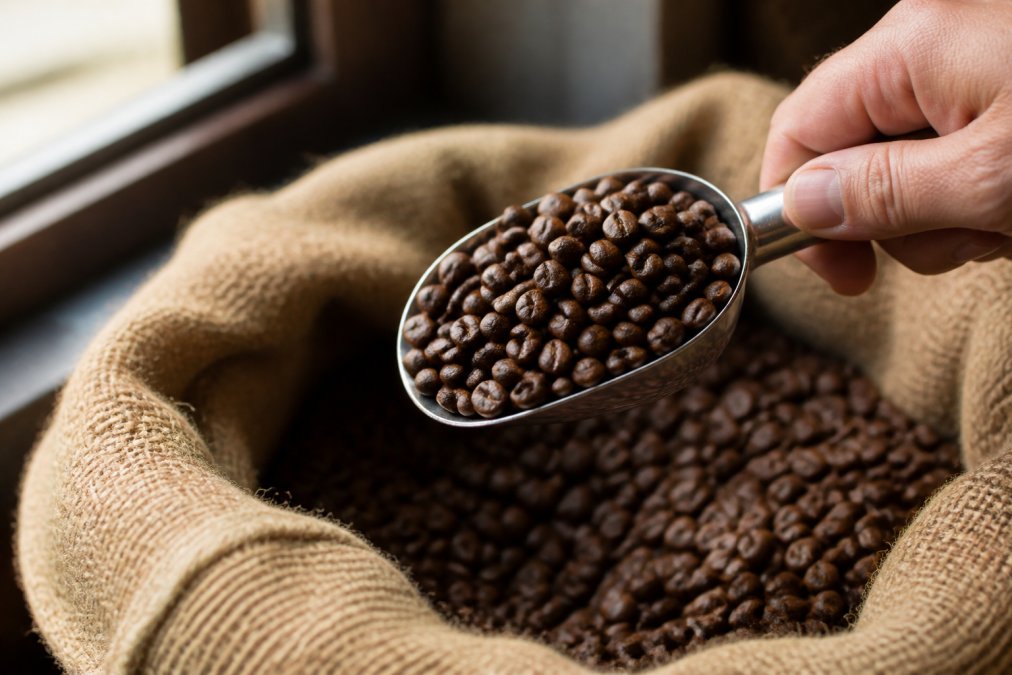
Quality coffee beans have a consistent appearance that reflects careful processing and sorting. Pour a small amount into your palm and look at the batch as a whole rather than individual beans. Uniformity is the first thing a professional checks.
Size, Color, and Uniformity
High-quality beans are sorted by screen size, so they should look similar in dimension. Mixed sizes suggest the roaster skipped a sorting step that matters for even extraction. Beans of different densities extract at different rates, which can make the cup taste muddy or inconsistent.
Color should be even across the batch for the roast level stated on the bag. A medium roast should look uniformly medium brown. A mix of pale and dark beans means some are under-roasted or over-roasted, showing up as sour or charred notes.
Spotting Defects and Insect Damage
Defects are physical flaws that affect flavor. Look for cracks, broken pieces, or holes that indicate insect damage. A few broken beans are normal, but a bag full of fragments will brew unevenly and taste harsh.
The Specialty Coffee Association's green coffee grading standards define how defects are counted and classified. Specialty grade allows very few full defects per sample, which is why roasters who buy at that level can charge more. When you see clean, whole beans with no insect damage, you are looking at a lot that was grown, processed, and sorted with care.
Arabica vs Robusta: Does the Species Guarantee Quality?
Arabica beans are generally associated with higher quality, but the species alone does not guarantee a good cup. Arabica grown at low altitude or processed poorly can taste flat. Robusta, while often used for instant coffee, can be excellent when grown well, though it typically has more bitterness and caffeine.
The distinction matters less than the specific origin and how the farm handled the harvest. A washed process arabica from a high-altitude farm will taste different from a natural process arabica from the same region. Quality is the result of the whole chain: variety, altitude, soil, processing, and roasting.
When you see "100% arabica" on a bag, treat it as a baseline, not a badge of honor. Ask where the arabica was grown and how it was processed. Traceability to a specific farm or cooperative is a stronger signal than the species name alone.
The Aroma Test and the Limits of Smell
Smelling beans before grinding gives useful information, but it has limits. Fresh quality coffee beans should have a fragrant, sweet aroma that matches their described notes. Stale beans smell flat or papery. Over-roasted beans can smell smoky or burned.
The aroma test fails when you try to detect specific tasting notes by smell alone. Flavor notes on a bag, like chocolate or dark fruits, are identified through cupping, which involves tasting the brewed coffee, not sniffing the dry beans. Aroma is a quick freshness check, not a full quality assessment.
Why Dry Aroma Misleads: The Role of Volatile Compounds
The limitation of the dry aroma test comes down to chemistry. Coffee contains over 800 volatile compounds, but most are locked in the bean's cellular structure until water breaks them free during brewing. When you sniff dry beans, you only detect the most volatile compounds that have escaped to the surface. The heavier aromatic molecules, responsible for caramel, fruit, and floral notes, remain trapped until extraction. This is why a bean that smells flat dry can still brew a fragrant cup, and why a bean with a strong dry aroma can taste disappointing.
A more reliable sensory check is the fracture test. Grind a small amount of beans and immediately inhale the grounds. The grinding process ruptures cell walls and releases a broader spectrum of volatiles. Freshly ground quality coffee should release a burst of aroma. If the grounds smell only mildly sweet or neutral, the beans are likely past their peak, even if the roast date says otherwise.
The Wet Aroma Check: A Window Into Flavor Development
Professional cuppers do not stop at dry grounds. They add hot water and break the crust that forms on top, releasing a second wave of aromatics. This wet aroma reveals how the roast developed the bean's sugars and acids. A quality bean will produce a complex, layered wet aroma, you might detect brown sugar, stone fruit, or baking spice. A bean roasted too dark will smell sharply of smoke or rubber, while an underdeveloped roast will smell grassy or like raw grain.
You can replicate this at home without a full cupping setup. Place a spoonful of ground coffee in a small bowl, add hot water just off the boil, and wait four minutes. Break the crust with a spoon and inhale deeply. This simple test separates beans that merely look good from those that will actually taste good.
The Role of Packaging in Preserving Aroma
The aroma you detect at home depends heavily on how the beans were packaged after roasting. Quality roasters use bags with one-way degassing valves, the small circular valve that lets carbon dioxide escape without letting oxygen in. Coffee releases up to 40 times its volume in carbon dioxide in the days after roasting. Without a degassing valve, the bag would balloon or burst. More importantly, oxygen is the primary enemy of coffee freshness; it oxidizes the volatile compounds that create aroma. A functional one-way valve signals that the roaster understands this chemistry and is protecting the product.
Some specialty roasters go further and use nitrogen flushing, a process that replaces oxygen inside the bag with nitrogen gas before sealing. This technique, more common with pre-ground coffee, extends the shelf life of the aroma compounds significantly. If you see "packaged in a protective atmosphere" or "nitrogen flushed" on a bag, it indicates a roaster investing in quality control beyond the roast itself.
When Aroma Alone Is Not Enough
Even with proper technique, aroma cannot tell you everything. Acidity, body, and aftertaste are only perceptible through taste. A bean can smell perfectly sweet and still brew a flat, lifeless cup if processing introduced defects that only manifest on the palate. The aroma test is a necessary filter, but not a complete quality assessment. Use it to eliminate obviously stale or over-roasted beans, then rely on the roast date, visual inspection, and traceability to make the final call.
Traceability and Processing Method as Quality Proxies
Quality coffee beans come from farms that can be named. When a roaster tells you the specific cooperative or estate, they are taking responsibility for the product. Traceability is a proxy for quality because farms that invest in their reputation tend to invest in their processing.
The processing method also shapes the cup. A washed process removes the fruit before drying, producing a cleaner, brighter cup with more acidity. A natural process dries the bean inside the fruit, adding sweetness and body. Neither is inherently better, but the method should be stated on the bag so you know what to expect.
How Processing Changes What the Beans Look Like
Most guides tell you to look for uniform color, but they rarely explain why the beans look the way they do. The processing method directly affects the visual appearance of green and roasted beans, and understanding this connection helps you read a batch more accurately.
Washed process beans, common in Central America, Colombia, and Kenya, are fermented and washed to remove all fruit mucilage before drying. This produces beans with a clean, bluish-green color in their raw state and a very even roast color after roasting. The parchment layer protects the bean during drying, meaning fewer physical defects and a more uniform surface. A batch of washed beans with consistent color and a smooth, matte surface was carefully fermented and dried.
Natural process beans, traditional in Ethiopia and Brazil, are dried with the whole cherry intact. This method imparts fruity, wine-like flavors but creates more visual variation. The beans often have a more yellowish or tan cast in their raw state, and after roasting, they may show slightly uneven color because the sugar in the dried fruit caramelizes at different rates. A natural process bean with some surface variation is not defective; it is a sign of the method. However, natural process beans are also more prone to defects like over-fermentation or mold if dried improperly. If a natural process batch looks uniformly dull or has a grayish tint, that is a red flag.
Honey process beans, common in Costa Rica and El Salvador, sit between the two. Some mucilage is left on the bean during drying, producing a bean that roasts with a slightly mottled appearance. The color of the dried mucilage (yellow, red, or black honey) affects both flavor and appearance. Knowing this prevents you from mistaking normal process variation for poor quality.
Bean Density: The Hidden Quality Metric
Processing affects more than flavor; it affects bean density, one of the most reliable physical indicators of quality that most buyers never consider. Density refers to how tightly packed the cellular structure of the bean is, and it correlates directly with altitude. Beans grown at higher elevations mature more slowly, developing a harder, denser structure that contains more sugars and acids. Dense beans extract more evenly and produce a sweeter, more complex cup.
You can feel density when you squeeze a bean between your fingers. A high-density bean feels hard and resists crushing. A low-density bean, often grown at low altitude or harvested too early, feels brittle and crumbles more easily. When you grind quality beans, they should produce a consistent particle size. Low-density beans shatter into a mix of fine powder and coarse chunks, leading to uneven extraction and a muddy, bitter cup.
Roasters often print the altitude at which the coffee was grown, usually in meters above sea level. Coffee grown above 1,200 meters is generally considered high-altitude and will have higher density. Above 1,600 meters, you are in the territory of truly exceptional lots. If the bag does not state altitude, the farm's name and region can still give you clues, highland regions in Guatemala, Ethiopia, and Colombia are known for dense beans.
Moisture Content: The Invisible Quality Gate
Green coffee beans contain between 8% and 12% moisture by weight. Specialty buyers target 10% to 11%. Beans above 12% are at risk for mold and fungal growth; beans below 8% have lost the cellular structure needed for proper flavor development. Roasters measure moisture with a handheld meter before roasting, and quality-focused roasters reject lots that fall outside the optimal range.
You cannot measure moisture content at home without a meter, but you can infer it from the bean's appearance and feel. Beans that feel excessively light or hollow when you shake them may have been over-dried. Beans that feel soft or spongy may have absorbed moisture during storage. Both conditions degrade cup quality, and both are more common in commodity-grade coffee than in traceable, specialty lots.
Ethical Sourcing as a Quality Signal
Ethical sourcing is another quality proxy. Farms that pay fair wages and follow sustainable practices can reinvest in their crops. The Fair Trade USA certification standards require minimum prices and community development funds, which supports the long-term health of the supply chain. Direct trade relationships, where roasters buy straight from farms, offer even more transparency.
The connection between ethics and quality is not just philosophical. Farms that pay workers fairly can afford to hire experienced pickers who select only ripe cherries. Farms that invest in their land can build proper drying beds and fermentation tanks. When a roaster names the farm and the farmer, they are staking their reputation on that farm's practices. Traceability is not just a marketing feature, it is a quality control mechanism that spans the entire supply chain.
How to Store Coffee Beans for Freshness After Purchase
Once you have identified quality coffee beans, storage determines how long they stay that way. The enemies of freshness are oxygen, light, heat, and moisture. Your goal is to slow the oxidation process that degrades flavor.
Store beans in an airtight, opaque container at room temperature. Do not refrigerate or freeze beans you are using daily, because condensation introduces moisture and the beans absorb other odors. Keep them away from the stove or any heat source. Buy whole beans and grind only what you need for each brew, since ground coffee loses aroma much faster.
For those who do not finish a bag quickly, buying smaller quantities more often is better than buying bulk. A 12-ounce bag of whole beans typically stays fresh for about a month when stored properly, but flavor peaks in the first two weeks after the roast date.
| Storage Factor | Best Practice | Why It Matters |
|---|---|---|
| Container | Airtight, opaque | Blocks oxygen and light |
| Temperature | Room temperature | Avoids condensation |
| Grinding | Grind per brew | Whole beans last longer |
| Purchase size | Smaller, frequent | Matches peak freshness window |
Build Your Quality Checklist
Identifying quality coffee beans becomes easier when you have a repeatable process. Use this checklist the next time you buy a bag.
- Check for a roast date and confirm it is within the last two weeks.
- Look for even bean size and uniform color across the batch.
- Inspect for defects like cracks, broken pieces, or insect damage.
- Confirm the origin is traceable to a specific farm or cooperative.
- Verify the processing method is stated on the bag.
- Smell the beans to confirm they are fragrant, not flat or smoky.
- Plan to store the beans properly and use them within a month.
The National Coffee Association's brewing and storage guidance reinforces that freshness is the single most important variable in coffee quality. When you buy from a roaster that prints the roast date and names the farm, you remove the guesswork.
At Cenia's Coffee, every single origin offering includes the region, altitude, process, and varietal on the label. Our Single Origin Favorites Sample Pack lets you compare six different lots to train your palate, from the cocoa notes of Brazil Santos to the floral character of Uganda. Roasted to order and shipped within days, these beans arrive in their peak flavor window.

Choosing quality coffee beans does not require a professional palate. It requires attention to the details that roasters print on the bag and the physical characteristics of the beans themselves. Cenia's Coffee makes this easy by roasting to order, sourcing from named farms, and providing full traceability on every single origin bag. Start with the roast date, inspect the beans, and trust the farms that are willing to be named. Get started with Cenia's Coffee and taste the difference that fresh, traceable beans make in your daily cup.
Frequently Asked Questions
What is the 15-15-15 rule for coffee?
The 15-15-15 rule is a simple freshness guideline: buy coffee within 15 days of the roast date, grind it within 15 minutes of brewing, and consume it within 15 minutes of pouring. While not a strict standard, it emphasizes that quality coffee beans lose their peak flavor quickly after roasting. For the best cup, check the roast date on the bag and aim to use the beans within a few weeks of that date.
How do I find the best quality coffee beans?
Start by looking for a roast date on the bag, not just an expiration date. Then, examine the beans: they should be uniform in size and color with no visible cracks or insect holes. Prioritize bags that list the origin, farm, or cooperative, as this traceability often signals higher quality. Finally, buy whole beans and store them in an airtight container away from light and heat.
Is Starbucks Arabica or Robusta?
Starbucks primarily uses arabica beans in its beverages. However, the arabica vs robusta quality debate is more nuanced than just the species. While arabica beans generally offer more complex flavors and higher acidity, a poorly processed arabica can taste flat. Robusta, often used in espresso blends for its crema and caffeine kick, is not inherently bad. Focus on the roast date and processing method rather than the species alone.
Does the smell of coffee beans indicate quality?
Aroma is a helpful but incomplete indicator. Freshly roasted, quality coffee beans should smell fragrant and inviting, with notes that match the bag's description, such as chocolate, fruit, or nuts. A flat or muted smell often means the beans are stale. However, a strong smell alone doesn't confirm quality. Always pair the aroma test with a visual inspection and a check of the roast date.
This article was written using GrandRanker