

Single Origin Coffee Beans for Beginners
Table of Contents
- What Is Single Origin Coffee?
- Single Origin vs Blend Coffee: Key Differences
- Understanding Flavor Profiles by Region
- Tasting Notes in Coffee Explained
- Processing Methods and Roast Level Impact
- How to Brew Single Origin Coffee at Home
- How to Store Coffee Beans for Freshness
- Choosing Your First Single Origin Bean
- Frequently Asked Questions
Last Updated: September 3, 2026
What Is Single Origin Coffee?
Single origin coffee beans are sourced from a single country, region, or specific farm rather than blended from multiple origins. This allows the unique characteristics of that terroir, soil, altitude, climate, and farming practices, to shine through in the final brew.
The appeal is straightforward: traceability and distinct flavor. When you buy single origin coffee beans, you know exactly where they came from and taste the specific region's harvest personality. A single origin from Ethiopia tastes fundamentally different from one grown in Colombia, even if both are roasted identically.
At Cenia's Coffee, we source single origin coffee beans from trusted farms around the world, roasting them to order so you experience maximum flavor and aroma.

Single Origin vs Blend Coffee: Key Differences
Blends combine beans from multiple origins to create a balanced, predictable flavor profile. Single origin coffees celebrate the unique characteristics of one place.
Blends are engineered: a roaster might combine 60% Brazilian beans with 40% Ethiopian beans to hit a specific flavor target. That consistency is valuable for a reliable daily cup. Single origin coffees are more like wine, each harvest is slightly different, each region has its own signature, and part of the appeal is discovering those variations.
Single origin also gives you transparency. With a blend, you might never know the exact farms or processing methods involved. With single origin coffee beans, you can trace the journey from farm to cup. Many specialty roasters, including Cenia's Coffee, provide detailed information about altitude, processing method, and sometimes the cooperative or family farm that grew your beans.

The trade-off is predictability. A blend tastes consistent year to year. A single origin from the same farm might taste slightly different depending on harvest season, rainfall, and other variables. For beginners, this is an opportunity to develop your palate and understand how environment shapes flavor.
| Aspect | Single Origin | Blend |
|---|---|---|
| Flavor Profile | Unique to region; varies by harvest | Engineered for consistency |
| Traceability | High; often farm-specific | Low; origins may be undisclosed |
| Price | Typically higher | More affordable |
| Best For | Exploring origins; developing palate | Reliable daily cup; broad appeal |
| Freshness Signal | Harvest date matters | Less critical |
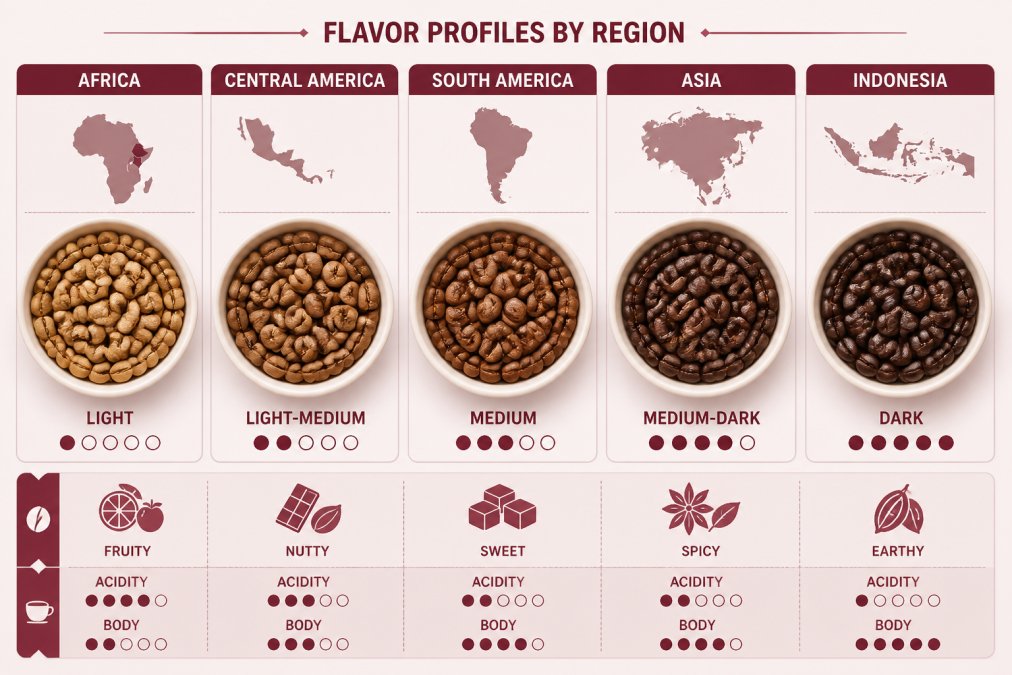
Understanding Flavor Profiles by Region
The geography of coffee is everything. Altitude, soil composition, rainfall, and temperature all shape how coffee plants grow and how the beans develop their flavor compounds.
East African Origins
East African coffees are known for their brightness and complexity. Beans grown in Kenya, Ethiopia, and Uganda typically have higher acidity and fruity, floral tasting notes.
Kenya coffees are prized for their clarity. The high altitude (often 1,700 to 1,890 meters) and volcanic soil create conditions for beans that develop bright, citrus-forward profiles with notes of orange, lemon, and sometimes berries (peer-reviewed research). Cenia's Coffee sources Kenya beans that showcase this brightness, making them excellent for pour-over or drip brewing.
Ethiopia is coffee's birthplace, and Ethiopian single origin coffee beans often taste unlike anything else. The country grows indigenous heirloom varietals cultivated for centuries. Natural-processed Ethiopian coffees tend toward fruity, wine-like profiles with notes of blueberry, strawberry, or jasmine. Washed-processed Ethiopian beans lean toward chocolate and spice.
Uganda's coffee regions produce beans with mild acidity and lighter body, with tasting notes of chocolate, dark fruit, and subtle floral hints.
South American and Asian Profiles
South American coffees, especially from Brazil and Colombia, tend toward heavier body and chocolate, nut, and caramel notes. Brazilian single origin coffee beans are often smooth and balanced with lower acidity, making them approachable for beginners.
Colombian coffees vary by region but often sit between East African brightness and Brazilian smoothness, with notes of chocolate, fruit, and nuts.
Asian coffees, particularly from Sumatra, have a distinctive profile. Sumatran single origin coffee beans are processed using wet-hulling, which creates earthy, herbal character with syrupy body and low acidity. These beans have notes of dark chocolate, dried fruit, and earth. If you prefer full-bodied coffee with less acidity, Sumatran origins are worth exploring.
Tasting Notes in Coffee Explained
Tasting notes are the descriptors you see on coffee bags, "notes of chocolate," "hints of citrus," "berry undertones." These aren't added flavoring; they're real flavor compounds that develop during growing and roasting.
Coffee naturally contains hundreds of flavor compounds (peer-reviewed research). When you see "notes of chocolate" on a single origin coffee bean package, it means the beans developed compounds that taste similar to chocolate. This happens through the plant's genetics, growing conditions, and how the beans were processed and roasted.
Learning to identify tasting notes takes practice but guides your selection. If you love chocolate and caramel, Brazilian beans are logical. If you want brightness and citrus, Kenya or Ethiopia are better choices. If you prefer earthy, full-bodied coffee, Sumatra fits.
Coffee acidity refers to brightness and liveliness, not sourness. High-acidity coffees feel vibrant; low-acidity coffees feel smooth. Body describes mouthfeel, how heavy or light the coffee feels on your tongue.
When buying single origin coffee beans, read the tasting notes and consider whether those flavors appeal to you. Pay attention as you brew and taste. Over time, you'll develop your own palate and understand which origins deliver the experience you want.
Processing Methods and Roast Level Impact
How coffee is processed dramatically affects flavor. Washed-processed beans have the fruit removed before drying, resulting in cleaner, brighter flavor profiles with more acidity (peer-reviewed research). Natural-processed beans dry in the fruit, creating heavier body, lower acidity, and more fruity, wine-like flavors.
Roast level also shapes the final cup. A light roast preserves the origin's unique characteristics. A medium roast balances origin flavor with roasting flavors like caramel and chocolate. A dark roast emphasizes roasting flavors over origin characteristics. For beginners exploring single origin coffee beans, medium roasts are a safe entry point.
How to Brew Single Origin Coffee at Home
The brewing method you choose affects how those tasting notes come through.
Pour-over brewing (using a Chemex, Hario V60, or Melitta dripper) gives you control over water temperature, pour rate, and contact time. Use water around 195-205°F, grind medium-fine, and pour slowly. The result is a clean, bright cup that showcases the bean's flavor profile.
Drip coffee makers offer convenience and consistency with medium grind, similar to sand.
French press creates full immersion, extracting more oils and creating heavier body. Use a coarse grind, steep for 4 minutes, and press slowly. French press works well for heavier-bodied beans like Sumatran or Brazilian origins.
Espresso requires a fine grind and precise tamping. Start with a medium-light roast and adjust the grind until you hit a 25-30 second pull time.
The key variable across all methods is grind size. Finer grinds increase extraction; coarser grinds decrease extraction. Match your grind size to your brewing method and adjust based on taste.
How to Store Coffee Beans for Freshness
Freshness matters more for single origin coffee beans than for blends. The unique flavor compounds degrade quickly once roasted.

Store beans in an airtight container away from heat, light, and moisture. A ceramic or opaque container works better than clear glass. Room temperature is ideal; don't refrigerate or freeze unless storing long-term.
Buy smaller quantities more frequently. A half-pound bag finished within two to three weeks will taste fresher than a five-pound bag sitting for two months. Cenia's Coffee's roasted-to-order model ensures beans arrive fresh after roasting.
Whole beans stay fresher longer than ground coffee. If you grind ahead, use the ground coffee within a few days.
Choosing Your First Single Origin Bean
Start with a region that matches your flavor preferences. If you love chocolate and caramel, begin with Brazilian or Colombian beans. If you prefer brightness and acidity, try Kenya or Ethiopia. If you want full body and earthy character, Sumatra is a logical choice.
Consider your brewing method. If you use pour-over or drip, choose a medium roast from an origin known for clarity like Kenya or Ethiopia. If you prefer French press, a medium or medium-dark roast from Brazil or Sumatra will shine. If you're an espresso drinker, start with a medium roast and experiment with dialing in the grind.
Buy from roasters who provide detailed information: altitude, processing method, tasting notes, and ideally the farm or cooperative name.
Cenia's Coffee offers a practical entry point with the Single Origin Favorites Sample Pack, which includes six 2-ounce samples of popular origins like Brazil Santos, Uganda, Sumatra, Kenya, and Ethiopia Natural. This lets you taste multiple origins without committing to full bags.
Start with one origin at a time. Brew it the same way several times so you can isolate how the bean tastes versus how your brewing technique affects the cup. Once you understand one origin well, try another.
Choosing your first single origin coffee doesn't have to be overwhelming. Start with a region that matches your flavor preferences, invest in a quality brewing method, and buy fresh beans from a roaster you trust. Cenia's Coffee delivers fresh-roasted single origin beans sourced from trusted farms worldwide, with detailed tasting notes and processing information on every bag. Explore a few origins, pay attention to how they taste, and let your palate guide your next purchase.
Frequently Asked Questions
What type of coffee beans are best for beginners?
Single origin beans with medium roast levels and balanced flavor profiles work best for beginners. Start with beans labeled as having mild to medium acidity and smooth body, such as Brazilian or Sumatran varieties. These offer approachable flavor without overwhelming complexity. Cenia's Coffee's Single Origin Favorites Sample Pack ($24.99) lets you try six different origins in small quantities, making it ideal for discovering your preferences without committing to a full bag.
How does single origin coffee differ from blends?
Single origin coffee comes from one specific geographic location or farm, creating a distinct flavor profile tied to that region's climate, altitude, and soil. Blends combine beans from multiple origins to achieve balanced or complex flavors. Single origins showcase the unique characteristics of their terroir, while blends are crafted for consistency and specific taste goals. For beginners, single origins make it easier to understand how geography and processing affect flavor.
What are common tasting notes I should expect?
Tasting notes describe the flavors you experience rather than added ingredients. East African coffees often show citrus, floral, and berry notes with bright acidity. Brazilian coffees typically present chocolate, cocoa, and nutty notes with smooth body. Indonesian coffees deliver earthy, dark chocolate, and syrupy characteristics. These notes result from the bean's varietal, altitude, processing method, and roast level. Familiarizing yourself with these descriptors helps you identify what you enjoy and select beans accordingly.
How should I store single origin coffee beans?
Store beans in an airtight container away from direct sunlight, heat, and moisture. A cool, dark cupboard or pantry works well. Whole beans stay fresh for 2-4 weeks after roasting; ground coffee loses freshness within days. Avoid storing in the refrigerator or freezer, as moisture and temperature fluctuations degrade flavor. Since Cenia's Coffee roasts to order, your beans arrive at peak freshness. Open the bag, transfer to an airtight container, and use within the recommended timeframe for best results.
What brewing method works best for tasting single origin flavors?
Pour-over and drip coffee methods highlight single origin characteristics well because they allow precise control over water temperature and extraction time. Espresso can work but requires more skill to dial in properly. For beginners, start with pour-over or a standard drip brewer. Use filtered water heated to 195-205°F, grind beans just before brewing, and use a 1:16 coffee-to-water ratio. This approach brings out the bean's natural tasting notes without overwhelming complexity.
Does roast level change the flavor profile of single origin beans?
Yes, roast level significantly affects flavor. Light roasts preserve the bean's origin characteristics and acidity, highlighting floral and fruity notes. Medium roasts balance origin flavors with roasted notes like chocolate and caramel. Dark roasts emphasize bold, smoky, and bitter characteristics while muting origin-specific flavors. For beginners exploring single origin coffee, medium roasts offer an approachable balance. Cenia's Coffee labels roast levels clearly, helping you choose profiles that match your taste preferences.
Why is traceability important when buying single origin coffee?
Traceability ensures transparency about where your beans come from and how they were grown. It verifies that coffee came from specific farms, cooperatives, or regions, often indicating fair trade or direct trade practices that support farmers. Traceability also connects you to the story behind your coffee, the altitude, varietal, and processing method, which explains the flavor you experience. Cenia's Coffee sources from trusted farms and provides detailed information about region, altitude, and cooperative details for each single origin offering.
This article was written using GrandRanker