

Buying Coffee Beans in Smaller Quantities: A Smart Guide
Table of Contents
- Why Buying Coffee Beans in Smaller Quantities Makes Sense
- Understanding Coffee Bean Freshness Timeline
- How to Store Coffee Beans for Maximum Flavor
- Best Coffee Beans for Home Brewing in Small Quantities
- Cost Comparison: Bulk vs. Small Bags
- Calculating Your Weekly Consumption
- Sample Packs and Subscription Models: ROI for Home Brewers
- Common Mistakes When Buying Small Quantities
- Frequently Asked Questions
Last Updated: August 31, 2026
Why Buying Coffee Beans in Smaller Quantities Makes Sense
Buying coffee beans in smaller quantities is one of the smartest moves a home brewer can make, yet it contradicts bulk-buying culture. The logic seems obvious: buy more, save more per pound. But that math breaks down the moment your beans lose their freshness.
Coffee begins to deteriorate the moment it's roasted. Oxygen exposure, moisture, and time all conspire against flavor. A five-pound bag sitting in your pantry for two months will taste flat compared to beans you bought three weeks ago. You're not saving money by buying bulk; you're paying for stale coffee. At Cenia's Coffee, we offer fresh-roasted coffee, and many home brewers find that smaller, fresher batches actually deliver better value because every cup tastes like it should.
The shift from bulk to small-quantity buying fundamentally changes how you approach coffee at home. Instead of committing to a flavor profile for months, you get to experiment. You discover what actually works with your brewing method. You stop wasting money on beans you don't finish. Most importantly, you taste the difference that freshness makes.
This guide walks you through buying coffee beans in smaller quantities strategically. We'll cover freshness timelines, storage techniques that actually work, how to calculate what you really need, and why sample packs and subscriptions often deliver better ROI than you'd expect.
Understanding Coffee Bean Freshness Timeline
The freshness window for coffee is shorter than most people realize, and it's the primary reason buying coffee beans in smaller quantities makes financial sense.
Peak Flavor Window After Roasting
Coffee reaches its peak flavor between 5 and 30 days after roasting (peer-reviewed research). During this window, the beans have fully degassed and the volatile aromatics are at their strongest. Your pour-over, espresso, or French press will taste exactly as the roaster intended.
Before day 5, the beans are still actively releasing carbon dioxide, which affects extraction and can make espresso pull too fast or pour-overs extract unevenly. After day 30, oxidation accelerates. The beans begin losing complexity, brightness, and aromatic depth. By day 60, most specialty coffees have noticeably declined. By day 90, you're drinking coffee that's past its prime (peer-reviewed research).
This timeline explains why buying coffee beans in smaller quantities aligns perfectly with how coffee actually tastes. A two-ounce sample pack consumed within two weeks hits that peak window consistently. A five-pound bag you're still working through at day 75 doesn't.

Degassing and Its Impact on Small Bags
Degassing happens faster in small bags than large ones. A two-ounce portion releases its CO₂ in roughly 3-5 days. A five-pound bag can take 10-14 days. Small bags reach optimal flavor faster and finish degassing before they start oxidizing significantly, meaning the entire time you're consuming them falls within that quality window.
Vacuum-sealed small bags preserve this advantage even longer. The seal prevents oxygen from entering until you open the bag. Once opened, consume within 7-10 days for best results.
How to Store Coffee Beans for Maximum Flavor
Storage determines how long your beans stay in that peak flavor window. Poor storage cuts that window in half.
Airtight Containers and Oxygen Exposure
Oxygen is coffee's enemy. It causes rancidity and flavor degradation. Every time you open a bag and expose beans to air, oxidation accelerates.
Airtight containers are non-negotiable. The ideal container is opaque, airtight, and kept in a cool, dark place. Glass jars with rubber seals, ceramic canisters designed for coffee, or resealable bags with one-way valves all work. What doesn't work: open bowls, clear containers in sunlight, or bags left rolled open on the counter.
Temperature stability matters too. Avoid storing beans above the stove, near windows, or in fluctuating environments. A pantry shelf or cupboard is ideal. Room temperature, dark, and airtight: that's your storage formula.
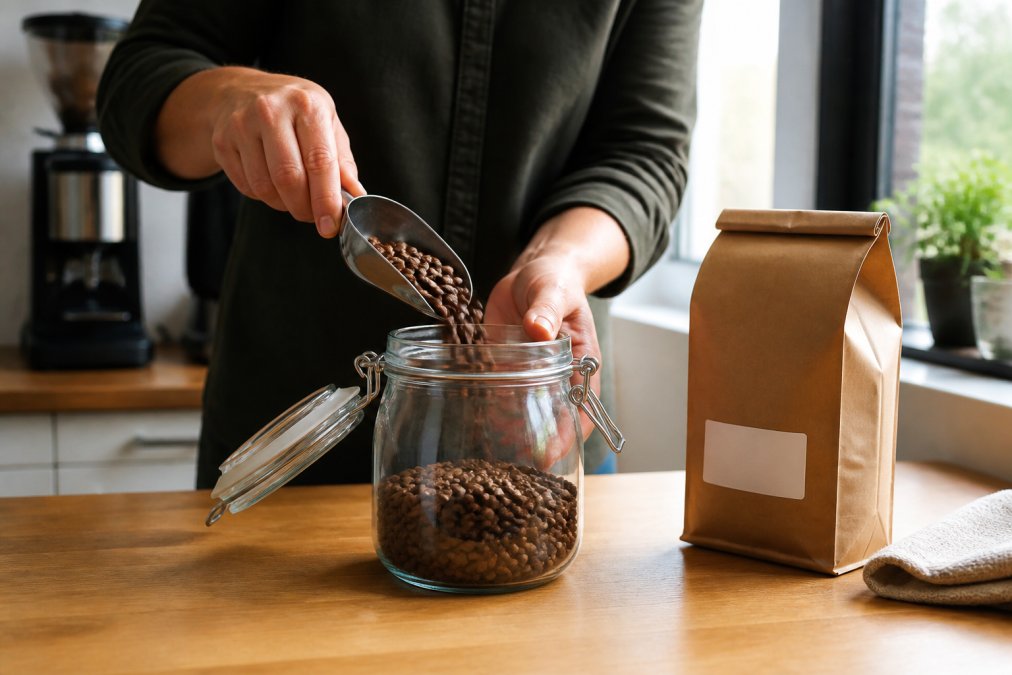
Freezing and Vacuum Sealing Methods
Freezing extends shelf life significantly. Frozen beans can last 2-3 months while maintaining most of their flavor profile (peer-reviewed research). The key is preventing moisture from accumulating. Beans should be in airtight containers or vacuum-sealed bags before freezing. Remove only what you need for the week, then return the rest immediately.
Vacuum sealing is one of the most effective storage methods for small quantities. A vacuum-sealed bag removes nearly all oxygen, essentially pausing the aging process. Vacuum-sealed beans stored at room temperature stay fresh for 4-6 weeks. Vacuum-sealed and frozen, they last 2-3 months.
The practical approach: buy small quantities frequently rather than large quantities infrequently. This eliminates the need for freezing most of the time. If you do freeze, vacuum-seal in weekly portions so you're not repeatedly exposing your entire stash to temperature changes.
Best Coffee Beans for Home Brewing in Small Quantities
Not all beans work equally well in small-quantity buying.
Single-Origin vs. Blended Options
Single-origin beans, coffee from one specific farm or region, are ideal for small-quantity buying. They have distinct flavor profiles that change noticeably as the beans age. This makes them perfect for sample packs where you're exploring and learning.
Blended coffees combine beans from multiple origins to create consistency. They're designed to taste similar batch to batch. In small quantities, blends work fine, but you lose some of the exploration value. A single-origin Ethiopian tastes completely different from a single-origin Brazilian.
For home brewing in small quantities, prioritize single-origin options. They justify the price premium because you're drinking them at peak freshness. Cenia's Coffee's Single Origin Favorites Sample Pack includes six different regions in two-ounce portions, exactly the format that lets you experience variety without waste.
Matching Roast Profiles to Your Brewing Method
Roast profile and brewing method are inseparable. Light roasts highlight origin characteristics and work best with pour-overs, Chemex, or drip machines. Medium roasts balance origin character with roast flavor and work across multiple brewing methods. Dark roasts emphasize body and excel in espresso, French press, and immersion brewing.
When buying coffee beans in smaller quantities, match your roast to your equipment. If you use a pour-over exclusively, light and medium roasts will show their best. If you pull espresso, medium and dark roasts deliver better results.
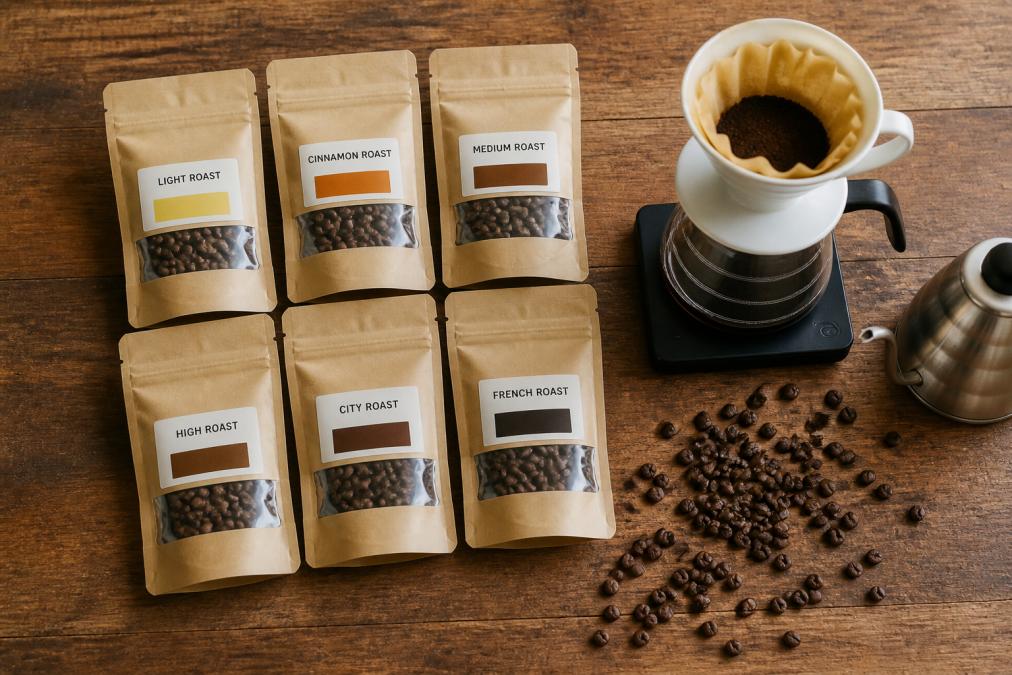
The Cenia's Coffee Best Sellers Sample Pack includes variety across roast profiles, from the 6Bean Blend for espresso to lighter options for drip brewing.

Cost Comparison: Bulk vs. Small Bags
The per-ounce math on bulk coffee looks better until you account for waste and staleness.
A five-pound bag of specialty coffee typically costs between $35 and $50, roughly $0.44 to $0.63 per ounce. A two-ounce sample pack costs $24.99 for six samples, or about $2.08 per ounce. The bulk price looks like a win until you realize three things.
First, bulk beans lose quality over time. By week 8, that $0.44-per-ounce coffee tastes like degraded product. Second, bulk buying often means you finish the bag out of obligation rather than preference. Third, most home brewers don't actually finish five-pound bags before they go stale.
Small-quantity buying costs more per ounce but delivers better value per cup. You're paying for freshness, not just beans. A two-ounce sample at $2.08 per ounce consumed within two weeks delivers better flavor than a bulk bag's week 6 coffee at $0.44 per ounce.
Calculating Your Weekly Consumption
Most home brewers underestimate how much coffee they actually use. This miscalculation drives the bulk-buying mistake.
Start by tracking your actual consumption for two weeks. If you drink two cups daily, that's 14 cups weekly, roughly 0.5 ounces per cup. You're consuming about 7 ounces weekly.
If you consume 7 ounces weekly, a two-ounce sample lasts 2-3 days. A four-ounce bag lasts a week. A twelve-ounce bag lasts roughly 10 days, still within the peak freshness window. Most subscription services offer flexibility to adjust frequency.
Order frequently enough that you finish bags before they age past 30 days. This is the single most important variable in buying coffee beans in smaller quantities successfully.
Sample Packs and Subscription Models: ROI for Home Brewers
Sample packs and subscriptions seem expensive until you calculate actual ROI.
A sample pack like Cenia's Coffee's Single Origin Favorites at $24.99 for six two-ounce samples gives you six different flavor profiles to evaluate. You're paying roughly $4.17 per origin to discover what you actually like. This information prevents you from committing to a 12-ounce bag of a flavor profile you don't enjoy.
Subscriptions work similarly. A recurring order of small quantities ensures freshness consistency. You're not managing inventory or worrying about staleness. For home workers who value ritual and consistency, subscriptions deliver ROI through convenience and reliability.
If a $25 sample pack prevents you from buying a $40 bulk bag of beans you don't finish, the sample paid for itself. If a $30 monthly subscription ensures you never drink stale coffee again, that's worth the premium over occasional bulk purchases.
Cenia's Coffee offers a simple ordering process and reliable delivery, allowing you to pause, skip, or adjust frequency without hassle.
Common Mistakes When Buying Small Quantities
Even with the right approach, home brewers make predictable errors.
The first mistake is confusing "small quantities" with "expensive." Small quantities cost more per ounce but deliver better value per cup. You're paying for flavor, not just beans.
The second mistake is buying without a consumption plan. You order four sample packs on impulse, they arrive, you can't finish them all before they age. Know your weekly consumption before ordering.
The third mistake is poor storage after opening. You buy fresh beans, store them in a paper bag on the counter, and wonder why they taste mediocre by week two. Airtight container, cool, dark place, every time.
The fourth mistake is ignoring roast dates. Always check roast date before buying, and prioritize recently roasted stock.
The fifth mistake is inconsistent brewing. Small quantities reveal brewing issues faster than bulk coffee. Use this as feedback to improve technique, not as a reason to blame the beans.
The final mistake is overthinking it. Buying coffee beans in smaller quantities doesn't require spreadsheets. It requires one simple principle: buy what you'll consume within 3-4 weeks, store it properly, and enjoy it while it's fresh.
Buying coffee beans in smaller quantities solves a problem most home brewers don't realize they have: they're drinking stale coffee and paying bulk prices for it. The shift to small-quantity purchasing means fresher beans, better flavor, less waste, and ultimately better value per cup. Cenia's Coffee makes this approach accessible through sample packs and flexible ordering designed for home brewers who refuse to compromise on freshness. Start with the Single Origin Favorites Sample Pack to discover your preferences, then build a ordering rhythm that matches your actual consumption. Fresh coffee delivered consistently beats bulk coffee sitting on a shelf, every time.
=== FAQ ANSWERS (audit these too, same rules) ===
[1] Q: Is buying coffee beans in smaller quantities more expensive per pound than buying bulk? A: Smaller quantities typically cost more per ounce initially, but the difference shrinks when you factor in waste. Bulk purchases often go stale before you finish them, negating the per-pound savings. Small bags let you buy what you'll consume within the peak freshness window, preserving flavor and aroma. Sample packs like the Single Origin Favorites or Best Sellers packs at $24.99 for six 2-ounce portions let you explore varieties without committing to full bags, making the actual cost-per-cup competitive once you account for quality retention.
[2] Q: How long do coffee beans stay fresh after the roast date? A: Whole beans peak in flavor 7-14 days after roasting, when degassing completes and volatile compounds stabilize. They remain drinkable for 3-4 weeks in an airtight container, though flavor gradually fades. After 30 days, oxidation and moisture absorption noticeably degrade taste and aroma. This timeline makes small-quantity purchasing ideal for home brewers, you finish bags during their prime rather than watching them decline. Check roast dates on packaging; Cenia's Coffee roasts to order, ensuring beans arrive fresh.
[3] Q: What's the best way to store coffee beans at home to keep them fresh? A: Store whole beans in an airtight container away from light, heat, and moisture. Glass jars with rubber seals or dedicated coffee canisters work well. Keep them at room temperature, not the refrigerator, temperature swings cause condensation. For long-term storage beyond 4 weeks, vacuum seal small portions and freeze them; this halts oxidation. Freezing doesn't harm bean density or flavor if done properly. Avoid grinding until just before brewing to preserve grind consistency and volatile flavor compounds. Portion control through smaller bags eliminates the need for extended storage.
[4] Q: What roast profile works best for pour-over brewing? A: Pour-over brewing suits medium and medium-dark roasts that showcase single-origin characteristics and balanced acidity. Light roasts can work but require precise temperature control; dark roasts may taste flat in this brewing method. Single-origin beans highlight regional flavor profiles better than blends in pour-over setups. Cenia's Coffee offers a premium selection of fresh roasted coffee, carefully sourced from trusted farms around the world. Start with their Best Sellers Sample Pack or Single Origin Favorites to test which roast profiles match your pour-over technique, then scale to full bags once you find your preference.
Frequently Asked Questions
Is buying coffee beans in smaller quantities more expensive per pound than buying bulk?
Smaller quantities typically cost more per ounce initially, but the difference shrinks when you factor in waste. Bulk purchases often go stale before you finish them, negating the per-pound savings. Small bags let you buy what you'll consume within the peak freshness window, preserving flavor and aroma. Sample packs like the [Single Origin Favorites](https://ceniascoffee.com/products/single-origin-favorites-sample-pack) or [Best Sellers packs](https://ceniascoffee.com/products/best-sellers-sample-pack-6bean-cowboy-breakfast-peru-mexico-bali) at $24.99 for six 2-ounce portions let you explore varieties without committing to full bags, making the actual cost-per-cup competitive once you account for quality retention.
How long do coffee beans stay fresh after the roast date?
Whole beans peak in flavor 7-14 days after roasting, when degassing completes and volatile compounds stabilize. They remain drinkable for 3-4 weeks in an airtight container, though flavor gradually fades. After 30 days, oxidation and moisture absorption noticeably degrade taste and aroma. This timeline makes small-quantity purchasing ideal for home brewers, you finish bags during their prime rather than watching them decline. Check roast dates on packaging; Cenia's Coffee roasts to order, ensuring beans arrive fresh.
What's the best way to store coffee beans at home to keep them fresh?
Store whole beans in an airtight container away from light, heat, and moisture. Glass jars with rubber seals or dedicated coffee canisters work well. Keep them at room temperature, not the refrigerator, temperature swings cause condensation. For long-term storage beyond 4 weeks, vacuum seal small portions and freeze them; this halts oxidation. Freezing doesn't harm bean density or flavor if done properly. Avoid grinding until just before brewing to preserve grind consistency and volatile flavor compounds. Portion control through smaller bags eliminates the need for extended storage.
What roast profile works best for pour-over brewing?
Pour-over brewing suits medium and medium-dark roasts that showcase single-origin characteristics and balanced acidity. Light roasts can work but require precise temperature control; dark roasts may taste flat in this brewing method. Single-origin beans highlight regional flavor profiles better than blends in pour-over setups. Cenia's Coffee offers a premium selection of fresh roasted coffee, carefully sourced from trusted farms around the world. Start with their [Best Sellers Sample Pack](https://ceniascoffee.com/products/best-sellers-sample-pack-6bean-cowboy-breakfast-peru-mexico-bali) or [Single Origin Favorites](https://ceniascoffee.com/products/single-origin-favorites-sample-pack) to test which roast profiles match your pour-over technique, then scale to full bags once you find your preference.
This article was written using GrandRanker