

Gooseneck Kettles for Pour Over Brewing: A Buyer's Guide
Table of Contents
- Why Gooseneck Kettles Matter for Pour Over Brewing
- Electric vs Stovetop Gooseneck Kettles: Which Works Better
- Key Features to Look For in a Gooseneck Kettle
- Best Temperature for Pour Over Coffee
- How to Use a Gooseneck Kettle for Pour Over
- Common Mistakes to Avoid
- Budget vs Premium Options: What You're Actually Paying For
- Frequently Asked Questions
Last Updated: October 3, 2026
Why Gooseneck Kettles Matter for Pour Over Brewing
Gooseneck kettles pour over coffee with a specialized narrow, curved spout designed to give you precise control over water flow. This precision matters because pour over coffee extraction depends on how water moves through your grounds. The right pouring technique creates even saturation, which pulls out balanced flavors without over-extraction or under-extraction.
Most coffee enthusiasts who switch to gooseneck kettles notice the difference immediately. You can pour slowly, pause mid-brew, and adjust your flow rate in real time. A standard kettle's wide spout forces water out too fast, creating turbulence that disrupts your brew bed. With a gooseneck design, you control the pour, the pour doesn't control you.
At Cenia's Coffee, we recommend gooseneck kettles for anyone serious about pour-over brewing.
Electric vs Stovetop Gooseneck Kettles: Which Works Better
The choice between electric and stovetop gooseneck kettles comes down to speed, consistency, and your brewing workflow. Each approach has real trade-offs worth understanding before you commit.
Electric Kettles: Speed and Precision
Electric gooseneck kettles heat water faster than stovetop models and offer built-in temperature control. Many models include a variable temperature controller that lets you dial in exact degrees. Some even hold your target temperature for extended periods, which is valuable if you're brewing multiple cups or brewing slowly.
The speed advantage is significant. Most electric kettles reach boiling in 3-5 minutes. Stovetop kettles typically take 8-12 minutes. If you're brewing before work or between meetings, that difference adds up. The precision also appeals to coffee enthusiasts who want consistency. You set 200°F and the kettle maintains that temperature, no guesswork.
The trade-off is price and durability. Electric kettles cost more upfront. The heating element can fail over time, and replacement may mean buying a new kettle. They also require a power outlet and take up counter space.
Stovetop Kettles: Simplicity and Reliability
Stovetop gooseneck kettles are mechanical, no electronics, no batteries, no features to break. You fill them, put them on heat, and wait. Once they whistle or steam heavily, you know the water's hot. Many stovetop models last decades because there's almost nothing to fail.
Stovetop kettles cost less and work on any heat source: gas, electric, induction (if you buy an induction-compatible model), or even a camping stove. That flexibility appeals to people who travel or brew in different locations.
The downside is lack of precision. You can't set an exact temperature. You have to guess when the water reaches your target heat. Some people use a separate thermometer, which adds a step. Stovetop kettles also take longer to heat, so they don't suit rushed mornings.
Key Features to Look For in a Gooseneck Kettle
When you're evaluating gooseneck kettles, focus on features that directly impact your brewing experience. Not every feature matters equally.
Flow Rate and Pour Control
The spout design determines how much control you actually have. A well-designed gooseneck spout lets you pour at any speed, from a thin stream to a steady flow. Poor designs force you into narrow ranges. You either pour too fast or the water dribbles.
Look for a spout that's long enough to reach comfortably into your dripper, but not so long that it becomes unwieldy. The opening should be small enough to restrict flow when you want it, but wide enough that you don't fight it. Some kettles have a slight bend at the very tip, which helps you control the exact pour point.
The agitation created by your pouring technique affects extraction consistency. A controlled pour minimizes turbulence in the brew bed, which leads to more even extraction. This is where the gooseneck design proves its value, it's the tool that makes controlled pouring possible.
Material Quality and Heat Retention
Stainless steel is the standard for gooseneck kettles because it heats evenly, resists corrosion, and lasts. Look for food-grade stainless steel, typically 18/10 or 18/8 (the numbers refer to chromium and nickel content). Cheaper kettles use thinner steel that dents easily and heats unevenly.
Thicker walls retain heat better, which matters if you're brewing slowly. A thin-walled kettle cools faster, which can drop your water temperature mid-brew. That affects extraction. A kettle with walls at least 2-3mm thick will hold temperature longer. Some premium models add an insulated base or handle to keep heat where you want it and away from your hand.
Water chemistry also affects longevity. Hard water leaves mineral deposits inside kettles. Descaling removes these deposits, but frequent descaling wears on the kettle. Stainless steel handles this better than other materials.
Ergonomic Handle Design
You're holding this kettle steady while pouring hot water into a small target. The handle design matters more than most people realize. A handle that's too small causes hand fatigue. One that's too large is hard to grip securely.
The best handles have a slight counterbalance, they're weighted so the kettle doesn't tip forward when you pour. This reduces strain on your wrist and gives you more control. The handle should be far enough from the spout that steam doesn't burn your hand. Some handles have a slight curve that fits your grip naturally.
Material also matters. Stainless steel handles conduct heat, so insulation or a wooden accent helps. Silicone handles stay cooler but can wear out. Test the grip in your hand. Your fingers should wrap around comfortably without squeezing hard.
Best Temperature for Pour Over Coffee
The ideal water temperature for pour over coffee is between 195°F and 205°F. This range extracts the flavors you want without pulling out bitter compounds that come from over-extraction.
Temperature matters because heat drives extraction. Too cool (below 190°F) and your coffee tastes weak and sour, under-extracted. Too hot (above 210°F) and it tastes bitter and harsh, over-extracted. The sweet spot sits in that narrow band.
Different coffee profiles benefit from slight adjustments. Lighter roasts often brew better at the higher end (203-205°F) because they need more heat to fully extract their bright, complex flavors. Darker roasts sometimes prefer the lower end (195-200°F) because they're already more extracted during roasting.
If you're using an electric gooseneck kettle with temperature control, dial in your target and you're done. With a stovetop kettle, use a separate thermometer to check the temperature just before brewing.
How to Use a Gooseneck Kettle for Pour Over
Using a gooseneck kettle correctly takes practice, but the technique is learnable. Here's the process broken down into steps.
Step 1: Prepare Your Equipment and Beans
Set up your pour-over dripper on top of your cup or carafe. Place a paper or metal filter inside the dripper. Rinse the filter with hot water, this removes paper dust and preheats your equipment. Discard the rinse water.
Grind your coffee just before brewing. Grind size matters. For pour over, you want a medium-fine grind, finer than drip coffee, coarser than espresso. The grounds should feel like sea salt, not flour. Add your grounds to the filter (typically 1:16 coffee-to-water ratio, so 25 grams of coffee to 400 grams of water for a standard brew).
Step 2: Heat Water to the Right Temperature
Fill your gooseneck kettle with fresh, filtered water. Use filtered water if your tap water is hard, it extends your kettle's life and improves taste. Heat the water to your target temperature (195-205°F). If you're using an electric kettle, set the temperature control. If you're using stovetop, heat until steam rises steadily, then check with a thermometer.
Let the water sit for 30 seconds after it stops actively heating. This allows the temperature to stabilize and gives you a more consistent brew.
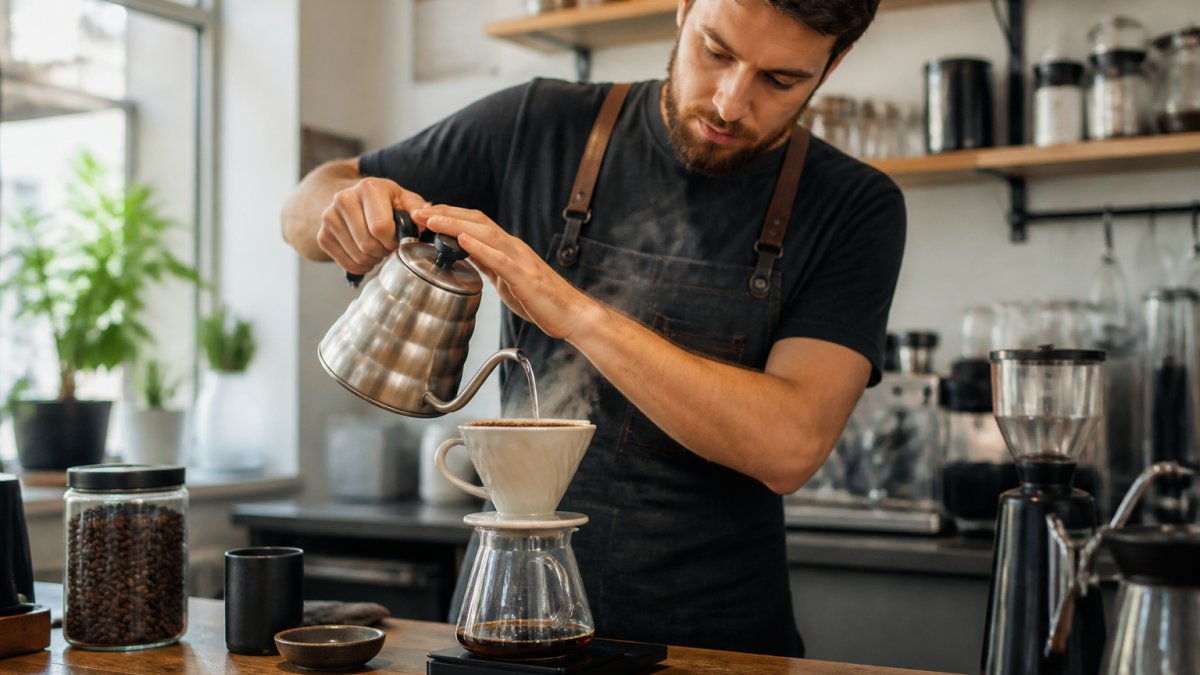
Step 3: Execute Controlled Pouring Technique
Start with a small pour, about twice the weight of your coffee grounds in water. Pour slowly in a circular motion, wetting all the grounds evenly. This is the "bloom" phase, which takes about 30-45 seconds. The bloom lets CO2 escape from the grounds, which improves extraction.
After the bloom, pour in a steady stream, maintaining a consistent flow rate. Aim for a pour that takes 2-3 minutes total (from first pour to last drop). Pour in circular motions or in a slow spiral from the center outward.
Control your flow by adjusting your hand height and pouring speed. The gooseneck spout lets you pour thin or thick. Use that control to keep the water level in your dripper consistent. If water level drops too fast, slow your pour. If it rises too high, pause briefly.
Common Mistakes to Avoid
Most brewing problems come from technique, not equipment. Watch for these patterns.
Pouring too fast creates turbulence and uneven extraction. Water channels through the coffee instead of moving through it evenly. Your cup tastes thin and sour. Slow your pour.
Grinding too coarse slows water flow and under-extracts. Your coffee tastes weak and watery. Grind finer. Grinding too fine clogs your dripper and over-extracts. Your coffee tastes bitter and harsh. Grind coarser.
Skipping the bloom means CO2 stays trapped in the grounds, which disrupts water flow and extraction. Always bloom for 30-45 seconds. Using water that's too cool under-extracts. Use water between 195-205°F. Using water that's too hot over-extracts. Stay below 210°F.
Not preheating your equipment cools your water as it hits the dripper and cup. Rinse everything with hot water before you brew. Reusing old grounds wastes time. Fresh grounds make better coffee.
Budget vs Premium Options: What You're Actually Paying For
Gooseneck kettles range from under $30 to over $200. Understanding where your money goes helps you choose wisely.
Budget kettles ($25-60) are stovetop models with basic stainless steel construction. They heat water and pour it. They work.
Mid-range kettles ($60-120) add better materials, improved spout design, and more comfortable handles. Electric models enter this range. You get faster heating, better temperature stability, and a more pleasant pouring experience.
Premium kettles ($120+) feature precision engineering, superior materials, and sometimes variable temperature control with a hold function. Some add gooseneck-specific features like counterbalanced handles or optimized spout geometry.
The practical difference: a budget kettle teaches you pour-over technique, but a better kettle makes technique easier and more forgiving.
| Feature | Budget Kettles | Mid-Range Kettles | Premium Kettles |
|---|---|---|---|
| Heating method | Stovetop | Electric or stovetop | Electric with control |
| Heat retention | Basic | Good | Excellent |
| Spout precision | Adequate | Precise | Highly precise |
| Temperature control | None | Variable (electric) | Variable + hold |
| Typical lifespan | 2-4 years | 4-8 years | 8+ years |
| Best for | Learning | Regular brewing | Daily enthusiasts |
The gooseneck kettle is one of the few tools that genuinely improves your coffee without changing your beans or brewing method.
Frequently Asked Questions
Why is a gooseneck kettle better for pour over coffee?
A gooseneck kettle's narrow, curved spout gives you precise control over flow rate and pour direction. This precision ensures even water distribution across the coffee grounds, which improves extraction consistency and brew bed agitation. The controlled pouring prevents turbulence that can lead to uneven extraction, resulting in a more balanced cup. For manual brewing methods like pour over, this control directly affects the final flavor.
What is the difference between electric and stovetop gooseneck kettles?
Electric kettles heat water faster and often include variable temperature control and auto-shutoff features, making them convenient for home brewers. Stovetop kettles require manual monitoring but offer simplicity, durability, and no dependency on electricity. Electric models work better if you brew multiple cups daily; stovetop models suit occasional brewers or those who prefer minimal equipment. Both can deliver excellent pour over results when used correctly.
Does water temperature control matter for pour over coffee?
Yes, water temperature significantly impacts extraction. Optimal pour over brewing typically occurs between 195-205°F. Water that's too hot over-extracts, creating bitter flavors; water that's too cool under-extracts, resulting in sour or thin coffee. Variable temperature control, especially on electric kettles with PID controllers, allows you to dial in the exact temperature your specific roast profile needs, improving thermal stability throughout the brew.
Do I really need a gooseneck kettle for pour over brewing?
Technically, no, you can pour over with a standard kettle. However, a gooseneck kettle's design makes a measurable difference in pouring precision and brew consistency. The narrow spout lets you control flow rate and avoid splashing, and the ergonomic handle reduces hand fatigue during longer pours. If you're serious about pour over and want to maximize extraction consistency, a gooseneck kettle is a worthwhile investment.