

Light Roast Beans for Cold Brew: A Complete Guide
Table of Contents
- Why Light Roast Works Best for Cold Brew
- Cold Brew Coffee Grind Size for Light Roasts
- Cold Brew Steeping Time: Getting the Timing Right
- How to Make Cold Brew with Light Roast Beans
- Top Light Roast Options: Single Origin and Blends
- Flavor Profiles and Tasting Notes in Cold Extraction
- Brew Ratio and Water Chemistry Adjustments
- Frequently Asked Questions
Last Updated: September 22, 2026
Light roast cold brew is a brewing method that extracts the bright, nuanced flavors of lighter roasted beans using cold water immersion over an extended period. Unlike hot brewing, which quickly pulls oils and compounds from the bean, cold extraction creates a smoother, less acidic cup while preserving the delicate floral and fruity notes that define quality light roasts. This guide from Cenia's Coffee covers everything you need to know about selecting, grinding, and brewing light roast beans for cold brew at home.

Why Light Roast Works Best for Cold Brew
Light roasts are ideal for cold brew because their density and flavor complexity shine through the slow immersion process. During the roasting process, light roasts spend less time over heat, which means the beans retain more of their origin characteristics. These beans are denser than dark roasts, allowing them to withstand the extended steeping without becoming over-extracted or bitter.
The cold extraction method works beautifully with light roasts because it avoids the high temperatures that can scorch delicate floral and fruity notes. When you brew light roast beans hot, you risk pulling out harsh compounds that cold water simply cannot extract. The result is a cleaner cup with vibrant acidity and pronounced tasting notes.
Many coffee enthusiasts overlook light roasts for cold brew, assuming they need bold, dark beans for a "strong" cup. That's backwards. A well-made light roast cold brew delivers complexity and brightness that dark roast versions cannot match. The full immersion process brings out subtle sweetness and origin-specific flavors that make the extra brewing time worthwhile.
Cold Brew Coffee Grind Size for Light Roasts
The grind size for light roast cold brew should be coarse, similar to French press consistency. Coarse grounds slow down the extraction process and prevent over-extraction, which is critical when you're steeping for 12-24 hours. A grind that's too fine will result in a muddy, over-extracted cup with an unpleasant astringent finish.
Light roasts have denser beans than dark roasts, which means they require slightly more aggressive grinding to break them down effectively. A burr grinder is essential here, blade grinders produce inconsistent particle sizes that lead to uneven extraction. Aim for grounds that resemble breadcrumbs or coarse sand.
The relationship between grind size and extraction time is direct. Finer grounds extract faster, so if you go too fine with a 24-hour steep, you'll pull out bitter compounds. Coarse grounds extract slower, which is exactly what you want with cold water and extended time. This is where many home brewers make mistakes, they grind too fine thinking it will make a stronger cup, when actually it just makes a worse one.
Cold Brew Steeping Time: Getting the Timing Right
Cold brew steeping time for light roasts typically ranges from 16 to 24 hours, depending on your grind size, water temperature, and desired strength. Most home brewers find that 18-20 hours hits the sweet spot, long enough to extract the full flavor profile without pulling out harsh compounds.
Temperature matters more than you might think. If your kitchen stays around 68-72°F, you're in the ideal range. Cooler temperatures slow extraction slightly, so a 16-hour brew in a cold kitchen might need 20 hours. Warmer temperatures speed extraction, so 16 hours in a 75°F environment might be enough. This is why temperature-controlled cold brew has become popular among serious coffee enthusiasts, it removes the guesswork.
The visual cues matter too. After 12 hours, your brew should be noticeably darker but not black. After 18-20 hours, it should have a rich brown color. If it looks like motor oil, you've gone too long. Taste it at the 16-hour mark and every 2 hours after that until you find your preference. You're looking for brightness and sweetness, not bitterness.
How to Make Cold Brew with Light Roast Beans
Making cold brew with light roasts is straightforward, but precision matters. Start with a brew ratio of 1 part coffee to 4 parts water by weight. This is a good baseline for light roasts, you can adjust up to 1:5 if you prefer a lighter cup or down to 1:3 if you want something bolder.
Use filtered or high-quality tap water. Water chemistry impacts extraction more than most brewers realize. Hard water with high mineral content extracts differently than soft water. If your tap water is heavily chlorinated, filtering it will improve the final cup noticeably.
Step-by-step process:
- Grind your light roast beans to coarse consistency immediately before brewing
- Add grounds to a clean glass jar or brewing vessel
- Pour cold water slowly, ensuring all grounds are fully saturated
- Stir gently to break up any clumps at the top
- Cover loosely and place in a cool, dark location (pantry or refrigerator)
- Stir briefly at the 12-hour mark to redistribute grounds
- After 18-20 hours, strain through a fine mesh or cheesecloth into a separate container
- Store the concentrate in the refrigerator for up to 2 weeks
- Dilute 1 part concentrate with 1-2 parts water or milk when serving
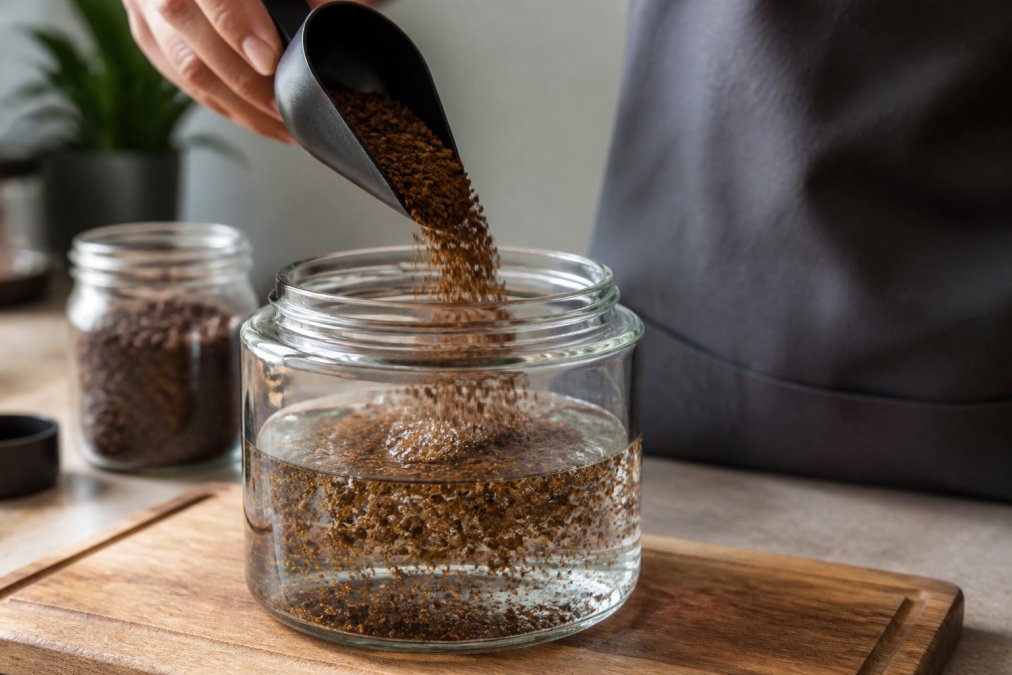
The key is patience and consistency. Use the same grind size, water, and timing each batch so you can dial in exactly what you like. Once you've made cold brew a few times, the process becomes automatic.
Top Light Roast Options: Single Origin and Blends
Cenia's Coffee offers several excellent light roast options designed specifically for cold brewing. Each brings different flavor characteristics to the cup, so your choice depends on whether you prefer bright, fruity profiles or more balanced, chocolate-forward notes.
Tanzania: Floral and Fruity Single Origin
Tanzania light roast from Cenia's Coffee delivers a distinctive floral and fruity profile that shines in cold extraction. This single-origin bean comes from small cooperative farmers in the Mbeya region, grown at high altitude (1,200-1,900 meters) in clay mineral soil. The combination of altitude and soil type creates beans with natural acidity and complex flavor development.
The tasting profile includes pear, floral notes, jasmine, and strawberry, flavors that cold water extraction preserves beautifully. The fully washed and raised-bed dried process contributes to the clean cup and bright acidity.
Ethiopia Natural: Chocolate and Caramel Notes
Ethiopia Natural from Cenia's Coffee offers a different flavor profile, one that balances brightness with deeper chocolate and caramel notes. Grown in the Sidama zone at 1,700-1,900 meters, these indigenous heirloom cultivars are processed naturally (dried on raised beds after hand sorting), which develops the chocolate and fruity character.
Breakfast Blend: Balanced South American Profile
The Breakfast Blend from Cenia's Coffee is a lightly roasted blend of South American coffees designed specifically as a morning option. This blend combines beans from partial sun and full sun growing environments at high mountain elevations, creating balance between brightness and body.
Flavor Profiles and Tasting Notes in Cold Extraction
Cold extraction creates dramatically different flavor expression than hot brewing. The slow immersion process emphasizes sweetness and mouthfeel while minimizing harsh, astringent compounds. Light roast beans show their origin characteristics more clearly in cold brew than in any other preparation method.
Brew Ratio and Water Chemistry Adjustments
The brew ratio, the proportion of coffee to water, is your primary control for strength and flavor intensity. The standard 1:4 ratio (1 part coffee to 4 parts water by weight) produces a concentrate that you dilute before drinking. A 1:5 ratio creates a lighter concentrate, while 1:3 creates something bolder.
Frequently Asked Questions
Can I use light roast for cold brew?
Yes, light roast is excellent for cold brew. The cold extraction process brings out the brightness and acidity that define light roasts, creating a clean cup with vibrant flavor notes. Light roasts have denser beans that resist over-extraction during the long steeping time, so you retain the floral, fruity, and citrus undertones that might be muted in hot brewing. Many specialty coffee enthusiasts prefer light roast for cold brew specifically because the extended extraction time highlights origin characteristics.
What grind size should I use for light roast cold brew?
Use a coarse grind for light roast cold brew, similar to French press consistency. The larger particle size slows extraction during the 12-24 hour steeping period, preventing the brew from becoming too acidic or bitter. Coarse grounds also make filtering easier at the end. If your grind is too fine, the extended immersion brewing will over-extract the denser light roast beans, resulting in a harsh, unbalanced cup rather than the clean, crisp profile you're aiming for.
How long should light roast cold brew steep?
Light roast cold brew typically steeps for 12-24 hours, depending on your grind size and water temperature. Start with 16 hours as a baseline. Finer grinds may reach full extraction closer to 12 hours, while coarser grinds benefit from the full 24-hour window. The extended steeping time allows the cold extraction process to fully develop the origin characteristics and subtle sweetness. Taste at 16 hours; if the brew is too weak, extend to 20-24 hours. This longer extraction compensates for the absence of heat.
Does light roast have more caffeine in cold brew?
Light roast beans contain slightly more caffeine than dark roasts because less caffeine is lost during the roasting process. However, the caffeine content in your final cold brew cup depends more on the brew ratio and steeping time than the roast level. A stronger brew ratio (more coffee to water) and longer steeping will yield more caffeine regardless of roast. For maximum caffeine, use a 1:4 coffee-to-water ratio and steep for the full 24 hours with light roast beans.