

How Long to Steep Cold Brew Coffee
Table of Contents
- The Ideal Steep Time for Cold Brew Coffee
- Factors That Affect How Long to Steep Cold Brew
- Cold Brew Steeping Temperature: Room vs. Refrigerator
- Best Grind Size for Cold Brew
- Cold Brew Coffee Ratio and Dilution
- Recognizing Over-Extraction and Under-Extraction
- Step-by-Step Cold Brew Brewing Process
- Decaf vs. Caffeinated Steep Time Differences
- Frequently Asked Questions
Last Updated: September 18, 2026
The Ideal Steep Time for Cold Brew Coffee
The ideal steep time for steep cold brew coffee is between 12 and 18 hours. This window allows the coffee grounds to fully release their flavors through immersion brewing without over-extracting and creating bitterness. Most people find that 16 hours hits the sweet spot, long enough to pull out all the good stuff, short enough to avoid harsh, unpleasant notes.

Steep time is where cold brew differs most from hot brewing methods. Hot water extracts quickly, which is why pour-over takes minutes. Cold water moves slowly through the grounds. That slow extraction is actually the point. It creates a smoother, less acidic cup with a natural sweetness hot brewing often misses.
The exact timing depends on several factors we'll cover below. But the 12-18 hour range is your starting point. If you're new to cold brew, aim for 16 hours on your first batch. Adjust from there based on how the result tastes.
Factors That Affect How Long to Steep Cold Brew
Not every batch needs the same steep time. Several variables change how fast extraction happens and how strong your final brew becomes.
Grind Size and Extraction Speed
Coarse grind is essential for cold brew. The grounds should look like breadcrumbs or sea salt, not powder. Coarse grounds slow down water movement through the coffee, which is exactly what you want with cold water.

If your grind is too fine, water gets stuck between particles. Extraction happens faster, but unevenly. You get over-extracted bitter notes mixed with under-extracted sour ones. A coarse grind lets water flow steadily through the entire batch.
Grind size directly impacts how long you steep. Coarser grounds may need the full 18 hours to extract properly. Medium-coarse grounds might be ready in 14-16 hours. Finer grounds (though not ideal for cold brew) extract faster but produce a muddier, less clean cup.
Water Quality and Altitude
Water quality matters more than most people realize. Tap water with high mineral content (hard water) extracts differently than soft water. Minerals affect how dissolved solids move through the grounds.
If your tap water is very hard, extraction may slow down slightly. You might need an extra 1-2 hours of steep time. If your water is soft or filtered, extraction happens faster. You might finish in 14 hours instead of 16.
Altitude affects water temperature and oxygen levels. At higher elevations, water boils at lower temperatures. This changes how cold water interacts with coffee. If you're brewing at altitude above 5,000 feet, add 1-2 hours to your steep time to compensate.
Most people at sea level with standard tap water can stick to the 12-18 hour window. If you use filtered or distilled water, you're in the faster range. If you have very hard tap water, lean toward the longer end.
Cold Brew Steeping Temperature: Room vs. Refrigerator
Temperature is the biggest factor controlling steep time. Cold brew can steep at room temperature or in the refrigerator. The choice changes how long extraction takes.
Room temperature steeping of steep cold brew coffee (around 68-72°F) extracts faster than refrigerated brewing. At room temp, you might finish in 12-14 hours. The warmer water moves through grounds more actively, pulling out flavors and caffeine more quickly.
Refrigerated steeping (around 38-40°F) extracts much more slowly. You'll need the full 16-18 hours, sometimes even 20 hours. The cold slows molecular movement. Extraction becomes a genuinely slow process.
Many people prefer room temperature steeping because it's faster and uses less fridge space. The trade-off is that room temperature brewing is slightly more prone to oxidation over time. Refrigerated brewing keeps the coffee fresher longer and reduces the risk of off-flavors developing.
If you steep at room temperature, filter and move to the fridge within 24 hours. If you steep in the fridge, you can leave it there for up to 48 hours before filtering without quality loss.
Best Grind Size for Cold Brew
Coarse grind is non-negotiable for cold brew. Think of it as similar to French press grind, chunky enough to see individual pieces, not powder.
Why coarse? Cold water doesn't have the energy that hot water has. Fine grounds create too much resistance. Water can't flow through evenly. You end up with some grounds over-extracted and others under-extracted. Coarse grounds let water move steadily through the entire batch.
The grind size directly controls extraction speed. Coarser grounds need more time to release their flavors. That's why you steep for 12-18 hours instead of minutes. The slow, even extraction through coarse grounds produces cold brew's signature smooth, clean taste.
If you're buying pre-ground coffee, look for "cold brew grind" on the label. If you're grinding at home, use the coarsest setting on your grinder. The grounds should feel gritty, like sand or breadcrumbs. If you're unsure, grind coarser rather than finer. You can always steep longer.
Cold Brew Coffee Ratio and Dilution
The coffee-to-water ratio controls strength. Most cold brew uses a 1:4 or 1:5 ratio by weight. That means 1 part coffee to 4 or 5 parts water.
A 1:4 ratio produces concentrate. This is strong stuff. You dilute it 1:1 with water or milk when you drink it. A 1:5 ratio produces a ready-to-drink brew that needs less dilution.
Cenia's Coffee offers Cold Brew Coffee specifically blended for this method. The dark French roast with coarse grounds is designed to steep properly and produce a smooth, rich concentrate you can use all week.
The ratio affects how much total dissolved solids end up in your final cup. Higher coffee-to-water ratios extract more. Lower ratios extract less. Both work fine. It depends on how you like to drink it.
| Ratio | Strength | Best For | Typical Dilution |
|---|---|---|---|
| 1:3 | Very strong concentrate | Espresso-style shots | 1:2 water or milk |
| 1:4 | Strong concentrate | Daily drinking | 1:1 water or milk |
| 1:5 | Medium concentrate | Ready-to-drink | Minimal dilution |
| 1:6 | Light concentrate | Cold brew cocktails | Often used straight |
Recognizing Over-Extraction and Under-Extraction
Over-extracted cold brew tastes harsh, bitter, and unpleasant. The grounds have released too many tannins and other compounds that create that astringent, mouth-puckering sensation. Over-extraction usually happens when you steep too long or use too-fine grounds.
Signs of over-extraction:
- Bitter, harsh aftertaste
- Unpleasant astringency
- Loss of the smooth, natural sweetness cold brew should have
- Muddy, flat flavor profile
Under-extracted cold brew tastes sour, weak, and thin. The grounds haven't had enough time to release their full flavor.
Signs of under-extraction:
- Sour, vinegary taste
- Weak, thin body
- Lack of flavor depth
- Sharp acidity that doesn't feel balanced
Step-by-Step Cold Brew Brewing Process
Making cold brew at home takes minimal equipment and almost no active work. Most of the time is just waiting.
What You'll Need
- Coffee beans, coarsely ground (or pre-ground cold brew)
- Water (filtered water works best)
- A brewing vessel (glass jar, pitcher, or dedicated cold brew maker)
- A fine mesh strainer or cheesecloth
- A filter (optional, but recommended for cleaner results)
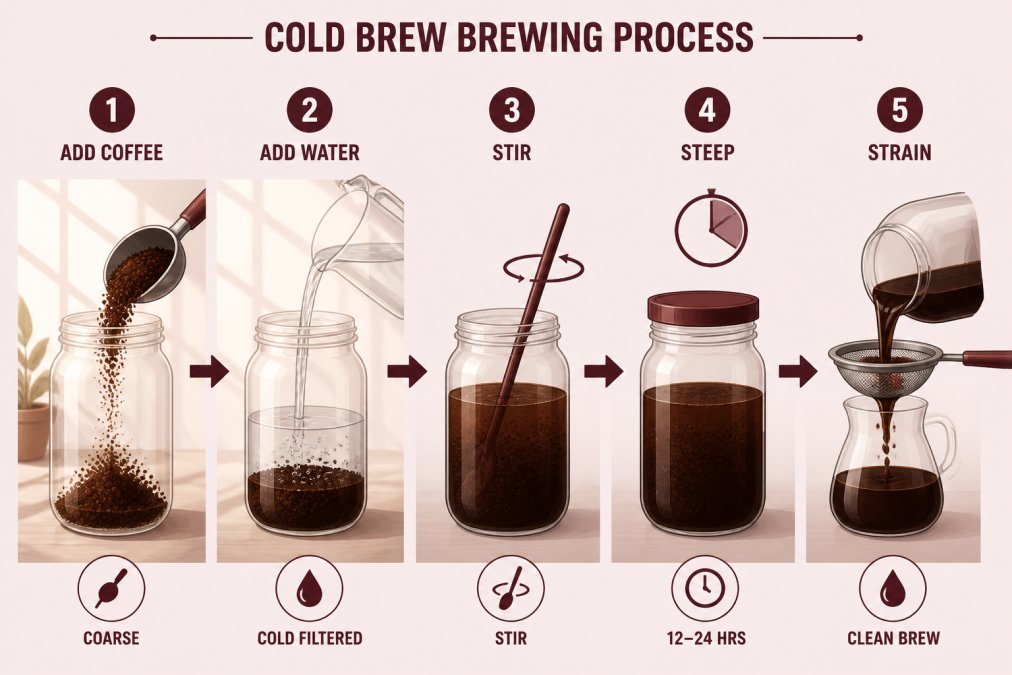
Brewing Steps
Step 1: Measure and grind (Time: 5 minutes)
Decide on your ratio. For a 1:4 concentrate, use 1 cup of coffee to 4 cups of water. Weigh if possible, it's more accurate than volume. Make sure your grind is coarse.
Step 3: Add water slowly (Time: 5 minutes)
Step 4: Cover and steep (Time: 12-18 hours)
Step 5: Filter (Time: 10-15 minutes)
Step 6: Store your concentrate (Time: 2 minutes)
Common Mistakes to Avoid
Using too-fine grounds is the biggest mistake. It creates sediment, muddy flavor, and uneven extraction. Always use coarse grind specifically for cold brew.
Decaf vs. Caffeinated Steep Time Differences
Decaf coffee extracts slightly differently than caffeinated coffee. The decaffeination process changes the bean's structure slightly, affecting how water moves through it.
Frequently Asked Questions
Is 12 hours enough to steep cold brew?
Twelve hours produces a lighter, more acidic cold brew concentrate with less body. Most brewers prefer 15-18 hours for fuller extraction and balanced flavor. At 12 hours, you'll notice brighter acidity and more pronounced origin characteristics, ideal if you prefer a smoother, less intense cup. Test it once to see if the flavor profile matches your preference, then adjust upward if you want deeper extraction.
What is the best cold brew coffee ratio?
A standard cold brew coffee ratio is 1 part coarse grounds to 4-5 parts water by weight. For a concentrate, use 1:3 or 1:4. If brewing 1 pound of coffee, use 4-5 pounds of water. This ratio produces a balanced concentrate that extracts well over 15-18 hours without over-extraction. Adjust based on your grind size and steep time, finer grounds may need less time, while coarser grounds benefit from longer steeping.
Can you let cold brew steep too long?
Yes. Steeping beyond 24 hours increases the risk of over-extraction, which produces bitter, astringent flavors from excessive tannin and total dissolved solids release. Most brewers stop at 18-24 hours maximum. If you accidentally steep longer, the concentrate will still be drinkable but may taste harsh. For best results, strain and filter your cold brew once it reaches 18 hours, then refrigerate to halt extraction.
Should cold brew be steeped at room temperature or in the fridge?
Room temperature steeping (68-72°F) extracts faster and more efficiently than refrigerated brewing (35-40°F). Room temperature cold brew typically reaches full extraction in 12-15 hours, while refrigerated cold brew needs 18-24 hours due to slower chemical extraction rates. Room temperature brewing also produces a smoother mouthfeel and more developed flavor profile. Once steeped, refrigerate your concentrate to stop extraction and preserve shelf life for up to two weeks.