

How to Find Ethical Coffee Roasters (2026 Guide)
Table of Contents
- What Makes a Coffee Roaster Ethical?
- Fair Trade Coffee Certifications: What They Actually Guarantee
- Coffee Supply Chain Transparency: Questions to Ask Your Roaster
- How to Read Coffee Labels to Spot Greenwashing
- The Cost Breakdown of a Cup of Ethical Coffee
- A Checklist for Evaluating Ethical Coffee Roasters
- Conclusion: Start With a Sample Pack
- Frequently Asked Questions
Last Updated: September 6, 2026
Finding ethical coffee roasters requires verifying who grew the beans, how much they were paid, and whether the roaster can prove it. Below, we'll show you how to evaluate any roaster independently, including which certifications matter, what label terms mean, and the questions that reveal the truth.
What Makes a Coffee Roaster Ethical?
An ethical coffee roaster prioritizes farmer compensation, environmental stewardship, and supply chain transparency over profit margins alone.
The real test is whether a roaster can trace its beans to specific farms and explain how much of your dollar reaches the producer. A roaster buying commodity coffee through anonymous brokers cannot call itself ethical, regardless of packaging.
The specialty coffee industry has shifted toward this understanding in recent years. As documented by the Specialty Coffee Association's research on sustainability, economic viability for producers is the foundation on which quality and environmental efforts rest.
The Difference Between Fair Trade and Direct Trade Coffee
The core difference between fair trade and direct trade coffee comes down to certification versus relationship. Fair trade is a third-party certified model with set minimum prices. Direct trade is an informal arrangement where roasters buy straight from farms, often paying well above fair trade minimums.
Fair trade guarantees a floor price, protecting farmers during market crashes, but the certification costs money and the premium does not always translate into better quality. Direct trade skips the middleman, letting roasters pay more for exceptional lots and build long-term relationships, but it has no oversight, so you must trust the roaster's word.
Fair Trade Coffee Certifications: What They Actually Guarantee
Fair trade certification is a starting point, not a finish line. It guarantees a minimum price floor and a social premium for community projects, but it does not guarantee the highest quality beans or a living wage beyond that floor.
Here is the breakdown of the major seals you will encounter on bags in the United States:
Fair Trade USA vs. Fairtrade International
These are two separate organizations with different standards, and they are not interchangeable.
- Fair Trade USA allows both smallholder cooperatives and larger farms (including estates) to be certified. Its standard sets a minimum price for coffee, which is currently $1.40 per pound for washed Arabica, and an additional $0.20 per pound social premium that goes to a community fund. It also has a separate standard for 'climate smart' agriculture.
- Fairtrade International (the global body that licenses the Fairtrade mark you see on most European and some U.S. products) primarily certifies smallholder cooperatives. Its minimum price for washed Arabica is also $1.40 per pound, but the social premium is higher at $0.30 per pound. It also has a 'Fairtrade Minimum Price' that adjusts upward if the market price (the 'C' price) rises above a certain threshold.
A key limitation of both models is that the minimum price often does not cover the true cost of sustainable production in high-cost regions. The premium is also paid to the cooperative, not directly to the individual farmer.
The Role of Organic and Other Environmental Seals
Organic certification, under the USDA's National Organic Program, verifies farming methods, specifically that no synthetic fertilizers or pesticides were used (usda.gov). It says nothing about labor conditions or the price paid to the grower.
Other seals you will see include:
- Rainforest Alliance: This is a broader sustainability standard that covers environmental, social, and economic criteria. It requires a 'living wage' assessment but does not guarantee a specific price premium is paid to the farmer. The certification is often applied to larger farms, not just smallholders.
- Bird Friendly (Smithsonian): This is the gold standard for habitat conservation. It requires the coffee to be both organic and grown under a shade canopy that meets specific criteria for forest structure. It is a rigorous, science-based standard, but it does not address farmer pay.
- Shade-Grown: This term is not regulated. A roaster can claim 'shade-grown' for coffee that has a few trees on the farm. It is a marketing term unless backed by a third-party audit like Bird Friendly.
The Practical Takeaway
Certifications signal baseline compliance, not exceptional ethics. When you see a certification seal, ask: "What does this roaster do beyond this seal?"
Coffee Supply Chain Transparency: Questions to Ask Your Roaster
Coffee supply chain transparency starts with a roaster's willingness to name its farms and share pricing details. If a roaster cannot tell you the region, the grower, and the price paid, it is likely buying from commodity markets.
Ask these five questions before buying from any roaster for the first time:
- Can you name the specific farm or cooperative where this coffee was grown?
- How much above the fair trade minimum price did you pay per pound?
- Do you publish your sourcing prices publicly or share them on request?
- How do you verify that your farmers receive the premiums you pay?
- What is your relationship with the producer, and how long have you worked together?
A roaster with genuine supply chain transparency answers these without hesitation. Vague responses like "we source from trusted partners" are red flags. Remember that the FTC's Green Guides require that environmental marketing claims be substantiated, so a roaster making unverified ethical claims is on shaky legal ground as well.
How to Read Coffee Labels to Spot Greenwashing
Greenwashing in coffee appears when brands use terms like "ethically sourced" or "sustainable" without certification or verifiable proof. Reading coffee labels is your first defense against paying a premium for marketing hype.
Start with the origin: a label naming a specific farm or cooperative is stronger than one that says "blend of origins." Look for altitude, variety, and processing method. Next, check for independently audited certification labels. Finally, look for price transparency, such as a stated price paid per pound to the grower.
Be wary of these label terms that sound meaningful but are not regulated:
- "Directly traded" with no explanation of how the relationship works
- "Sustainable" with no third-party audit or published practices
- "Farmer friendly" without naming a specific farm or paying above-market prices
- "Single origin" without naming the country, region, or producer
Origin-specific labeling and third-party audits are the strongest signals of authenticity. The USDA organic seal and Fair Trade certification are backed by inspection systems.
The Cost Breakdown of a Cup of Ethical Coffee
Most guides tell you that ethical coffee costs more, but they rarely show you where that money actually goes. This section provides a transparent model for understanding the price you pay, including the carbon cost of getting the bean to your cup.
Where Your Dollar Goes
When you pay $20 to $25 for a 12-ounce bag of specialty coffee, here is a typical breakdown of how that money is distributed across the supply chain. These are approximate ranges based on common industry practice.
- Green Bean Cost (35-45%): This is the largest single line item. Ethical roasters pay $2.50 to $5.00+ per pound of green coffee, versus the commodity 'C' price which has historically hovered around $1.00 to $1.50 per pound. The premium you pay here is the difference between a farmer covering costs and a farmer thriving. This is the most important number to ask a roaster about.
- Roasting Labor & Overhead (15-20%): This covers the roaster's rent, utilities, equipment depreciation, and the labor of the person running the roaster. Small-batch roasting is labor-intensive and not easily automated.
- Packaging & Materials (5-10%): Bags with one-way valves, custom printing, and compostable materials cost more than generic bags. This is a small but non-zero cost.
- Shipping & Logistics (10-15%): This is the cost of moving the green beans from the origin country to the roaster, and then the roasted coffee to your door. This is where the carbon footprint issue becomes critical.
- Roaster Margin (10-20%): This is what keeps the roaster in business. For a small roaster, this margin is often thin, and it is what allows them to reinvest in future harvests and pay their own staff a living wage.
The Carbon Footprint Gap: Shipping vs. Farming
The ethical coffee conversation almost always focuses on social justice, farmer pay, child labor, and community development, while the environmental conversation usually stops at farming practices. Rarely discussed is the carbon footprint of the shipping itself.
The carbon footprint of a cup of coffee is not dominated by the farming stage; it is heavily influenced by how the beans travel from the farm to your roaster.
- Ocean Freight: Shipping a container of green coffee from a port in Colombia or Ethiopia to a U.S. port is the most carbon-efficient way to move it. A study by the Specialty Coffee Association found that ocean freight accounts for roughly 1-2% of the total carbon footprint of a cup of coffee.
- Air Freight: This is the hidden problem. Some roasters use air freight to get 'microlots' or 'fresh crop' coffee to market faster. Air freight has a carbon footprint that is roughly 20 to 40 times higher than ocean freight. A single kilogram of coffee shipped by air can generate as much CO2 as shipping the same amount by sea from a far more distant origin.
A roaster buying from a farm in Kenya that ships by sea may have a lower carbon footprint than one buying from a farm in Costa Rica that ships by air. The mode of transport is the dominant variable.
What to Ask Your Roaster About Carbon
When you are evaluating a roaster, ask these two questions that almost no one else is asking:
- "Do you ship your green coffee by ocean freight or air freight?" A roaster committed to environmental ethics should be able to answer this. If they are air-freighting beans, they should have a compelling reason (e.g., a highly perishable experimental lot) and should be offsetting that carbon.
- "Do you publish any carbon footprint data for your supply chain?" Very few roasters do this, but the ones that are serious about environmental sustainability are starting to. If a roaster cannot answer this, they are likely not measuring it, which means they are not managing it.
The Real Price of a 'Cheap' Bag
When you buy a $10 bag of coffee, the green bean cost is likely under $1.50 per pound, meaning the farmer is paid at or near commodity prices. The roaster likely buys in bulk and roasts in large batches, sacrificing freshness, and the carbon footprint is likely higher because they optimize for cost.
When you pay $20 to $25 for a bag, you are paying for a farmer to cover their costs, for a roaster to use ocean freight instead of air freight, and for a supply chain transparent enough to explain where every dollar goes.
A Checklist for Evaluating Ethical Coffee Roasters
Ethical coffee roasters share common traits you can verify with a few minutes of research. Use this checklist before your first purchase.
- Does the roaster name specific farms, cooperatives, or producers on its website or packaging?
- Does it publish the price paid for green coffee or state that it pays above fair trade minimums?
- Does it hold credible third-party certifications where relevant, such as USDA Organic or Fair Trade?
- Can it explain its direct trade relationships, including how it verifies farmer payments?
- Does it provide origin details such as region, altitude, variety, and processing method?
- Does it avoid vague marketing terms without substantiation?
- Does it consider the carbon footprint of shipping alongside farming practices?
- Does it roast to order, indicating fresh stock and a smaller inventory footprint?
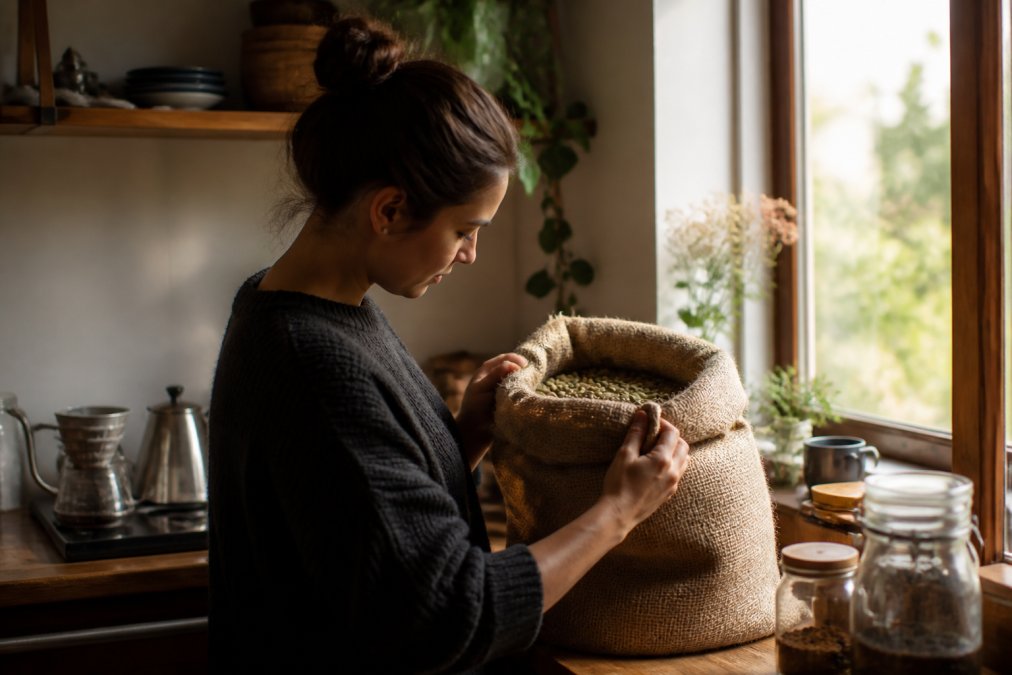
A roaster that passes most of these checks is worth trying; one that fails several is likely selling commodity coffee with ethical branding. The checklist works for local roasters and online shops alike.
Conclusion: Start With a Sample Pack
Finding ethical coffee roasters requires shifting from passive consumer to active verifier. The roasters worth your money name their farms, publish their prices, and welcome your questions. Certifications provide a useful baseline, but genuine supply chain transparency goes further.
At Cenia's Coffee, we put this philosophy into practice by sourcing from trusted farms around the world to ensure maximum flavor and aroma. Our beans are roasted to order, providing a smooth and rich experience for every coffee lover. Our Best Sellers Sample Pack lets you explore our premium selection. For a dark roast, the French Roast delivers a bold cup from specialty grade beans. You can also try our Ethiopia Natural, which offers a med-light roast with tasting notes of milk chocolate, fruity, and caramel. Start with a sample pack and experience coffee that is as flavorful as it is convenient. Get started with Cenia's Coffee and enjoy a smooth and rich coffee experience.


Frequently Asked Questions
What is the difference between Fair Trade and Direct Trade coffee?
Fair Trade coffee relies on third-party certifications that set a minimum price floor and require audits. Direct Trade is a model where roasters buy straight from farms, often paying above Fair Trade prices. The key difference: Fair Trade guarantees a baseline through certification, while Direct Trade depends on the roaster's own standards and relationships. Direct Trade can pay more, but it lacks independent verification, so you must check how roasters prove their claims.
What certifications should I look for when buying ethical coffee?
Look for USDA Organic, Fair Trade, and Rainforest Alliance labels as a starting point. Each covers a different area: organic addresses farming inputs, Fair Trade focuses on farmer compensation, and Rainforest Alliance includes environmental criteria. Bird Friendly certification adds shade-grown requirements. No single label covers everything, so treat certifications as minimum standards and then ask roasters about their direct relationships and price transparency.
How can I tell if a coffee roaster is actually sustainable?
Check whether the roaster names the specific farm or cooperative on the bag and lists the price paid per pound. Look for details on growing altitude, processing method, and harvest year. Roasters committed to sustainability publish this data openly. If a roaster only says 'ethically sourced' without specifics, ask for documentation. A roaster with genuine supply chain transparency will share farm names and verification details without hesitation.
What are the most common greenwashing tactics in the coffee industry?
Vague terms like 'responsibly sourced' or 'sustainable' without certification or proof are the biggest red flags. Some roasters show a coffee farm photo on the bag but never name the farm. Others claim 'direct trade' without explaining how they verify farmer payments. Watch for marketing that emphasizes environmental terms while staying silent on farmer compensation. Legitimate roasters provide origin-specific details and welcome questions about their sourcing.