

How to Choose Fresh Coffee Delivery: A 2026 Guide
Table of Contents
- Why Roast Date Matters More Than Best-By Dates
- Roast-to-Order Coffee Benefits for Home Brewers
- How to Evaluate Bean Quality and Sourcing Transparency
- Matching Roast Profiles to Your Brewing Method
- How to Store Fresh Coffee Beans After Delivery
- Coffee Subscription Cancellation Policy: What to Check Before You Commit
- Troubleshooting Delivery Issues and Final Checklist
- Frequently Asked Questions
Last Updated: September 16, 2026
Why Roast Date Matters More Than Best-By Dates
Most coffee bags lead with a best-by date, and that's the number you should ignore. The date that actually predicts what's in your cup is the roast date, printed separately and often stamped by hand. Fresh coffee delivery is built around that distinction: a roaster who ships within days of roasting is selling you flavor, while a best-by date only tells you when the bag stops being safe to sell.
The 15-15-15 Rule for Freshness
A practical way to judge any delivery is the 15-15-15 rule: drink within 15 days of the roast date for peak flavor, expect noticeable decline after 15 weeks, and treat anything past 15 months as decoration. The first number is the one to design your ordering around.
Roast-to-Order Coffee Benefits for Home Brewers
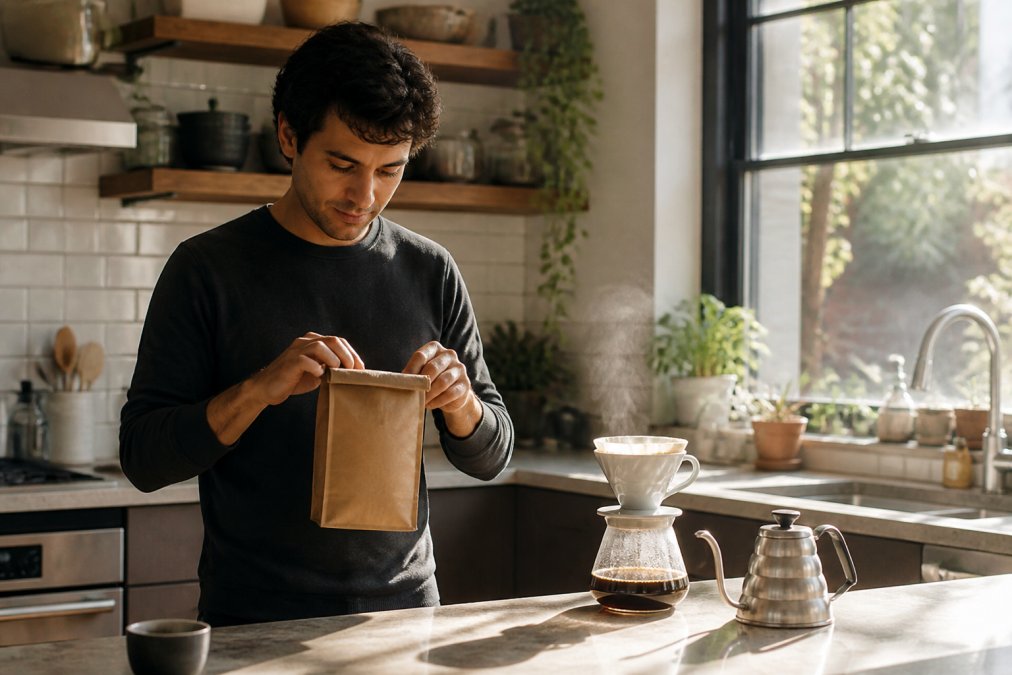
Roast-to-order coffee benefits come down to one thing: your beans are roasted after you order, not before. That shortens the time between the roaster and your grinder, which is the single biggest lever on flavor. The Specialty Coffee Association's freshness guidance treats time since roast as a core quality variable for exactly this reason.
How to Evaluate Bean Quality and Sourcing Transparency
Sourcing transparency is the difference between a roaster who can name the farm and one who can't. But a name on a bag is a claim, not proof. The real skill is knowing which claims can be verified and which are marketing.
Here's what to check before you buy:
- Grower or cooperative named, "Fazenda Santa Barbara" beats "South America"
- Region and altitude, altitude often correlates with bean density and flavor clarity
- Processing method, washed, natural, honey, or anaerobic, each changes the cup
- Variety, Caturra, Bourbon, and heirloom cultivars all taste different
- Roast date, printed, not just a best-by
How to Verify a Sourcing Claim Instead of Trusting It
This is where most buying guides stop, and it's where you should start. A roaster can print "direct trade" or "sustainable" on a bag without any third party checking. Here's how to tell a documented relationship from a slogan:
- Named certification, not a badge. Third-party certifications like Fairtrade America, Rainforest Alliance, and USDA Organic are audited and searchable in public registries. A generic leaf or globe icon with no certifying body named is decoration.
- A farm name you can search. If the roaster names the producer, you can often find that producer's own site, cooperative, or social presence. A farm that exists independently of the roaster's marketing page is a good sign.
- A published price or relationship length. Some roasters disclose how long they've bought from a producer or what they pay above commodity. Even a sentence like "we've bought from this cooperative since 2019" is more verifiable than "ethically sourced."
- A transparency report or sourcing page. Roasters serious about this publish one. If the only sourcing information lives in a product description, treat the claim as unverified.
Decaf and Alternative Processing: The Gap Most Guides Skip
Two categories get almost no coverage in buying guides, and both affect whether your delivery is actually fresh:
- Decaf. Ask which decaffeination method was used, because it changes flavor as much as it removes caffeine. The two common methods are the Swiss Water Process, which uses water and carbon filtration and is chemical-free, and solvent-based methods like ethyl acetate or methylene chloride, which are cheaper but can strip more of the bean's character. A decaf bag with a printed roast date matters even more than a caffeinated one, because decaffeinated beans stale faster.
- Alternative processing. Anaerobic, honey, and natural processes can produce dramatically different cups from the same farm. If a roaster lists the process, they're telling you they controlled it. If they list "natural" with no detail, you're guessing at the outcome.
Matching Roast Profiles to Your Brewing Method
Roast level and brewing method should be matched, not chosen independently. A light roast shines in a pour-over because the paper filter and slower extraction pull out its acidity and floral notes. A dark roast holds up in espresso and French press, where pressure and immersion reward body over delicacy.
| Brewing Method | Best Roast Level | Why It Works |
|---|---|---|
| Pour-over | Light to medium | Filter highlights acidity and aroma |
| French press | Medium to dark | Immersion rewards body and sweetness |
| Espresso | Medium to dark | Pressure needs a denser, developed roast |
| Drip machine | Medium | Balanced extraction, forgiving of variance |
How to Store Fresh Coffee Beans After Delivery
How to store fresh coffee beans determines how long your delivery stays good. The enemies are oxygen, moisture, heat, and light, in that order. Keep beans in an opaque, valve-sealed bag or an airtight canister, stored at room temperature, away from the stove and the window.
Coffee Subscription Cancellation Policy: What to Check Before You Commit
A coffee subscription cancellation policy is the fine print that decides whether a subscription feels convenient or trapping. Before you commit, confirm three things: how to pause, how to cancel, and how much notice each requires. A roaster who makes both easy is one who expects you to stay because you want to, not because you can't leave.
Ask these questions directly:
- Can I pause a shipment without canceling the whole subscription?
- How much notice is required to skip or cancel before the next charge?
- Is there a minimum number of shipments before I can cancel?
- Can I change my cadence, blend, or grind setting between orders?
Troubleshooting Delivery Issues and Final Checklist
Delivery problems are usually fixable, and knowing the fix before you order saves a lot of frustration. Most guides skip this entirely, which is why it's worth its own section.
When Beans Arrive Stale
Stale beans are the most common complaint, and the cause is almost always time, not the roaster's skill. If the bag has no roast date, you can't diagnose it, that's the first thing to fix by switching roasters. If it does have a roast date and the beans are more than three to four weeks old on arrival, the problem is warehouse or transit time, not the roast.
When Beans Arrive Damaged or Warm
A torn valve, a crushed bag, or beans that feel warm to the touch all point to a shipping problem. Photograph the packaging before you open it, note the condition on the carrier's tracking if the box was visibly damaged, and contact the roaster. Roasters who ship roast-to-order generally replace compromised shipments without argument, because the loss is small and the review is public.
When a Shipment Is Late
Late shipments usually trace to a carrier delay rather than the roaster. Check the tracking number first. If the package is sitting in a distribution center for several days, that's a carrier issue and the roaster can often reroute or reship. If the roaster hasn't handed the package to the carrier at all, that's on them, and it's a signal about their fulfillment reliability.
How to Handle Pauses During Travel
This is the scenario most subscription guides ignore. If you're traveling for two weeks, you don't want two weeks of beans aging on your counter. The fix is to pause, not cancel:
- Log in and pause the next shipment before the cutoff date, which is usually a few days before the charge.
- If the roaster doesn't offer a pause, ask whether you can skip a single shipment, many will do this even if it isn't on the site.
- If you can't pause and can't skip, order a smaller bag or a sample pack for the weeks you're home, and let the subscription lapse rather than pay for beans you won't drink.
- Before you leave, check whether the roaster ships on a fixed schedule or on demand. On-demand roasters are easier to pause because there's no standing charge to interrupt.
Final Checklist Before You Commit
Use this checklist before you commit to any fresh coffee delivery:

- Roast date printed on the bag
- Grower, region, altitude, and process listed
- Sourcing claims backed by a named certification or a searchable farm
- Decaf method stated if you're buying decaf
- Roast level matches your brewing method
- Subscription can be paused and canceled easily
- Shipping time is short enough to preserve freshness
- Storage guidance included with the shipment
- A stated process for replacing stale or damaged shipments
| Problem | Likely Cause | Fix |
|---|---|---|
| Beans arrive stale | Long warehouse or transit time | Contact roaster with roast date, switch to roast-to-order |
| Shipment arrives late | Carrier delay | Check tracking, ask roaster to reroute or reship |
| Flavor is flat | Wrong roast for your brew | Match roast level to method |
| Too much per shipment | Cadence too long | Order smaller, more often, or pause |
| Beans arrive warm or damaged | Shipping problem | Photograph packaging, request replacement |
| Subscription feels trapping | No pause option | Pause before canceling, or switch roasters |
Frequently Asked Questions
How can you tell if a coffee delivery service is actually fresh?
Look for a roast date printed on the bag, not just a best-by date. Fresh coffee delivery services that roast to order typically ship within 24 to 48 hours of roasting. Check whether the bag has a one-way degassing valve, which releases carbon dioxide without letting oxygen in. If the roaster does not publish roast dates or sourcing details, that is a red flag. Ask directly: when was this roasted, and when will it ship?
What is the difference between roast-to-order and pre-roasted coffee?
Roast-to-order coffee is roasted after you place your order, so it reaches you within days of roasting. Pre-roasted coffee sits in warehouses or on store shelves for weeks or months before purchase. The roast-to-order coffee benefits include a wider freshness window, more vivid tasting notes, and better extraction quality. Pre-roasted beans may still be drinkable, but the aromatics fade quickly. For home brewers who grind fresh, roast-to-order makes a noticeable difference in the cup.
How do I choose a coffee subscription based on my flavor profile?
Start by identifying whether you prefer light, medium, or dark roast. Light roasts highlight acidity and fruity notes; medium roasts balance sweetness and body; dark roasts emphasize cocoa and caramel. Next, decide between single origin and blends. Single origin coffees showcase a specific region's terroir, while blends offer consistency. Many roasters offer sample packs so you can try before committing to a full subscription cadence.
Is it worth paying for premium coffee delivery services?
It depends on how much you value freshness and convenience. Premium services typically charge more per pound than grocery store coffee, but they deliver beans within days of roasting rather than weeks. If you drink coffee daily and care about flavor clarity, the cost per cup may still be lower than a cafe. Compare shipping costs, subscription frequency options, and whether you can pause or cancel easily. For many remote professionals, the trade-off is worth it.
Choosing fresh coffee delivery comes down to verifying what you can't see: the roast date, the sourcing, and the cancellation terms. Cenia's Coffee roasts to order for maximum flavor and aroma, sources beans from trusted farms with full origin details, and offers sample packs so you can test profiles before committing. Get started with Cenia's Coffee and build a morning ritual around coffee that actually tastes fresh.