

Pour Over vs French Press: Taste Comparison
Table of Contents
- Pour Over vs French Press: A Taste Comparison at a Glance
- How Pour-Over Coffee Taste Develops
- How French Press Coffee Taste Develops
- Key Flavor Differences: Body, Richness, and Clarity
- Pour-Over Coffee Grind Size and Consistency
- Choosing the Best Coffee Brewing Method for Flavor
- Troubleshooting Flavor Problems in Both Methods
- Frequently Asked Questions
Last Updated: October 7, 2026
Pour Over vs French Press: A Taste Comparison at a Glance
The choice between pour-over and French press comes down to one fundamental difference: how each method treats the coffee's natural oils and fine particles. At Cenia's Coffee, our single-origin coffees showcase how dramatically brewing method shapes the cup.

Pour-over uses filters that separate oils and sediment from the liquid. French press steeps the grounds directly in water, then presses them to the bottom, leaving those oils and fine particles in your cup.
How Pour-Over Coffee Taste Develops
Pour-over brewing is controlled: you pour hot water over grounds held in a filter, gravity pulls the liquid through, and the filter traps oils and fine particles before they reach your cup.
Paper Filters and Clarity
Paper filters define pour-over brewing. They catch coffee oils that would otherwise end up in your cup, creating a cleaner, brighter cup where individual flavor notes come through without oils coating your palate.
The trade-off is texture: without those oils, pour-over feels lighter on your tongue. A well-brewed pour-over highlights origin characteristics like the citrus in an Ethiopian natural or the chocolate and caramel in a Brazilian Santos.

If you're using Cenia's Coffee Peru, a paper filter pour-over will emphasize the salted caramel and citrus notes while keeping the cup clean and crisp.
Extraction Control and Flavor Balance
Pour-over gives you control over extraction, the amount of flavor compounds pulled from the grounds.
Under-steeped pour-over tastes sour and thin; over-steeped tastes bitter and flat. The sweet spot, optimum extraction, balances these variables. Most professionals aim for a brew time between 2.5 and 4 minutes.
This precision lets you dial in your pour-over to match your beans and taste preference.
How French Press Coffee Taste Develops
French press brewing works differently: you steep the grounds directly in hot water for 4 minutes, then press a metal mesh filter down to separate them from the liquid. The grounds stay submerged the entire time.
Metal Filters and Oil Retention
Metal mesh filters let coffee oils pass through into your cup. Those oils carry flavor compounds and create the full-bodied, rich mouthfeel French press is known for.
The trade-off is clarity: fine particles also pass through the metal mesh, creating sediment at the bottom of your cup. Some enjoy the added texture; others find it gritty.
A French press cup of Cenia's Coffee Sumatra showcases exactly what this method does: Sumatra's syrupy body, dark chocolate, and earthy notes become even more pronounced, and the sediment adds a grainy texture some coffee lovers consider part of the experience.
Steeping and Full-Bodied Flavor
French press steeping is passive: add grounds and water, wait, press. There's no pouring technique to master, making immersion brewing straightforward and forgiving.
Full immersion means the grounds extract evenly, since every particle spends the same amount of time in hot water.
The downside is less control. You can adjust brew time and water temperature, but you can't fine-tune extraction the way you can with pour-over.
Key Flavor Differences: Body, Richness, and Clarity
The most obvious difference between pour-over and French press is mouthfeel: pour-over tastes light and clean, French press heavy and rich.
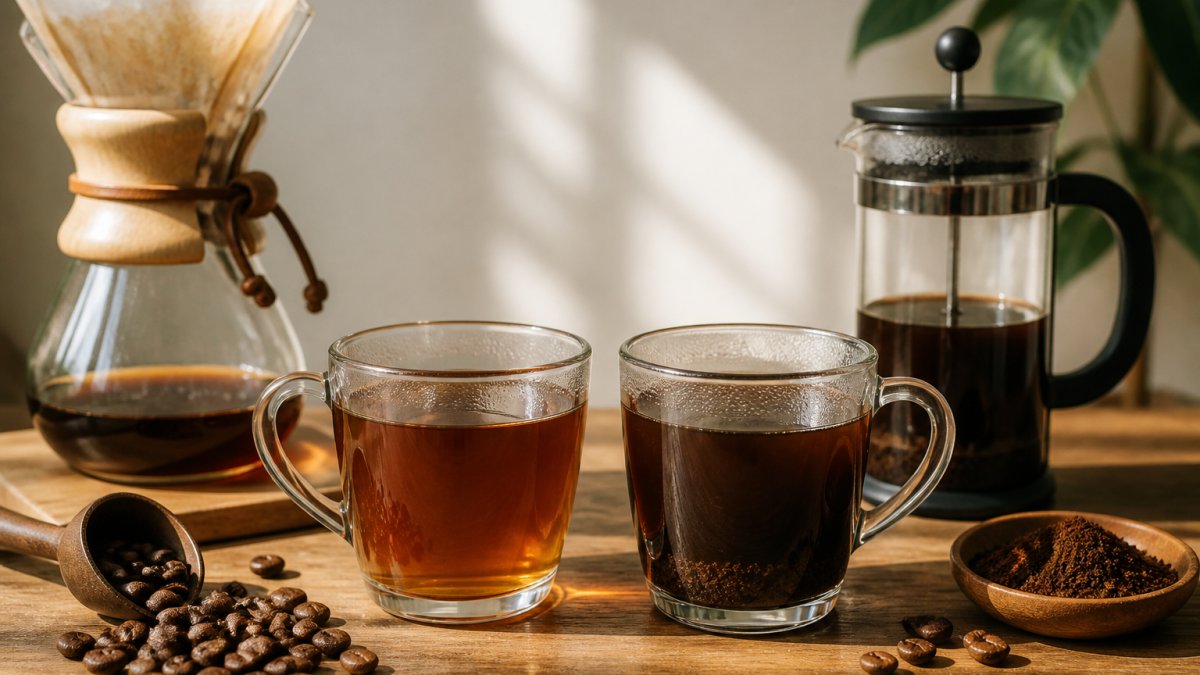
A bright, clean pour-over lets you taste subtle notes like citrus, floral, and sweetness without oils masking them.
A rich, full-bodied French press emphasizes boldness: the oils amplify darker flavors like chocolate, earth, smoke, and spice.
Pour-Over Coffee Grind Size and Consistency
Grind size is the single most powerful lever over how a cup tastes, and it matters more in pour-over than in French press. Finer grounds mean more surface area and faster extraction; coarser grounds extract slower. Get this right and most other problems shrink.
What Grind Size Actually Does
Think of grind size as a dial controlling extraction speed: finer extracts faster and pulls more solubles, coarser extracts slower.
Pour-over typically uses a medium-fine grind, roughly table salt texture: fast enough to finish in 2.5 to 4 minutes, but slow enough that water doesn't rip through the bed and leave the coffee under-extracted.
French press uses a coarse grind, closer to coarse sea salt or raw sugar.
Grind Tolerance: Why One Method Forgives and the Other Doesn't
Grind-size tolerance is tight in pour-over: a slightly finer grind can taste bitter or drying, a slightly coarser one sour or thin.
French press has wider grind-size tolerance: you can drift a notch finer or coarser and still get a drinkable cup. The trade-off is sediment, since grinding too fine lets particles through the mesh for a gritty, muddy texture.
The Variables That Sit Alongside Grind Size
Grind size doesn't work alone. These practical starting ranges interact directly with grind:
- Dose: 15 to 18 grams of coffee per 8 ounces (about 240 milliliters) of water is a common starting point for both methods.
- Ratio: 1:15 to 1:17 by weight. A 1:15 ratio tastes stronger and heavier; 1:17 tastes lighter and more tea-like. French press often benefits from the stronger end because the oils and sediment add perceived body.
- Water temperature: 195 to 205 degrees Fahrenheit. Hotter water extracts faster and can push a fine grind into bitterness; cooler water slows extraction and can leave a coarse grind tasting sour.
A Simple Adjustment Loop
If your pour-over tastes sour or thin, grind finer, pour slower, or raise the temperature slightly. If it tastes bitter or drying, grind coarser, pour faster, or lower the temperature. If your French press tastes sour, grind finer or extend the steep; if bitter, grind coarser or shorten it; if gritty, grind coarser. Change one variable at a time so you can tell what moved the cup.
A consistent burr grinder is the highest-return upgrade for either method. It won't change the fundamental character of pour-over or French press, but it makes every cup repeatable, and repeatability is what lets you taste the difference between the methods instead of between two random brews.
Choosing the Best Coffee Brewing Method for Flavor
Most comparisons stop at "pour-over is clean, French press is rich" and leave you to guess. The more useful question: given the beans in your cupboard, which method will taste better to you? That depends on roast level, processing method, and what you want the cup to do, and the only way to know your own preference is tasting the two side by side with the same coffee.
Match the Method to the Bean
Roast level and processing method change how each style performs. Here's how the common categories shake out:
- Light roasts (washed): Pour-over. The paper filter strips oils that would otherwise mute the delicate floral and citrus notes, and the clarity lets acidity read as brightness instead of sharpness. A light washed Ethiopian or Kenyan coffee is the classic case.
- Light roasts (natural or honey): Pour-over, but expect a fruitier, heavier cup than a washed version. The filter still cleans up the ferment notes so they read as berry or stone fruit rather than boozy.
- Medium roasts: Both methods work. Pour-over emphasizes chocolate, caramel, and nutty notes with a lighter body. French press amplifies the same notes with more weight and a syrupy finish. This is the sweet spot for a side-by-side test.
A Repeatable Side-by-Side Taste Test
You can't compare two cups fairly unless you control the variables. This 30-minute protocol gives you a real answer instead of a guess.
What you need:
- One coffee, 30 grams total (15 grams per method)
- A burr grinder
- A pour-over dripper with paper filters
The protocol:
- Pick one bean. A medium roast is the fairest starting point because it performs well in both methods. Avoid flavored coffees, which mask method differences.
- Grind separately. Medium-fine for pour-over, coarse for French press; the methods need different sizes to extract properly.
- Use the same ratio and temperature. 1:16 by weight (15 grams coffee to 240 grams water) and 200 degrees Fahrenheit for both.
- Brew the French press first. Add grounds and water, stir gently, steep 4 minutes, press slowly, then pour into a cup and set aside.
- Brew the pour-over second. Rinse the filter, add grounds, bloom with twice the coffee's weight in water for 30 seconds, then pour in slow spirals to finish between 2.5 and 4 minutes.
- Let both cups cool to about 140 degrees Fahrenheit. Tasting at the same temperature is essential because aroma and flavor shift as coffee cools.
- Taste blind if you can. Have someone label the cups A and B, slurp from a spoon, note body, sweetness, acidity, bitterness, and finish, then write down which you preferred and why.
- Repeat with a second bean. Try a light roast and a dark roast; your preference may flip depending on the coffee, and that's the point.
What Your Results Probably Mean
If you preferred the pour-over, you likely value clarity, acidity, and distinct flavor notes. If you preferred the French press, you likely value body, sweetness, and a heavier mouthfeel. If you preferred them equally, you're in the majority: most drinkers find the two methods complementary, and the right choice depends on the bean and the mood.
Practical Workflow and Cleanup
Taste isn't the only variable. The method you'll actually use every morning is the one that fits your routine.
- Pour-over: Setup takes about a minute, and cleanup means discarding the filter and grounds, rinsing the dripper, and wiping the carafe. Batch size is limited to one or two cups, and each takes hands-on attention.
- French press: Setup is faster with no filter to rinse and no pouring technique, but cleanup is messier since you have to scoop out wet grounds and rinse the mesh filter to keep it from clogging. It scales easily to three or four cups, and the steep is hands-off.
If you brew for one and enjoy the ritual, pour-over fits. If you brew for two or more and want to walk away during the steep, French press fits. Many households keep both.
At Cenia's Coffee, our Ethiopia Natural (medium-light roast with milk chocolate, fruity, and caramel notes) is a strong candidate for the side-by-side test because its fruit and chocolate notes read very differently through a paper filter versus a metal one. Our Brazil Santos (medium roast with cocoa and a smooth finish) is the fairer control: it performs well in both methods, so any difference you taste is the method talking, not the bean.

Troubleshooting Flavor Problems in Both Methods
If your pour-over tastes sour, extraction is too fast: grind finer, pour slower, or use hotter water.
If your French press tastes sour, you under-steeped: increase brew time or use hotter water.
Both methods benefit from water between 195 and 205 degrees Fahrenheit, since hotter water over-extracts and tastes bitter while cooler water under-extracts and tastes sour.
The pour over vs french press taste comparison ultimately comes down to the experience you want.
Frequently Asked Questions
What is the main taste difference between pour-over and French press coffee?
Pour-over coffee typically tastes clean and bright with clarity that highlights subtle flavor notes, while French press coffee delivers a bolder, richer, full-bodied cup with heavier mouthfeel. Pour-over uses paper filters that trap coffee oils and fine particles, producing a lighter cup. French press uses a metal filter that allows oils to pass through, creating a heavier, more robust flavor. Your preference depends on whether you want to taste delicate, complex character or bold, rich flavors.
Does pour-over coffee grind size affect the taste?
Yes, significantly. Pour-over requires a medium-fine, consistent grind, coarser than espresso but finer than French press. If your grind is too coarse, water passes through too quickly and the coffee tastes weak and under-steeped. If it's too fine, over-extraction occurs and the brew becomes bitter. Consistent grind size ensures even water contact and optimum extraction, delivering the clean, balanced flavor pour-over is known for. Invest in a burr grinder to maintain grind uniformity.
Why does French press coffee taste heavier than pour-over?
French press retains coffee oils and fine particles because it uses a metal mesh filter instead of paper. These oils carry flavor compounds and create the syrupy, full-bodied mouthfeel. The immersion steeping method (where grounds sit in hot water for 3-4 minutes) also extracts more solids than pour-over's shorter contact time. This combination produces a heavier, richer cup. If you prefer a lighter taste, pour-over's paper filter removes those oils, resulting in a cleaner, brighter cup.
Which brewing method brings out more flavor complexity?
Pour-over generally highlights more flavor complexity because the paper filter removes oils that can mask subtle notes. This clarity lets you taste the distinct characteristics of your beans, the citrus in a light roast, the chocolate in a medium roast. French press's heavier body and oil retention create bold, dominant flavors that can overwhelm delicate notes. For single-origin beans with unique tasting profiles, pour-over is often the better choice. Try our Ethiopia Natural or Peru beans with pour-over to experience their fruity and citrus notes clearly.